Summer Internship Spotlight Series: Tia Walker (MiM’26)
Each year, our students spend their summers in Washington, D.C., across the nation, and around the world working in corporate, nonprofit, and government organizations. Meet a few of our graduate and undergraduate students in our Summer 2026 Internship Spotlight series.
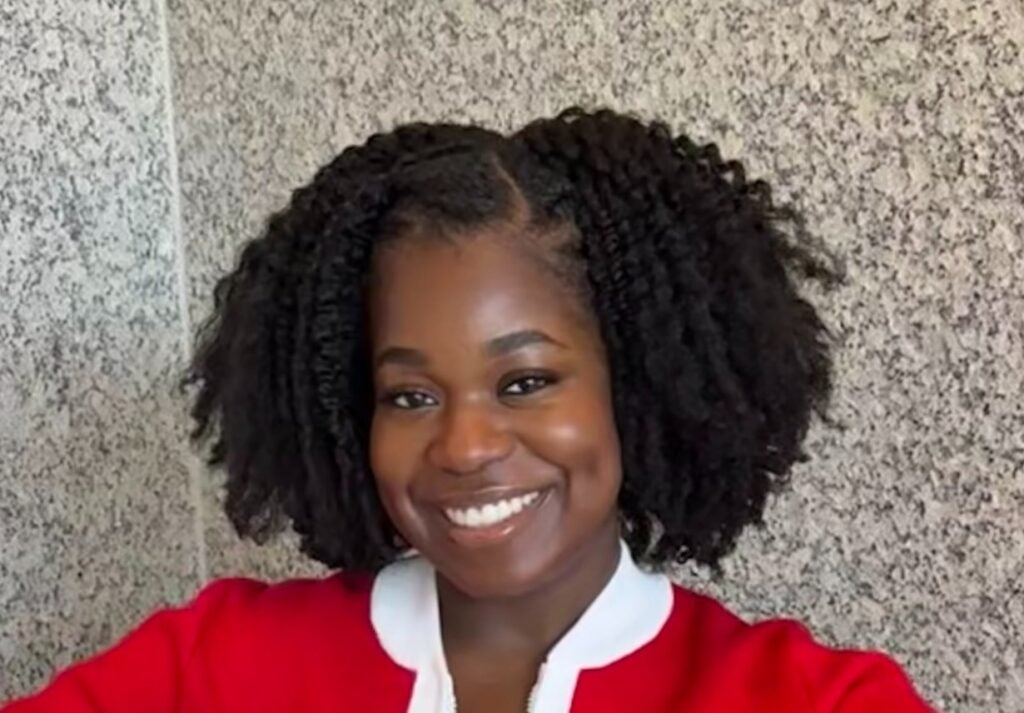
Tia Walker (MiM’26)
This summer, Tia Walker (MiM’26) interned in the office of Texas Congresswoman Jasmine Crockett on Capitol Hill, where she supported constituent services, conducted policy research, and gained firsthand insight into the legislative process. From developing a policy proposal focused on Black maternal health to attending congressional briefings and learning from public service leaders, Walker explored how thoughtful policymaking can drive meaningful change. Here, she reflects on the projects that shaped her summer, the lessons she learned, and how her Georgetown experience prepared her for the fast-paced world of Congress.
Tell us about your internship and what attracted you to it?
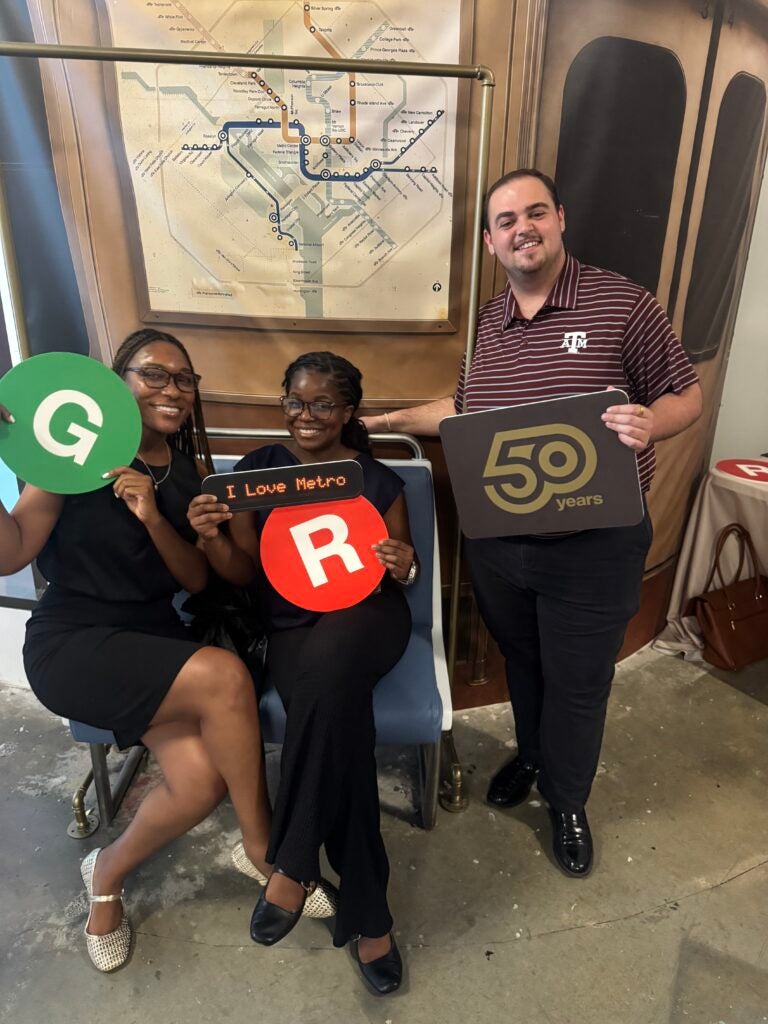
Walker celebrating DC Metro’s 50th anniversary with fellow interns at the WMATA anniversary popup event.
One of the things I have appreciated most about studying at Georgetown is being so close to the institutions where national policy is shaped, making this internship feel like a natural extension of my classroom experience. Since visiting the U.S. Capitol for conferences during my undergraduate years at Dartmouth, I knew I wanted the opportunity to work inside the institution and better understand how policy is shaped and implemented. Being just a few blocks from Georgetown’s campus has made that opportunity feel even more tangible. My academic journey, from African and African-American studies and sociology to business, has consistently centered on questions of who holds power, how it is distributed, and what that means for communities. Working in Congress felt like the natural next step.
Interning in Congresswoman Jasmine Crockett’s office has made that experience especially meaningful. Her commitment to advocacy and public service has long inspired me. Every day, I have the opportunity to support constituents, sit in on legislative briefings, observe the policymaking process firsthand, and learn from members of Congress and congressional staff. It is an environment unlike any other, filled with people who are deeply committed to public service, and the experience has strengthened my desire to become a more informed and engaged leader.
Describe a typical day.
A typical day starts with my morning metro or scooter ride to Capitol Hill before arriving at the office at 9 a.m. I usually begin by checking constituent voicemails and helping sort the large volume of mail our office receives. From there, I check in with staff to see if there are requests for research, memos, or policy briefings. Throughout the day, I work on my policy projects, attend intern lecture series events or congressional briefings when the House of Representatives is in session, and take advantage of opportunities to learn from members of Congress and staff.
One of my favorite parts of the day is grabbing lunch from the Longworth Cafeteria and eating in the Rayburn Courtyard, a quiet outdoor space tucked inside the Capitol complex. In the afternoons, I might give a Capitol tour to visiting friends or continue supporting the office with constituent services and research. The pace on Capitol Hill is incredibly fast, especially in the underground tunnels connecting the House office buildings, where it feels like everyone is on their way to an important meeting or delivering something that keeps Congress moving. It is an exciting environment to be part of, even as an intern.
What’s a project you’re especially proud to be working on?
The project I’m most excited about is a collaborative policy proposal I’m developing with two fellow interns from Congresswoman Crockett’s district office in Texas focused on improving Black maternal health. This is a policy area I care deeply about, and earlier this summer I had the opportunity to contribute research and draft a policy memo in preparation for a Maternal Mortality Review Committee (MMRC) meeting. Black women continue to experience disproportionately high rates of maternal mortality in the United States, making this an issue where thoughtful, evidence-based policy can have a meaningful impact.
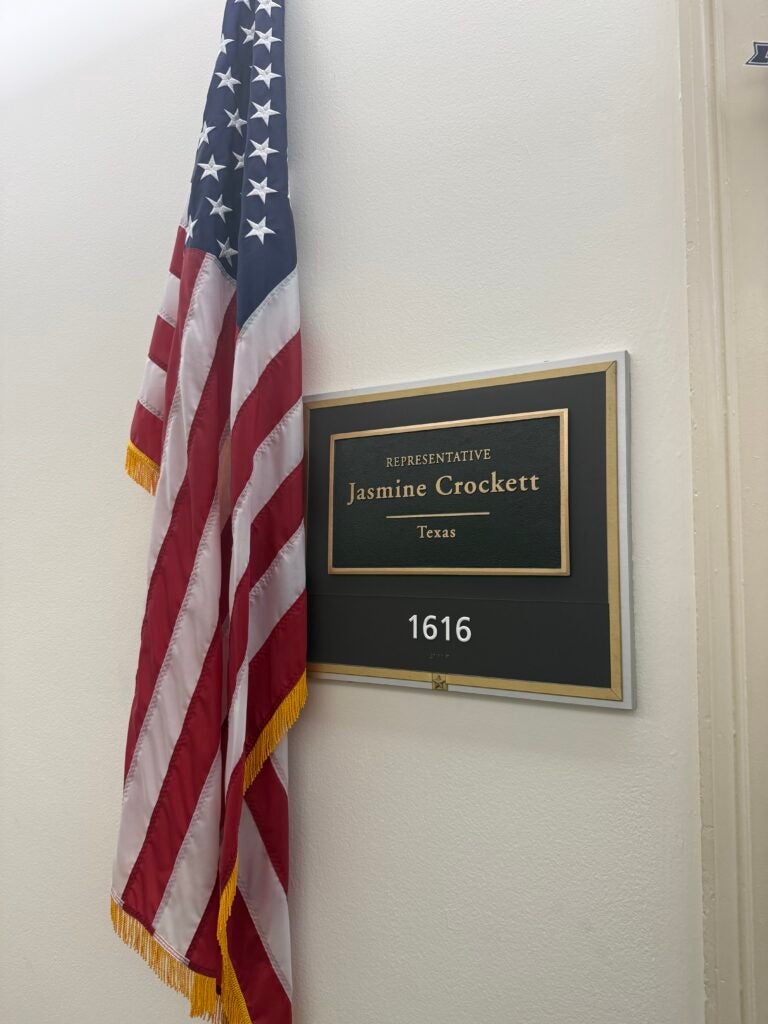
Texas Congresswoman Jasmine Crockett’s office on Capitol Hill.
For our intern project, we are developing a legislative proposal that addresses gaps in existing policy by researching current legislation, evaluating implementation strategies, and considering the proposal’s impact on constituents in Texas’s 30th Congressional District. What has made this project especially rewarding is seeing how much work goes into developing legislation before it is ever introduced.
Beyond researching the issue itself, we’ve had to think through committee jurisdiction, agency authority, bipartisan support, implementation, and how to communicate the proposal to the public. It’s given me a much deeper appreciation for the research, collaboration, and strategic thinking that shape the policymaking process.
What’s the most interesting meeting you’ve sat in on?
One of the most interesting events I have attended was a Bethune Briefing hosted by the National Council of Negro Women titled “Drawn Out and Locked Out: How Gerrymandering and Voter Suppression Threaten American Democracy.” The panel was moderated by Congresswoman Terri Sewell and featured Maya Wiley, president and CEO of the Leadership Conference on Civil and Human Rights, Shavon Arline-Bradley, president and CEO of the National Council of Negro Women (NCNW), and Todd Cox, associate director-counsel at the NAACP Legal Defense Fund.
What stood out to me most was the depth of experience in the room and the way each speaker connected historical context to the current challenges facing voting rights and democratic participation. It was especially meaningful to later meet Maya Wiley after the event, as we are both Dartmouth alumni. Overall, it was an engaging and thought-provoking conversation that reinforced the importance of civic participation and the role of policy in shaping access to democracy.
Which McDonough class has unexpectedly helped you the most during your internship?
One part of the Master’s in Management curriculum that has unexpectedly helped me during my internship is the course Consulting Models and Methods. The course taught me a more structured way of thinking about complex problems, specifically how to take large, often ambiguous issues and break them down into clear components, synthesize data, and translate it into actionable recommendations.
That approach has been especially useful on Capitol Hill, where much of the work involves navigating broad policy issues and constituent needs and distilling them into concise memos and briefings for staff. It has helped me think more clearly about how to move from high-level policy questions to practical, implementable solutions. The class has reinforced for me that whether in consulting or public service, effective problem-solving often starts with structuring complexity in a way that allows others to act on it.
What’s your advice for future interns?
My advice for future interns is to be intentional and proactive early in the process. Finding offices and members of Congress whose work you genuinely admire makes the experience more meaningful, and it is important to apply early since many internship cycles begin months in advance. Once in Washington, I would also encourage interns to fully immerse themselves in the news and current events. I start each day listening to NPR on my commute and often follow The New York Times podcasts, and I stay informed throughout the day by keeping news coverage on in the background. Being aware of what is happening in real time is essential in an environment like Capitol Hill, where policy discussions are constantly evolving. Understanding the context allows you to contribute more thoughtfully and better serve the people behind the issues.
Quick takes
Go-to lunch spot: Longworth Cafeteria, which has a wide variety of options and makes it easy to grab something quick between meetings and briefings.
One thing you learned that wasn’t in a textbook: How much the Capitol truly runs on the people behind the scenes, from staff in offices to the teams in the tunnels, mailroom, and visitor services who keep everything moving. One of the most important lessons has been the value of
acknowledging everyone you pass throughout the day, since so many different people contribute to making the institution function.
Your favorite part of every week: Getting to use the underground shuttles in the tunnels that connect the House buildings to the Capitol and Senate buildings.
The first thing you do when you get to work: I turn the TV on to MSNow to get a recap of what happened in current events the night before and what is ahead for the day.
Best piece of advice you received: One of the best pieces of advice I heard this summer at a briefing from the CEO of the NCNW Shavon Arline-Bradley was not to view a ‘no’ as the end of the process. In advocacy and public service, it often means there’s more work to do, including building support, refining your message, and continuing to show up.
Most-used app on your work computer: Outlook
Coffee or tea? Coffee, but specifically a hot latte with oat milk.