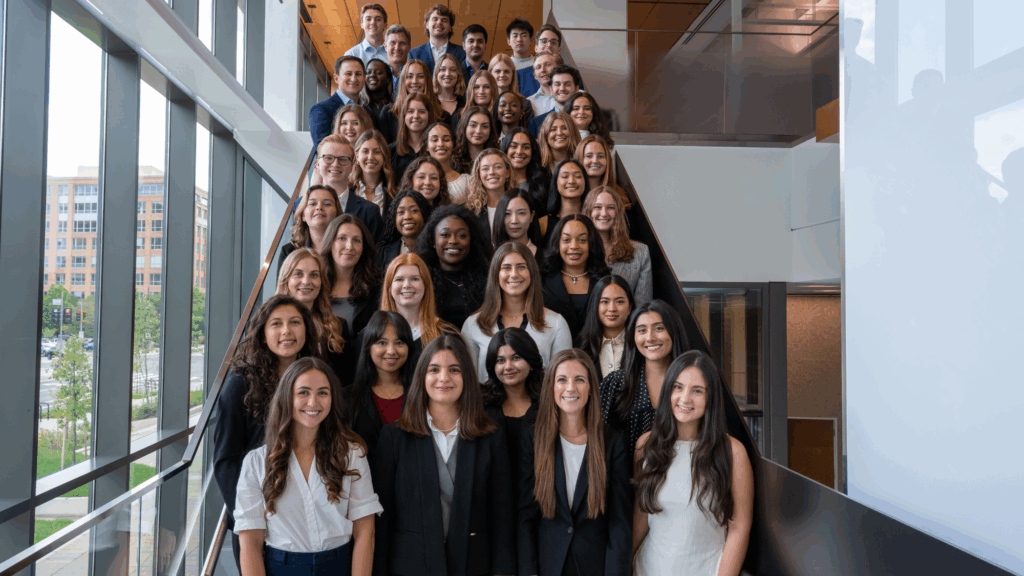
Can Supply Chains Be Resilient and Sustainable? Georgetown Tackles this Question at Sustainability Summit
In early November, the Business of Sustainability Initiative at Georgetown’s McDonough School of Business hosted the 2025 Leadership and Innovation Summit. The event convened global leaders across private equity, consumer goods, retail, automotive, and nonprofit sectors to discuss the future of supply chain sustainability.
This year’s theme made clear that supply chains are critical levers for decarbonization, social impact, operational resilience, and long-term value creation across sectors.
“Supply chain sustainability is one of the most critical topics in business today,” said Vishal Agrawal, director of the initiative and Henry J. Blommer Family Endowed Chair in Sustainable Business. “As we examined the latest innovations and solutions to make supply chains more sustainable with leaders across industries, my takeaway from today’s summit has been that organizations who are thinking about their entire supply chain, globally, to mobilize action and change will be the leaders as we approach 2030-2045.”
In large part, the summit revolved around the following question: “How do we make the business case for sustainability in the supply chain?”
Sustainable Business Practices
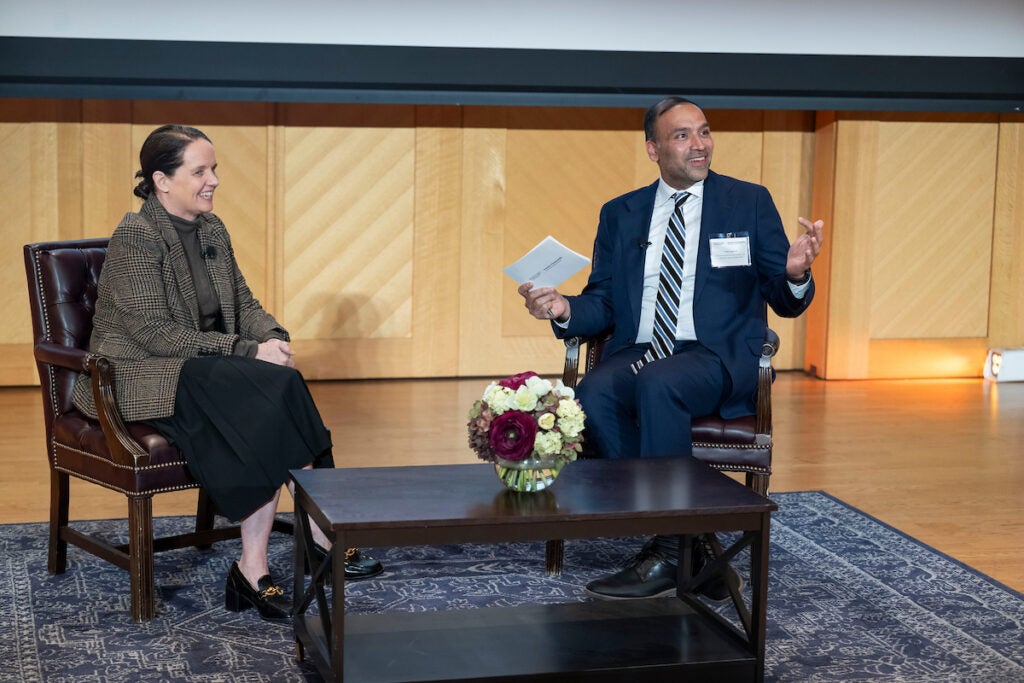
Left to right: Sally Gilligan (Gap, Inc.) and Vishal Agrawal
The summit began with a conversation with Sally Gilligan (B’94), chief supply chain and transformation officer at Gap Inc. She discussed how one of the world’s largest apparel companies is building more sustainable practices into its supply chain.
Gilligan highlighted different programs Gap sponsors to address sustainable operations. With women making up 85% of garment workers, Gap invests in gender equity programs to support the women with life-skills and workplace awareness while supporting systems changes such as digital wages.
Another portion of Gap’s sustainability challenge lies in Scope 3 emissions produced upstream in the supply chain. Partnerships with suppliers, water stewardship programs, and investments in new technologies like AI and textile recycling play crucial roles in advancing long-term decarbonization goals. Gilligan also highlighted how technological advancements support this work. In particular, leveraging AI can reduce waste and enable digital sampling, eliminating the need to physically ship products around the world: streamlining what has traditionally been a resource-intensive process.
Elizabeth Lewis, global head of sustainability in the infrastructure group at Blackstone, and Carletta Ooton, operating partner and head of responsible and sustainable operations for equity at Apollo Global Management, both discussed how investment firms are rethinking long-term value creation through sustainability.
Safak Yucel, associate director of the initiative, asked, “How can sustainability strategies elevate profitability and how do you define sustainability in your organization?”
Ooton described a portfolio-wide approach that entails collecting data to understand the opportunities for decarbonization for each company during the holding period. Having the data ensures results can be measured. Some other key focuses surround climate, waste, water, and employee welfare. Ooton highlighted the importance of understanding the levers to pull to create pathways toward sustainability and profitable goals while facing a myriad of commercial, external, and regulatory pressures.
Both speakers made the business case clear: sustainability reduces risk and accelerates value creation.
Supply Chain Challenges and Solutions

Left to right: Kerrie Carfagno and Marissa Pagnani McGowan (L’Oréal)
In the beauty sector, Marissa Pagnani McGowan (C’00, L’03), chief sustainability officer at L’Oréal North America, shared unexpected supply chain challenges and solutions.
L’Oréal’s digital advertising footprint is bigger than its transportation and supplier footprint. This reflects the change in where consumers consume information and how various factors fluctuate carbonization levels, such as where content is produced and how it is edited. Small changes in pixel count and transmission decisions led to a 30% decarbonization.
Later in the day, audience members heard from Bob Holycross, vice president and chief sustainability, environment, and safety officer at Ford Motor Companies.
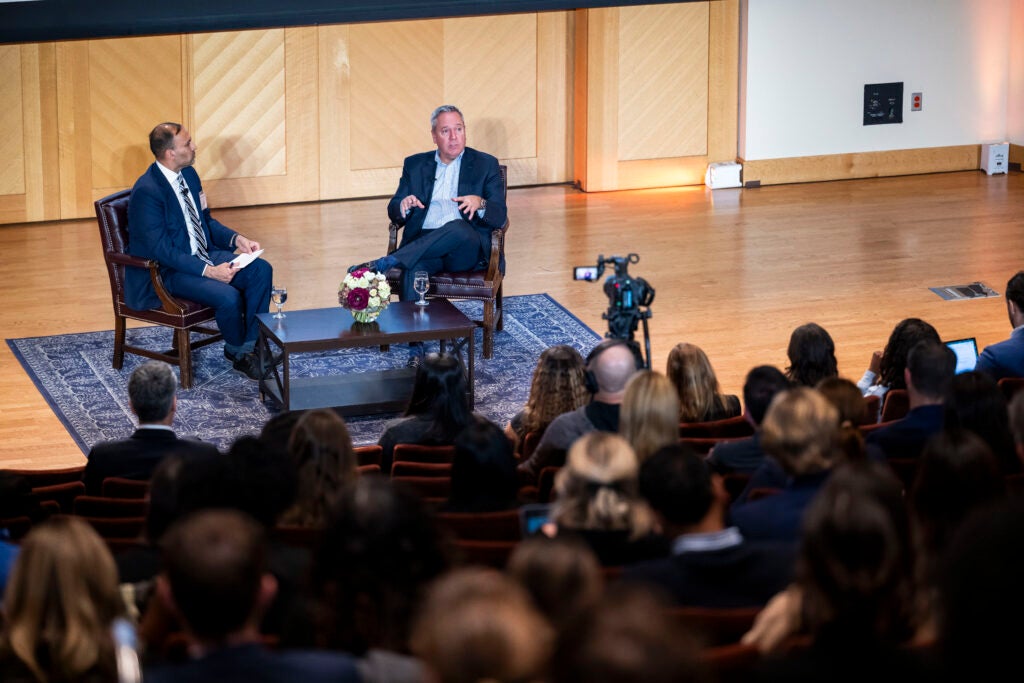
Left to right: Vishal Agrawal and Bob Holycross (Ford)
Holycross spoke about Ford’s decision to integrate sustainability and financial reporting into one combined report, reinforcing the business case that sustainability is inseparable from long-term profitability, capital efficiency, and shareholder value. Ford has shifted focus to Scope 3 emissions in its supply chain by working with suppliers to identify issues and create solutions along manufacturing, product, and labor.
Some solutions center around recyclable materials such as aluminum in the F-150 models and the use of soy foam in over 30 million vehicles to date. Some persisting challenges include battery operations in terms of manufacturing hurdles and end-of-life waste, although scrapping has been implemented as a step forward.
Sustainability in Retail
The summit concluded with a discussion on sustainability in retail supply chains with Scot Case, vice president of sustainability for the National Retail Federation, and David Eagles, executive vice president and chief operating officer, Goodwill Industries International.

Left to right: Safak Yucel, David Eagles (Goodwill), and Scot Case (National Retail Federation)
Case characterized retail as “the place where supply chains meet the consumer.” Retailers have the unique role to synthesize consumer expectations and translate them across supply chains. Because the industry is so vast, there is no one solution, and common challenges include complex supplier networks and evolving regulations. Eagles spoke on the evolving market of reuse and resale as the fastest-growing sector of retail, with younger generations making up the core market segment. Circularity, according to Eagles, is becoming the central pillar for reducing emissions.
Across the day’s conversations, speakers reinforced the business case for sustainability across supply chains. Through long-term investment models, circular systems, supply chain partnerships, and technological innovation, the summit demonstrated how organizations across sectors are transforming operations to build resilient and responsible value chains.