A World View: Business as a Force for Change
From geopolitical issues to the complexities of global health, the world is facing unprecedented challenges. The inclination may be to retreat within borders, but globalization in business is now more important than ever.

Dean Paul Almeida
As the world grapples with disruptions to geopolitical realities, including the ongoing effects of global health challenges, businesses are reckoning with changing globalization sentiments. What is the future of business in this new global landscape?
Paul Almeida, dean and William R. Berkley Chair, shares his thoughts on why global remains a critical component of business even as societies take a more inward view, and why he believes interdisciplinary collaboration holds the key to creating a more just world.
Recent events have stirred a rising anti-globalization sentiment across the world. What is your view on global trends in business?
The convergence of ongoing economic, political, and cultural shifts have inspired new debate on the importance of globalization efforts, but just as these conversations are underway, the world’s biggest problems continue to grow more interconnected and complex. Issues such as climate change, health disparities, and the rapid pace of technological advancement cannot be addressed by any single entity acting alone. Now more than ever, global collaboration is essential in building sustainable solutions to today’s challenges.
With the ever-increasing complexity and scale of these global problems, how can businesses play a strategic role in the solutions?
Businesses are uniquely positioned to implement change at a faster rate than other sectors thanks, in large part, to their agility, rate of innovation, focus on results and multinational scope. In today’s business climate, we are now beginning to see more companies focus on how they can both achieve their economic goals and simultaneously act as good stewards of the world’s resources. Business will always play a pivotal role in shaping the global landscape, but in order to create meaningful change, we must share a collective responsibility to look beyond short-term economic interests and work together for the interest of all. Business can and must be the greatest force for positive change and for serving the common good.
Why is it important for educational institutions, like Georgetown, to focus on building global mindsets?
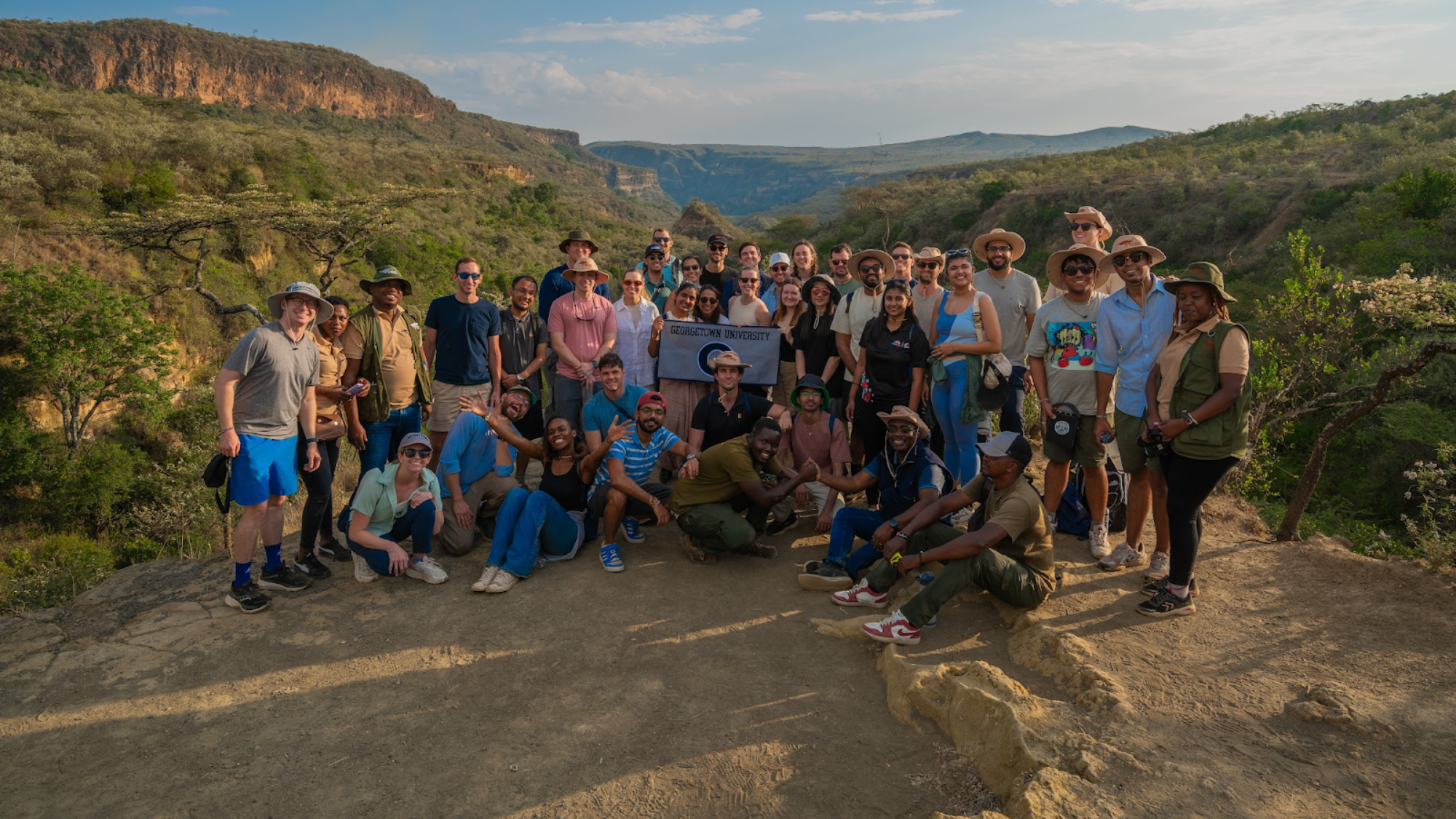
Since their early origins, the Society of Jesus transcended boundaries in order to live out their mission to promote the common good. These are the values that inspire the work we do at Georgetown. To develop business practices that positively impact our world, we must better understand our global neighbors and see the world through their eyes. It is imperative that our future leaders experience international perspectives firsthand, learn to emphasize collaboration across disciplines, and find power in diversity and view the world’s problems as their own. Only then will we develop leaders who are empowered to reach across continents and shape the future of our world, for the better.
This story was originally published in the Fall 2022 Georgetown Business Magazine.