AI for All: The Promise of AI-Powered Social Change
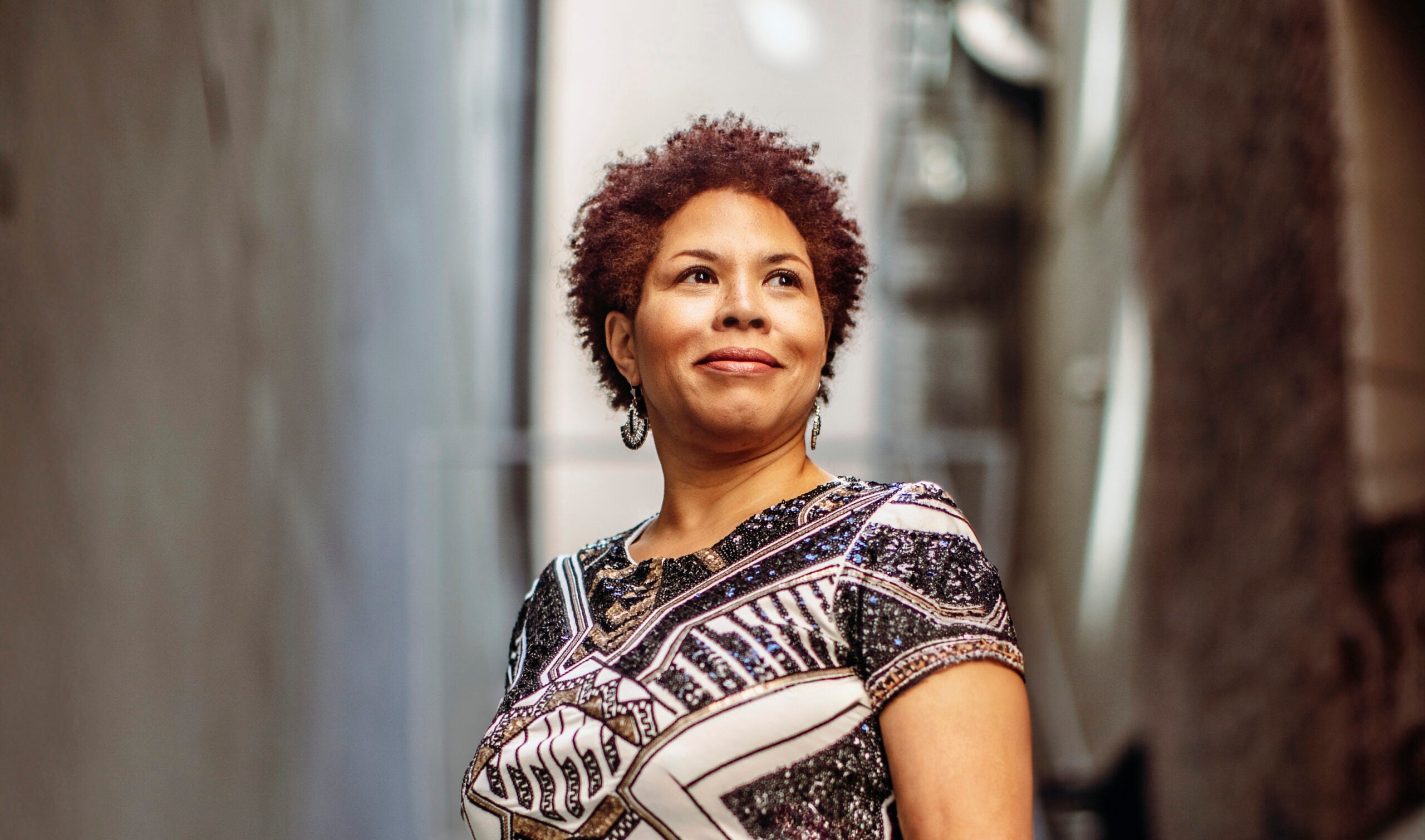
A pioneer in mission-driven tech, Cheryl Contee explores the promise of AI, the power of diverse founders, and the possibilities of a more sustainable capitalism.
Cheryl Contee (EMBA’04) got her start in tech because, she says, “I hate washing dishes.” As a scholarship student in her undergrad years at Yale, she was required to hold an on-campus job. The best-paying position available was working in the kitchens; the second best-paying position was on the computer help desk.
Contee became the first person of color in the IT role and one of only four women on the 28-person team — a situation that would be dismayingly common as she parlayed that early experience into a career in mission-driven technology.
Contee went on to cofound the social listening startup Attentive.ly and the digital agency Do Big Things and, more recently, the artificial intelligence startup Change Agent AI. She also works as a senior advisor with PosterChild.ai. But she never wanted to succeed on her own: Contee also co-founded The Impact Seat Foundation to support other underrepresented startup founders.
We talked to the serial entrepreneur, author, and advocate about the promise of AI-powered social change and the future of capitalism.
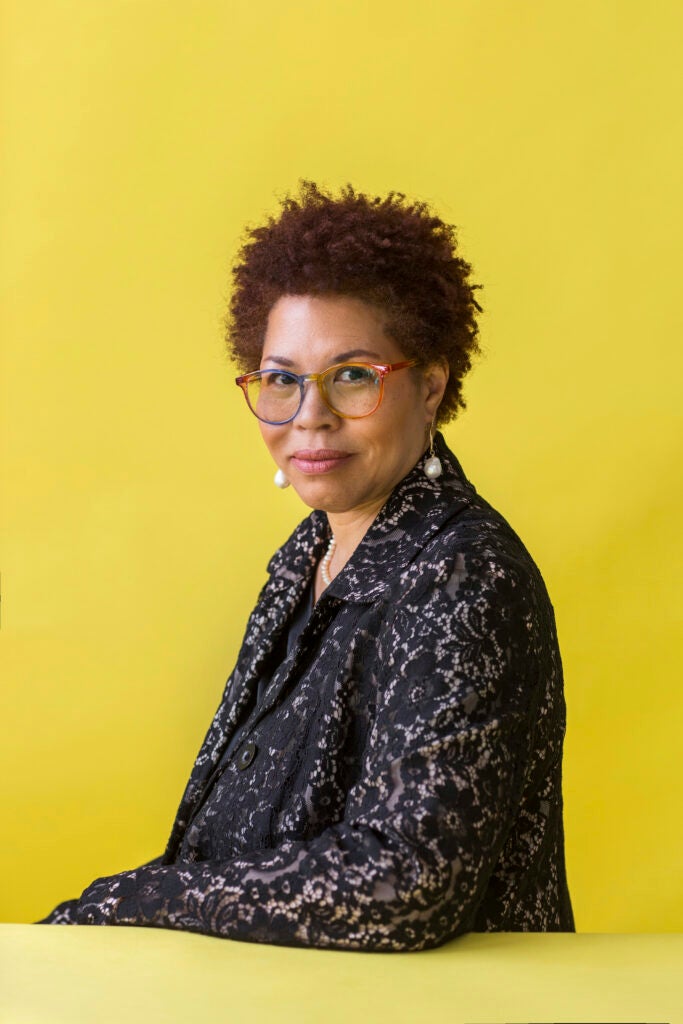
Cheryl Contee (EMBA’04)
Tell us about your experience in the startup world.
I fully realized it when I was first fundraising for Attentive.ly. It didn’t even occur to us that most of our peers were white dudes. Raising money was a very different thing for them. Much later I became a senior advisor at Astia, one of the original angel networks and venture funds that focuses on female entrepreneurs. They crunched the numbers and put out a report that showed it took, on average, seven introductions for white female startup founders, and it took 50 investor introductions to get a Black female entrepreneur funded. Fundraising is hard for everyone, but America is asking Black women to put in 10 times the effort. I didn’t know those statistics going in. But at some point, my business intuition kicked in: “You are just going to have to knock on more doors and crawl across more glass to get there.”
And you did. In 2016, Attentive.ly was acquired by Blackbaud, making it the first tech startup with a Black woman founder to be acquired by a NASDAQ-listed company.
We didn’t realize it was going to be a first until we got there. And then it just occurred to us, “Hey, we may have made some history here.” It was a huge deal. My goal has always been to open doors for others, and so it felt like a lot of responsibility to then help others walk through that door too. I founded The Impact Seat Foundation with Barbara Clarke, an iconic impact investor who is one of the largest individual investors in women-led tech startups in America, to encourage investment in historically excluded entrepreneurs. Our message is that investors are missing out on an important opportunity. All the studies show that diverse-led firms are more innovative, more productive, more capital efficient — in part because they have to be — and more profitable in general and exit at higher multiples. If you are sincere that making money is your highest priority, which is what a lot of venture capitalists say, you’re sleeping on a whole set of amazing entrepreneurs who are in many ways more likely to see success, if they are fully capitalized.
How has AI adoption differed from previous technology advances you’ve seen?
I just released a new book called AI for Nonprofits, which is a practical and tactical field guide for the nonprofit leader who is ready to roll up their sleeves and adopt AI — ethically and responsibly. It’s been a delightful surprise to see it become a popular bestseller in big categories like Business and Finance, AI and Office Automation. We have a chapter in the book called “How to Sell AI Upstream and Downstream in Your Organization.” But we had originally named that chapter “Selling AI Upstream.” That was what happened with social media: younger and mid-level team members were trying hard to get senior team members to understand that “hey, Facebook seems like it is going to be a thing.” But we heard in talking to many nonprofit leaders that they were on board with AI adoption. It is their teams that are pushing back; there’s a lot of fear out there that AI is going to take jobs. You do occasionally hear nonprofit leaders say things like, “Oh we aren’t going to use AI in this organization for ethical or environmental reasons.” My response is: This isn’t a choice. AI will be in everything, everywhere. Hoping that somehow AI is going to go away is not really a smart strategy.
What are the biggest AI opportunities for nonprofits?
There are so many organizations I’ve worked with over the years that send out these email blasts and people email back, but no one checks that mailbox. No one is talking to those supporters. Imagine how much more money and support they could bring in if they were actually able to have the capacity to talk to each and every one of those people. AI can free up your staff to have active listening conversations with donors and supporters — or with customers, for for-profit companies. I often describe generative AI as a super smart intern. In an ideal world, AI has the potential to free up more energy and time for people to do the work they love most.
Why have you turned your attention to the AI sector?
When you look across my career, the ribbon that runs through everything is the question of how new technologies can aid social innovation that’s positive for everyone. So, AI is something I’ve been clocking for a long time. AI has actually been around for some time now on the backend. It’s how your Amazon packages find you so fast and how Netflix knows that you’re into British murder mysteries. Then in 2022 with ChatGPT, all of a sudden those tools were at the fingertips of everyday people. It was exciting to jump into learning about what’s possible and where this is heading. This is such an important time for leaders to start understanding how to adopt AI in their organizations so they can be a part of shaping how these tools are created. We don’t talk a lot about the fact that our new book AI for Nonprofits is co-authored by a Latino man and a Black woman, but I think both Darian Rodriguez Heyman and I understand it’s important we show that all kinds of people are — and can be — experts in this field.

What were some of the lessons you learned writing AI for Nonprofits?
The book is thick and meaty, with insights from 57 contributors. One of my favorite quotes is from [nonprofit data strategist] Nick Hamlin saying, essentially, AI is like hot sauce. You want to think really carefully about where you are going to put it in your organization or your casserole. Zooming out, the big takeaway is that people are concerned that AI is going to automate everything and take humans away from each other and productive work. I see the opposite. There are so many ways in which AI can alleviate pain points, automate the most repetitive, time-consuming, and tedious work, and free people up not only to be more creative but to actually communicate more with each other.
Why do you believe mission-driven organizations need a generative AI option that is different from what’s currently available?
We founded Change Agent AI as an alternative to the big Large Language Models (LLMs) like Anthropic, OpenAI, Gemini, and Google. If you want to make sure you are using AI as ethically as possible, you want to make sure your data is mostly contained with an LLM that you can control, one that is trained on diverse photos, videos, and language with positive values.
What do you see for the future of tech and entrepreneurship?
When I was in Georgetown’s Executive MBA program in 2004, there were only two out of about 50 of us who worked at nonprofits and even the concept of mission-driven companies was still young. Now there are so many students and professors who understand that regenerative capitalism and sustainable capitalism really are the future. Finding a way to have innovation, productization, and commercialization that doesn’t hurt people or the planet—that is the future. Seeing people embrace that is exciting for me as someone who tends to be sometimes a little ahead of the curve. That can be lonely sometimes!
This story was originally featured in the Georgetown Business Fall 2025 Magazine. Download the Georgetown Business Audio app to listen to the stories and other bonus content.