By studying the frameworks that drive business and international relations, you’ll develop a nuanced perspective that allows you to see and solve challenges from a unique angle.
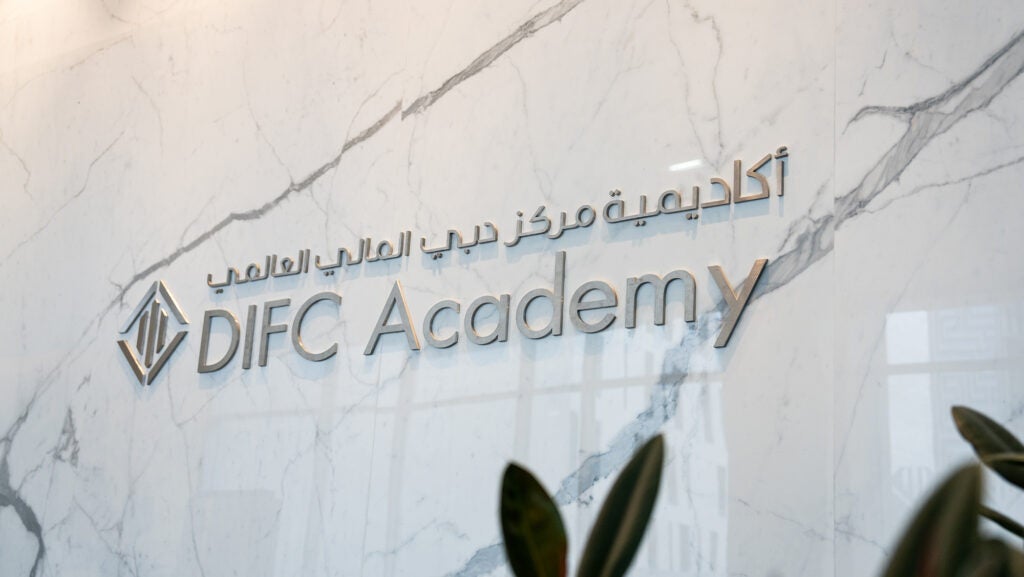
The 10-month Master’s in International Business and Policy in Dubai (IBP Dubai) program consists of seven one-week, in-person modules. Five of the modules take place in the United Arab Emirates at the DIFC Academy in the Dubai International Financial Centre. The remaining two modules are held on Georgetown’s campus in Washington, D.C., and in Jakarta, Indonesia.
Modules and Courses
Please note that module sequence, dates, and locations are subject to change from year to year.
Fall Semester: September — December
Module 1: Dubai, UAE (September)
Global Cooperation
This course will analyze and discuss the evolution of global cooperation, the impact of international rules on global business, and the main challenges to the current system of international institutions. A key theme will be the influence of global, regional, and national-level policy-making and politics on the rules governing global business. We will examine how actors use and contest institutions at all these levels to achieve their interests. Focus will extend beyond traditional multilateral organizations (World Bank, IMF, WTO) to less institutionalized forms of global cooperation. The course also will focus on particular challenges to global cooperation in MENASA, including globalization backlashes and geopolitical tensions from regional conflicts. The final part will address global cooperation on climate change and the energy transition, exploring how these issues impact trade, development, debt, investment, and economic policies.
International Economics and Business
This course provides frameworks, tools, and concepts to help you analyze and understand key inter-relationships in the global economy. We will study the larger economic forces that shape production, capital flows, interest rates, exchange rates, and other variables that create the global economic landscape. The ultimate objective is to help you develop a toolkit for analyzing both opportunities and risks in the global economic environment. While the course will examine the objectives of policy-makers, this is not a public policy course. The perspective of the course is that of a private (for-profit or nonprofit) manager. The course opens with an examination of why firms choose to produce where they do. Next, we turn to why some countries run current account (trade) deficits and others run surpluses. We then turn to the role of monetary and fiscal policy in shaping business conditions. Last, we examine the forces that influence exchange rates. We finish with a case that draws together many of the themes from the course.
Introduction to the Global Economy
Globalization is under considerable strain. Debates over the appropriate degree of global economic integration lie at the heart of several surprising recent political events. Many of the world’s democracies are revolting against globalization’s social and economic consequences. Where is globalization headed? How would possible changes in international economic policy and institutions affect businesses? This experiential course focuses on the policy issues that shape the globalization of goods, capital, and people.
Module 2: Dubai, UAE (October)
Data and Analytics
Data science is a multidisciplinary field that uses scientific methods, processes, algorithms, and systems to extract knowledge and insights from structured and unstructured data. This course introduces you to some of these methods in an applied way. The course teaches skills and concepts that allow you to derive substantively meaningful insights from data and understand the logic of data analysis and prediction in data science. The main goals of the course are: (a) to learn the main concepts underlying the collection, manipulation, and analysis of data; (b) develop data visualization and reproducibility skills using the statistical software STATA; and (c) develop a basic understanding of the more advanced approaches in data science.
Global Marketing
The course examines the processes of economic, political, and social change in the modern Gulf states within the framework of the region’s regional and international context. The economies and societies of the Gulf states interact with the global economy from their unique position as the holders of the world’s largest concentration of crude oil reserves. While oil rent cannot be taken for granted, the impact of oil revenues is nonetheless significant and widespread. The goal of this course is to develop an understanding of transformative processes in the Gulf countries and how they shape the region’s existing economic, social, and political realities. The institutions and the cultural context of Gulf societies influence these changes and have themselves undergone dramatic transformations as a result. Additionally, this module examines the Gulf’s position in the international arena, focusing on regional integration and its interactions with the global political economy.
Social Action Project
This is a year-long course. The Social Action Project introduces an extra element of rigor into the program and is an opportunity for you to apply the knowledge gained in the classroom to a real-world problem or issue. The Social Action Project includes research, interaction with a faculty mentor, field work, and a reflection essay for final evaluation. You will be required to submit a short outline of your project halfway through the program, after which time you will begin to define it. You will then implement the project and submit your reflective essay during the final module.
Module 3: Washington, D.C. (December)
Business, Government, and the Global Economy
This course explores how businesses are impacted by international trade policy and law. It examines market access on the “offense” and “defense,” and evaluates how businesses can maximize these opportunities. These strategies necessarily take into consideration domestic and foreign governments, as well as international institutions. The course surveys topics ranging from tariffs and non-tariff barriers to rights and obligations under the World Trade Organization, as well as the more than 300 preferential trade agreements in today’s global economy.
Multinational Strategy
In a rapidly changing world, the modern multinational corporation is faced with new challenges and opportunities. Though firms know they must increasingly compete globally, few know how. This course, through lectures, case discussions, review of scholarly papers, and projects, explores the challenges and the solutions to competing globally and provides insights into the creation of competitive advantage for multinational firms. The course begins with a discussion of the nature of global competition where we introduce the idea of the multinational firm, look at patterns of foreign direct investment (FDI), and highlight basic concepts associated with multinational management. The course next focuses on issues dealing with the process of internationalization of firms. The final section of the course builds an understanding of the process of globalization and the challenge for firms to manage their activities across borders to achieve the advantages of multinationalism.
Future of the Global Economy
This course examines the future of globalization and what companies need to do to react. Faster information technologies, expanding foreign markets, wage rate differentials, and improved transportation are breaking down barriers of time and space between countries, forcing companies to take on a global dimension. In other words, the world is becoming flat. What makes some companies more successful than others? The definition of global supply chains is at the core of the answer. Competing in this “new” globalized world requires a different approach, and this seminar will replace conventional thinking about management in a global world with fresh approaches.
Spring Semester: January — May
Module 4: Dubai (January)
Accounting Principles
This course is an introduction to financial accounting. Financial accounting is the process through which an organization reports financial information to interested parties. In other words, it is the language of business. The information is used for decision-making purposes by managers, investors, bankers, labor unions, suppliers, etc. This course will provide participants with the requisite skills to prepare, analyze, and use financial accounting information. By the end, you will gain an understanding of the financial reporting process and the importance of financial reporting for well-functioning capital markets.
International Finance
This course examines the theory and practice of international macroeconomics and finance. Concepts of balance of payments and exchange rates are developed, followed by macroeconomic tools in an open economy. Balance of payments adjustments will be analyzed under fixed and flexible exchange rate systems. Macroeconomic topics ‒ such as inflation, growth, unemployment, the roles of monetary and fiscal policies ‒ will be discussed using examples from developed and/or developing countries.
International Negotiation
International negotiations often unfold in the shadow of conflict, crisis, and war. This course explores the dynamics of international cooperation through leading theories of negotiation and insights from related disciplines. Students will gain both conceptual understanding and hands-on experience through a range of simple and complex negotiation exercises.
Negotiation is presented as a core competence, an essential skill for building peaceful relations and effective societies. The course equips students with practical tools, techniques, and strategies to navigate conflict and achieve successful outcomes. Drawing on the work of leading scholars and real-world case studies, participants will strengthen their ability to manage disagreement and build constructive agreements in challenging contexts.
Online Course (February)
Finance and Investment Operations
This course begins with a review of the building block concept of the time value of money, and quickly moves onto bond valuation, stock valuation, and the relation between risk and return. Students will remotely attend a weekly live class session with the majority of the course content delivered asynchronously.
Module 5: Dubai (April)
Sustainable Business
Companies are increasingly facing several new and urgent challenges affecting their operations and business models. The rising cost and scarcity of some raw materials is requiring firms to invest in operational efficiency and recapturing value post-use. Geographical disparities in water, climate, and energy risks are inducing firms to proactively redesign their supply chains and operations. The global nature of supply chains, including presence in countries with weak regulation and institutions, requires firms to undertake a new approach to supplier management, and safeguard their reputations and access to resources. On the other hand, these challenges also represent opportunities for product differentiation, innovation, and eco-entrepreneurship. Responding to environmental considerations may provide firms with ways to do well while doing good. This course takes a holistic view of the interaction of operations and business models with the natural environment and utilizes a business-oriented perspective by focusing on voluntary or economically-motivated sustainability considerations and initiatives.
Environmental Policy and Geopolitics
This course offers an in-depth and novel exploration of how major energy players use their energy capabilities and resources as instruments of power that contribute to their national strategic and security priorities. You will examine international energy actors in the wider international system from several different perspectives, exploring how hydrocarbon-dependent countries are adapting to changing realities in the global energy markets and how they are using energy as a strategic instrument to navigate a challenging geopolitical landscape. This will include examining the emerging strategic opportunities, as well as legal and national security risks in energy assets and investments; evolving energy relations with a host of key global players (the United States, Russia, China, South Korea, Japan, the United Kingdom) energy, trade and security partners; and how the quest for sustainability and the new reality created by the fourth (AI) industrial revolution are impacting on the global energy sector and global relations between energy partners and competitors.
Business Negotiation
In today’s complex business environment, leaders must navigate competing interests and priorities with skill and confidence. This course frames negotiation as a problem-solving process, emphasizing cooperation to achieve optimal outcomes. Participants will explore the three-dimensional architecture of negotiations: strategic, creative, and tactical, learning how to operate effectively across all dimensions. Combining theory with practical exercises, the course builds the essential negotiation skills executives need to resolve conflicts, create value, and lead with impact.
Module 6: Jakarta (May)
Comparative Politics, Development Economics
In a changing global economy, understanding and managing country risk is essential for successful investment and expansion into emerging markets. These sessions will delve into the complexities of assessing and navigating country risk, examining the processes of economic development and political change in emerging markets, and exploring how these factors shape business environments. To identify and evaluate political, economic, and social risks that can impact business operations, you will gain insights into the drivers of economic growth, the impact of political transitions, and the role of institutions in shaping market opportunities. You also will develop strategies for mitigating risks and capitalizing on opportunities in high-potential, yet unpredictable, environments.
Organizational Management and Cross-Cultural Communication
This course focuses on effective communication, teamwork, and leadership in a global, multi-cultural context, drawing on concepts like global mindsets, cultural intelligence, and cross-cultural competence. The sessions will explore issues at the levels of individuals, teams, organizations, and countries through readings, cases, and class discussions, as well as role plays, simulations, and exercises. You will engage in self-assessments to reflect on your own personality, values, work styles, leadership, and cultural influences in comparison to past and potential teammates, clients, and collaborators from different parts of the world. Each topic will include discussions on how organizational and national cultures influence the challenges and opportunities in our work.
Globalization in Developing Economies
How are developing countries affected by globalization? How does foreign aid, investment, and trade with low- and middle-income countries affect the global economy? This course will provide you with insights into current debates on globalization, as well as international market impacts on the standards of living and quality of life for the public (and particularly, the poor) in the field. We will emphasize the kinds of policies and practices that help (or hinder) export-led growth in a global economy. You also will analyze the broader societal impacts of globalization in an emerging market. Using these tools, we will identify some of the key challenges and opportunities that trade, and international capital flows can provide the government and its people in both rich and poor countries.
Summer Semester: June
Module 7: Dubai, UAE (June)
Politics of Economic Transformation
This course explores the political economic foundations of policies relevant to leaders of global enterprises in a world that is transforming due to technological shifts. The course also will cover AI governance, including AI technologies’ transformative impact on various industries, international regulations and frameworks guiding AI development and deployment, ethical dilemmas, privacy issues, bias, and worst-case risks in AI applications. You will examine key stakeholders in AI governance, such as government bodies, private companies, and civil society. Through interactive discussions, case studies, simulations, and practical exercises, you will gain insights into the future of globalization and AI governance, preparing you to navigate and lead in an increasingly interconnected and technologically advanced world.
Institutions, Diplomacy and International Business
This course examines the implications of international politics for the international business environment. You will learn about the historical origins of the international system, contemporary dynamics within that system, and possible future developments. We will ask the following questions: What is the structure of the international system? Why does war occur in the international system at some times but not others? Do democracies behave in unique ways in international relations? What are the advantages and disadvantages of different instruments of foreign policy available to actors in international politics? How are emerging transnational issues transforming the international system? The course will conclude with a crisis simulation exercise focused on the MENASA region.
Social Action Project
This is a year-long course. The Social Action Project introduces an extra element of rigor into the program and is an opportunity for you to apply the knowledge gained in the classroom to a real-world problem or issue. The Social Action Project includes research, interaction with a faculty mentor, field work, and a reflection essay for final evaluation. You will be required to submit a short outline of your project halfway through the program, after which time you will begin to define it. You will then implement the project and submit your reflective essay during the final module.
Georgetown University Dubai International Financial Centre DIFC Academy, Gate Village 2, Level 3 PO Box 74777, Dubai, UAE
Lana Dajani
Director of Admissions & Business Development
As the director of admissions and business development for Georgetown University in Dubai, Lana Dajani leads admissions, recruitment, marketing, and business development. She has more than 15 years of experience in higher education and the private sector. Prior to joining Georgetown, she worked for Duke University’s Fuqua School of Business in Dubai. Her experience includes business development, admissions, operations, strategic planning, and recruitment. Dajani also is the author of two children’s books. She is a graduate of Georgetown University, with a B.S. in foreign service and an M.A. in international law.