Connecting Communities to Energy Innovation: Clayton Pokorny (ESM’23) on Local Partnerships and Grid Planning
As the need for climate resilience, local energy planning, and grid innovation grows, national energy laboratories are playing an increasingly critical role in supporting community transitions. At the National Renewable Energy Laboratory (NREL), researcher Clayton Pokorny (ESM’23) leads technical assistance that helps towns and cities, from Houston to remote island communities, realize their energy goals.
Below, Pokorny reflects on his path through Georgetown McDonough’s Business of Sustainability Initiative and the M.S. in Environment and Sustainability Management (ESM) program, the importance of bridging technical and community perspectives, and what surprised him the most about the national lab system.
Tell us about your current role at NREL and the kinds of projects you’re working on.
I joined NREL in early 2024 and now work in the Grid Planning and Analysis Centre, which partners with communities across the United States to advance local energy initiatives. Originally launched as a solar technology centre in the 1970s, NREL has since expanded to support a wide range of technologies, including grid planning, modeling, and deployment.
Most of my work focuses on technical assistance, helping communities use NREL’s modeling capabilities to move their energy projects forward. This involves supporting solar and energy efficiency programs in Florida, building resilience hubs in Houston, Texas, and working with remote and island communities facing aging infrastructure and weather-related risks. I’m also working on geothermal stakeholder engagement in Hawaii and Colorado, helping coordinate state-level conversations about development barriers and opportunities.
What drew you to this kind of work?
I didn’t have a background in electrical engineering before I got this job, but during the ESM program, I did a capstone project with a solar and battery developer based in Texas. This exposed me to financial modeling around energy systems, especially how project siting and load patterns affect economics. It really peeled back some layers for me.
One idea that has stayed with me since my studies is how sustainability lives in the interstitial space, where people from different sectors must communicate, coordinate, and build trust. It’s about being able to translate between public and private partners, understanding their needs and capabilities. That’s essentially my role today. A big part of my job is building bridges between different partners: communicating between the community, nonprofits, utilities, and the technical teams at the lab.
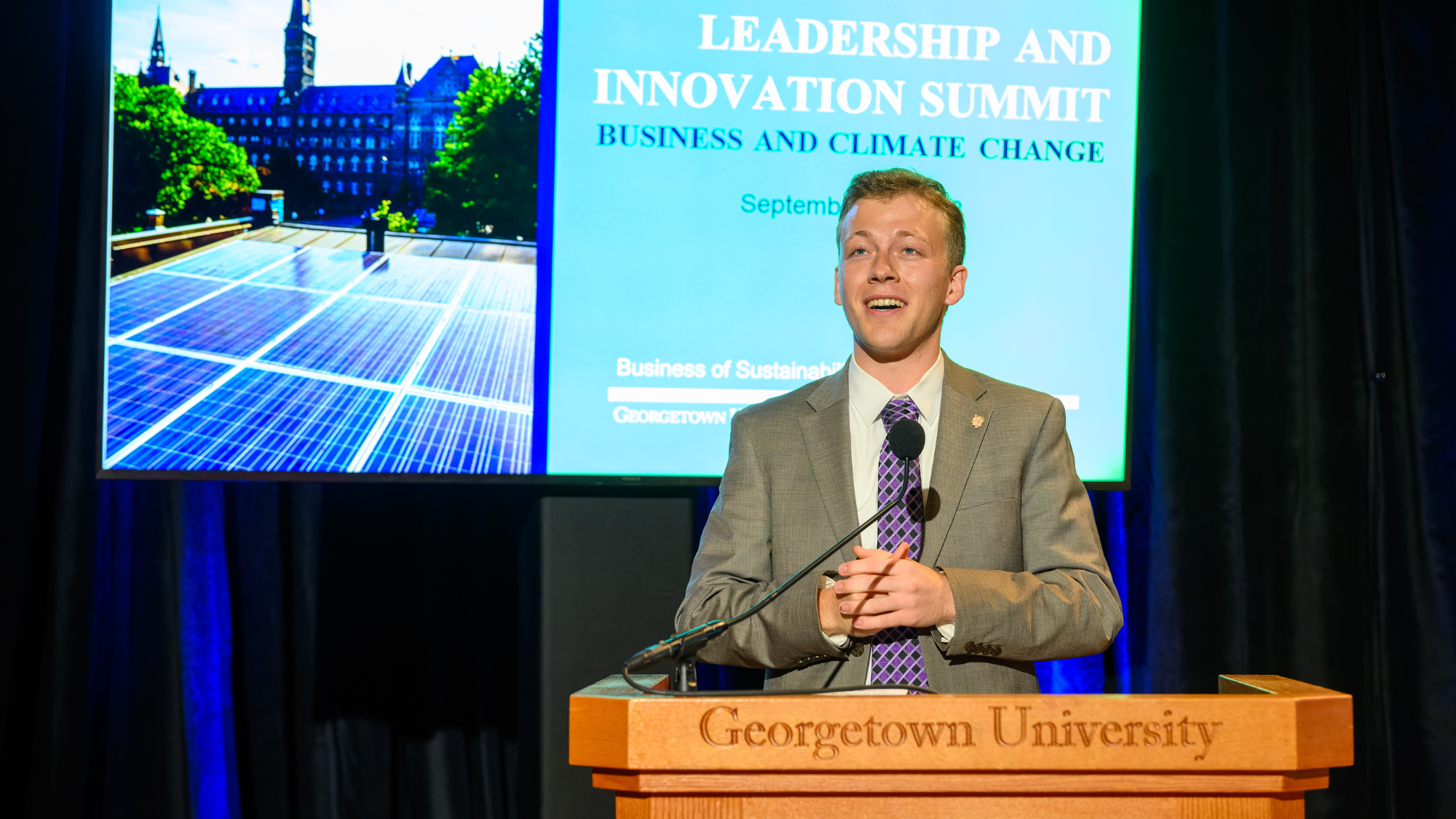
While at Georgetown, I also supported the first Business of Sustainability Initiative Leadership and Innovation Summit focused on voluntary carbon markets. I gained valuable skills in stakeholder outreach and communication: explaining why this market is important and why people should get involved. This work taught me how to communicate a bigger vision, how to bring in new partners, explain why it matters, and collaborate with people from different sectors. It’s a lot like what I do now with utilities and community groups. You’re always explaining, aligning, and inviting people into the work.
What aspects of your work have surprised you?
While the National Labs are hubs for foundational science, looking at how to make things like combustion engines or solar panels more efficient, I’ve also come to learn that there’s a strong focus on technology implementation and development. A lot of that involves communicating research to the public, whether through presentations to the Department of Energy or through technical assistance programs.
I really value the opportunity to engage with people directly, transfer knowledge about different energy technologies, and help them get the funding they need. This work is key in spurring implementation across the United States.
What advice would you give to students or recent graduates who want to work at the intersection of sustainability and large-scale systems like the grid?
Lean on asking questions and be an avid learner. It’s like learning another language; it takes time, but those who succeed are the ones who throw themselves into it unabashedly and lean into the skills they already have. For me, that’s being a bridge builder, staying organized, and making connections that last.
The ability to communicate between technical and non-technical stakeholders is incredibly valuable when you’re engaging with community partners, funders, or clients, and it’s something that the ESM program and Business of Sustainability Initiative really prepares you for. Whether you’re working with developers, cities, or utilities, that kind of connective tissue is vital for collaboration and long-term success.