My Shot: A Master Plan
Trey Davis left a high-profile marketing role to lead Community Forklift, a nonprofit turning salvaged materials into second chances for people, projects, and the planet.
When Trey Davis (MBA’07) left his position as vice president of marketing at the Urban Land Institute (ULI), it wasn’t for prestige or promotion. It was for a warehouse full of salvaged materials — and a mission he couldn’t ignore.
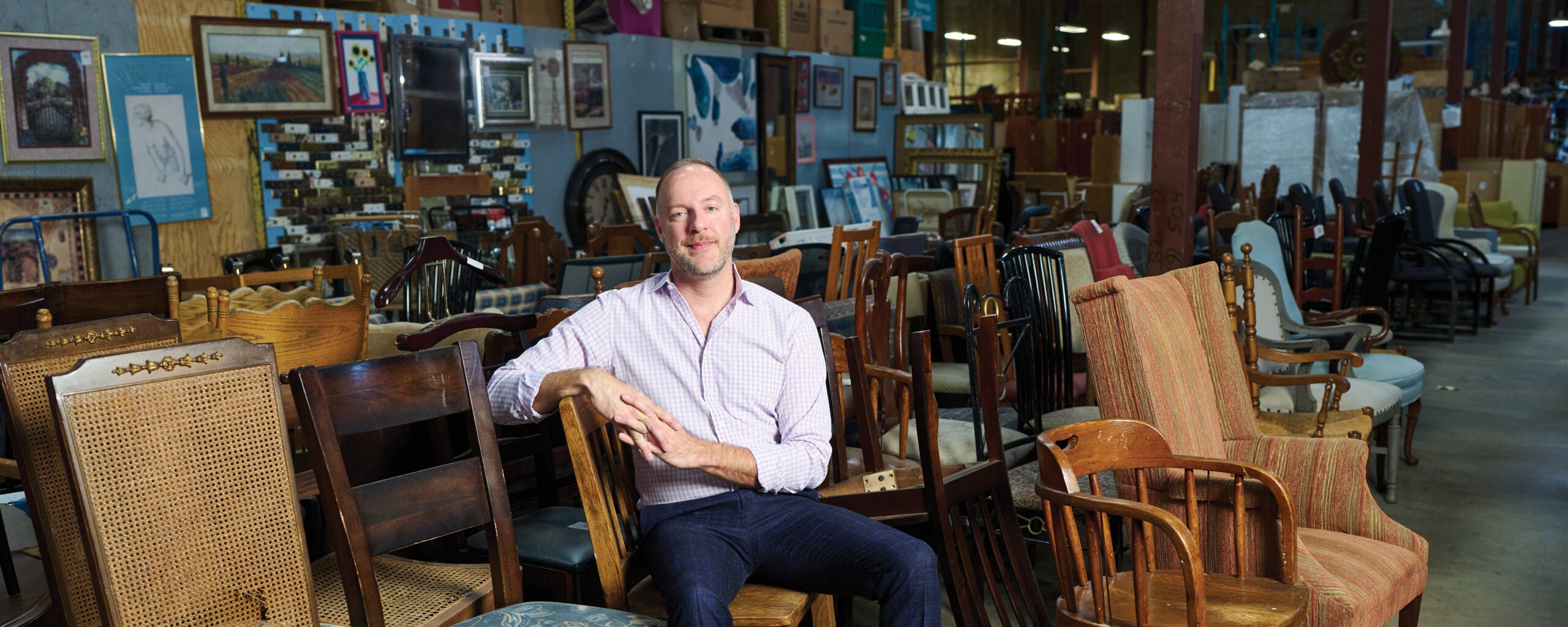
Now executive director of Community Forklift, Davis leads a nonprofit reuse center in Edmonston, Maryland, that turns the D.C. region’s construction waste stream into a powerful community resource. Since taking the role, he’s not only embraced the grit of nonprofit leadership but also reshaped its direction — driven by a desire to build, to serve, and to take the shot that felt most true.
“I could’ve stayed comfortable at a larger organization like ULI, but I wanted my work to have a more direct impact in the community,” said Davis.
Davis didn’t jump blindly. A few months before considering new opportunities, he took a two-week sabbatical at the Penland School of Craft in North Carolina, where he built a wooden canoe by hand. That period of reflection — and sawdust — helped clarify his next move. One that would include a smaller organization with a hands-on element, allowing him to connect people with building/making.
When the opportunity at Community Forklift opened, he called a mentor to discuss the leap to the role of executive director. “She told me they weren’t looking for perfect,” he recalls. “They were looking for someone who cared.”
Since joining Community Forklift, Davis has made bold moves. The organization secured federal funding to modernize operations, digitize inventory, and grow its green jobs workforce. He revitalized its summer First Fridays events — live music and local food trucks in the warehouse parking lot — and is launching a capital campaign to secure a permanent location where it can further expand its impact. A new HR resource and enhanced volunteer efforts are strengthening internal culture, too.
But the real impact is on the ground.
In 2024 alone, Community Forklift diverted over 227,000 items from the landfill, including 1,279 appliances, 11,683 pieces of furniture, and 58 tons of metal. Its Home Essentials Program provided $78,217 worth of materials to 195 low-income households, delivering refrigerators, furniture, and other essentials — often via a newly purchased electric van for clients without access to transportation.
One Anne Arundel County resident, who received a working refrigerator after months without one, told the team, “I was so thankful I went home and cried.”
Community Forklift’s Community Building Blocks program supported 78 grassroots partners with free materials in 2024 — benefiting over 80,000 people in projects ranging from outdoor classrooms to nonprofit cafés.
For Davis, a longtime DIYer, this work is deeply personal. His own home is filled with Community Forklift finds — from a blue 1960s toilet to period light fixtures and a room divider he painted and repurposed to use as his wedding backdrop.
“Reuse is about creativity, history, and care,” he says. “People don’t just come here to shop. They come here to imagine.”
And for Davis, it’s about more than materials. It’s about taking the shot — even if it means stepping out of comfort, into a warehouse, and back into purpose. “Sometimes,” he says, “the safest bet is the one that aligns with who you really are.”
This story was originally featured in the Georgetown Business Fall 2025 Magazine. Download the Georgetown Business Audio app to listen to the stories and other bonus content.