The Storyteller
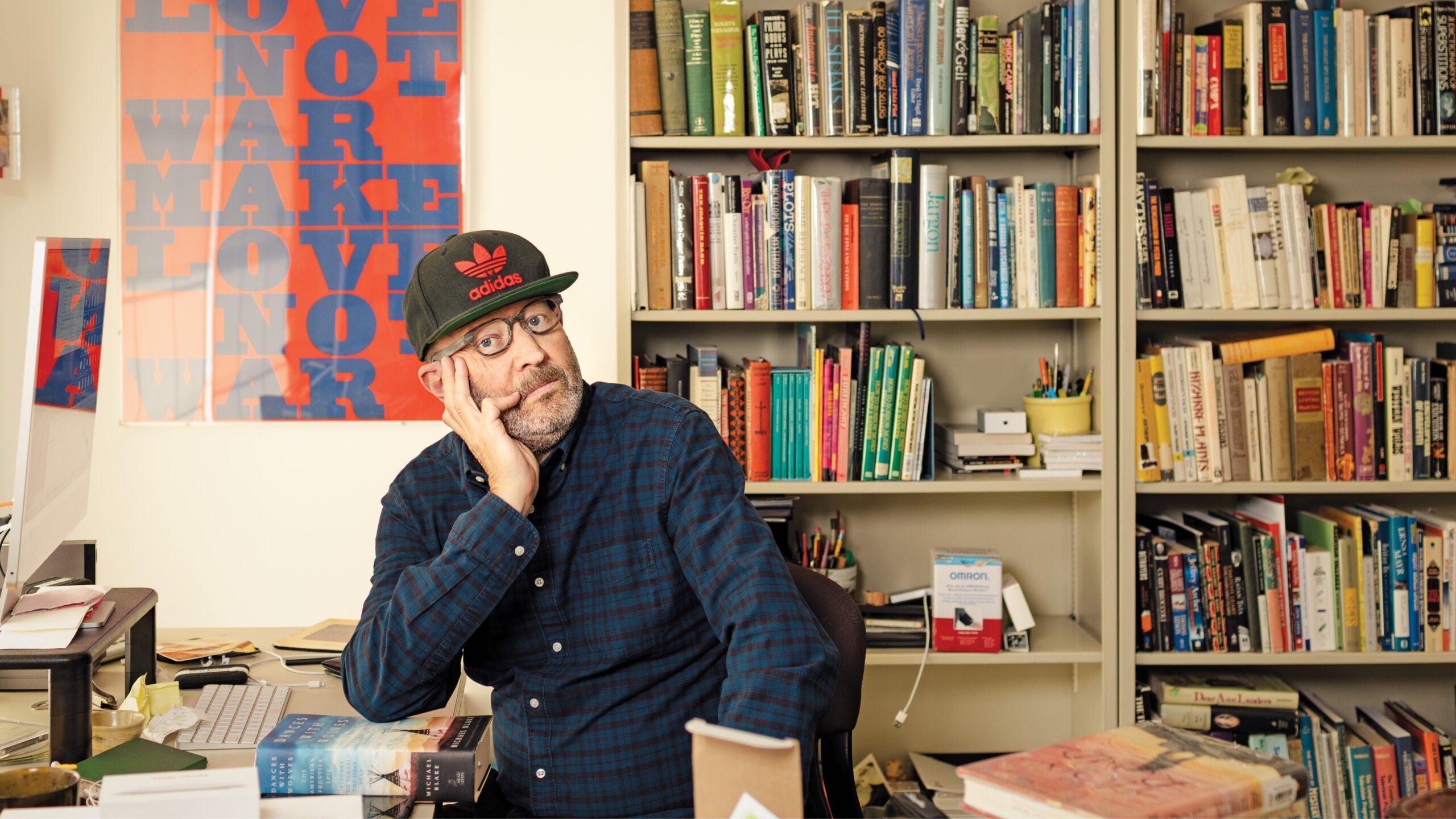
Filmmaker and producer Daniel Ostroff wants his work to be intellectually engaging, certainly, but more important to him is the responsibility he holds in telling people’s stories.
Daniel Ostroff (B’76) loves movies. That’s why, one year after he graduated from Georgetown University’s McDonough School, he was standing in line outside Mann’s Chinese Theatre in Hollywood at 5 p.m. on August 5, 1977: Opening day for George Lucas’ new film, Star Wars. Ostroff was there because he had read an interview with Lucas in which Lucas described his forthcoming movie as a “space opera,” he recalls.
Ostroff needed to see what that was all about.
But maybe it wasn’t movies that Ostroff loved so much. He loved reading, too. So maybe it was the stories. In stories, after all, anything can happen. The dog can save the kid. The guy can win the out-of-his-league girl. In stories, creatures called Wookies with names like Chewbacca fly around with smugglers in beat-up spaceships like the Millenium Falcon. As Ostroff moved through high school and college, he learned that these incredible stories didn’t all live in fantasy and that Lucas had done his homework. “He had read and absorbed lessons from humanity’s past that were universal truths,” says Ostroff.
Ostroff loves the stories from real life, too. There’s the gentleman he met recently at San Quentin Rehabilitation Center who had been violence-free for eight years and refused to play basketball in prison because inmates played the game full-contact. “But he said ‘pickleball is cordial, I’ll play pickleball,’” Ostroff says. There’s the warden he met at another prison who played pickleball in his suit alongside inmates for three hours. There’s the 78-year-old retired banker shows up in prisons across the country to teach everyone inside how to play the sport in hopes that it might aid their rehabilitation.
Ostroff has spent a lot of time reading and viewing stories, as a script reader, as a stage manager at Georgetown, and as a kid sitting inside Mann’s Theatre watching cinema history, but today as an Emmy-nominated film producer and a scholar of American architects and designers Charles and Ray Eames, his role has become the storyteller who tells stories—both fiction and nonfiction—as honestly and as authentically as he can.
If Ostroff were to ever write a book about screenwriting, he already knows what he would call it: “God’s Architecture.” It’s a theory he’s developed over a career in storytelling that God—or the universe or whatever it is you believe is bigger than you—has a way of putting people, events, opportunities, and challenges in one’s life to give them what they need. And it was only recently that Ostroff saw how this theory played out in his own life. “I was definitely one of my own characters,” he says, “because when I was a student at Georgetown, I didn’t know what I needed,” he says.
He had studied at UC-Berkeley for two years and headed back to Washington to work at the Library of Congress. He decided to wrap up his degree at Georgetown, but only saw that degree as a box to check: “You went to elementary school, you went to junior high, you went to high school, then you got a college degree.” His journey through McDonough was driven by something different. His ambition told him to dive into something for which he had little interest. For Ostroff, that was business administration. “I’d been going to the movies every Friday night since I was 10 years old and reading books about the history of movies—I didn’t need that to be a classroom assignment.”

While pursuing his B.S. in business administration, Ostroff stood one day in front of a bulletin board reading various notices. That’s when Donn Murphy, beloved Georgetown theatre professor, came up behind him and offered a simple observation, but one that would affect the filmmaker’s Hollywood career. He said, “I think the Responsibility Quotient is more important than the Intelligence Quotient.”
Ostroff gave him a quizzical look. “Can you be more specific?”
In a quick attempt to offer him some of that coveted responsibility, he said, “You should join Mask and Bauble,” referring to the Georgetown dramatic society, one of the oldest of its kind in the United States. Ostroff took the hint, joined, and Murphy introduced the young student to script-reading and made him stage manager for a production of Thornton Wilder’s “The Skin of Our Teeth.” Ostroff also had a walk-on part. “Mask and Bauble became my world,” he says.
Murphy, who became executive director of the National Theatre, was a trusted mentor, helping Ostroff secure a position reading scripts for producers at the John F. Kennedy Center for the Performing Arts, then an internship that led to a full-time job with Kennedy Center Productions after graduation. “I had had jobs since I was 14 years old, but Murphy arranged for me to have a job in the entertainment business with real responsibility,” says Ostroff.
After starting out as an intern there while still in college, Kennedy Center productions quickly made Ostroff company manager for the U.S. premiere of Tom Stoppard’s “Dirty Linen and New-Found-Land” at D.C.’s West End Theatre and The Kennedy Center’s Eisenhower Theater, and later when the production moved to Broadway. Insight from Stoppard and director Ed Berman stayed with him. “They said, ‘The audience likes it when you reward them for paying attention,’” Ostroff says. His last Kennedy Center Productions job was to oversee the production of Tom Stoppard’s “Travesties” at Boston’s venerable Colonial Theatre.
Ostroff enjoyed theater, but his heart was with movies. So after completing his assignment in Boston, he moved to Los Angeles to take a job in the mailroom of International Creative Management. “You could only work in that mailroom if you had a college degree and two of the seven of us had law degrees,” says Ostroff. “The rule was that if you were still in the mailroom after one year, they would fire you.” Ostroff spent his nights reading scripts for agents and writing summaries. After six months, he was promoted to script reader. Six months after that, he became an agent for writers, directors, and books to film, eventually representing the creators of award-winning films like “The Right Stuff,”“Dances with Wolves,” and “A River Runs Through It.” The final two movies he had a hand in as an agent for the creators were “Space Cowboys” and “Road to Perdition.
After transitioning from a large talent agency, to a medium one and then a partnership, he eventually opened his own agency, The Daniel Ostroff Agency (1987 to 2001). “That’s where I was the most productive as an agent,” he says. Ostroff has also carved out a niche for himself as a historian studying the texts of American architects and designers Charles and Ray Eames. He preserves and shares lessons from their marriage and professional partnership of 50 years and is the longest serving non-family member to work with The Eames Office, where, since 2019, he’s been head of acquisitions and research at The Eames Institute. He produced An Eames Anthology, a highly regarded book published by Yale University Press.
Over the years, the couple’s approach to design has influenced how he approaches his own work. In client meetings, he’d often share a diagram the Eameses referred to as they decided what projects to take on. “I’d sit my client down and I’d show them the diagram or even draw it,” Ostroff says, “And then I’d tell them, let’s select things you have a passion for, but also things that the current market wants and, to follow the Eames example, things that are good for society. It’s simple, but it’s useful to share.” It’s an exercise that’s applicable to creatives considering a project, says Ostroff, but could also extend to business students mulling over a career path. “Charles Eames once wrote, ‘Take your pleasures seriously,’” says Ostroff, “meaning, do for a living what you would do for free.”
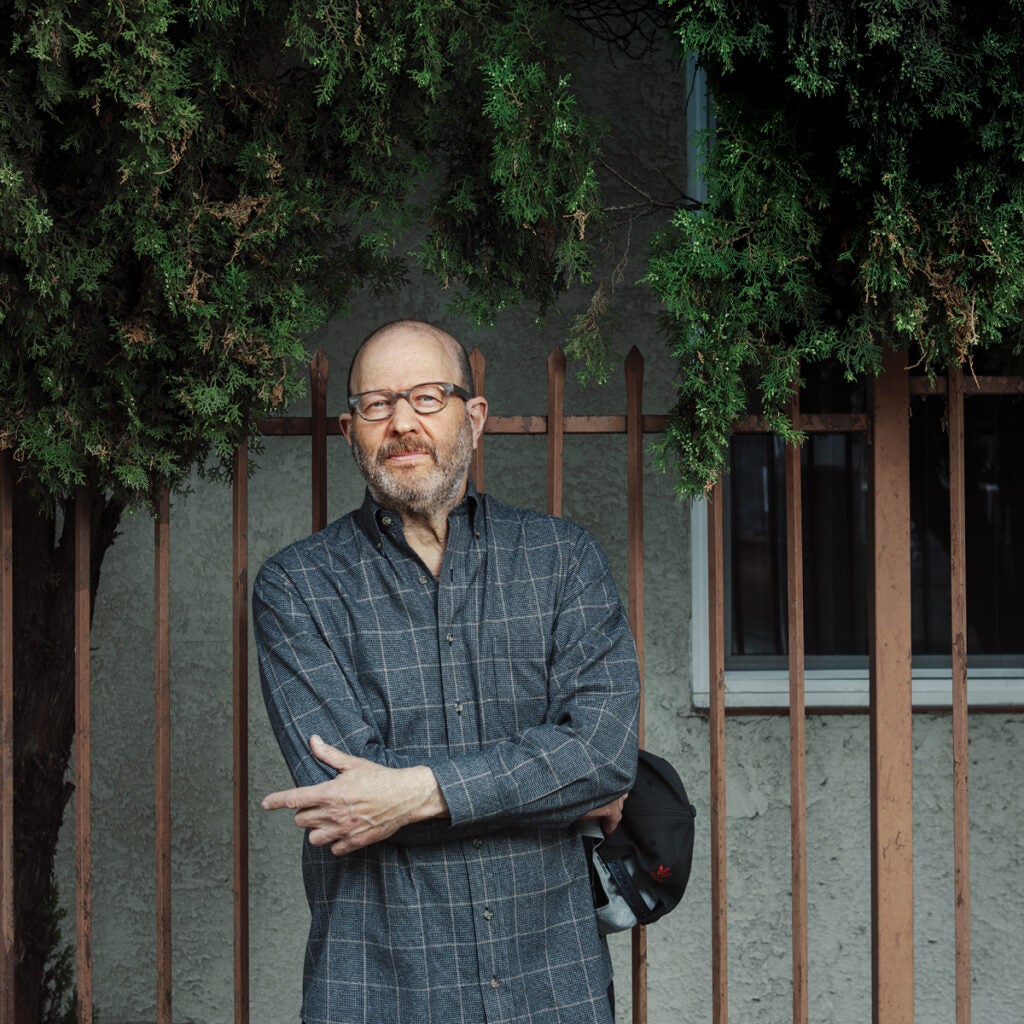
His first movie as a producer, “Snow in August”, was based on a bestselling book by Pete Hamill and the movie received three Emmy nominations. His second was was “Dogtown and Z-Boys.” This award-winning documentary based on a series of stories in Skateboarding magazine, focused a group of kids who revolutionized the sport and built a style of skating that still endures.
Ostroff is working on his second sports documentary now, which was also inspired by something he read, in this case, a Washington Post story headlined “Pickleball’s Latest Court? The Prison Yard.” The story interested him so much that he decided to personally fund a trip to Mexico to meet Roger BelAir, the man responsible for bringing pickleball to prisons, and capture footage of him teaching resort guests how to play pickleball before following him into prisons throughout California where he taught inmates the art of paddle sports.
Throughout Ostroff’s career his intellect was obvious, and he is always applying his responsibility quotient with every project. Even today, Ostroff is slow to answer questions because he isn’t willing to throw out an off-the-cuff thought. He mulls over his ideas, offering an answer only after he has thought through the question entirely.
The pickleball in prison story caught Ostroff’s attention because he’d recently learned how to play, and he and his girlfriend hit the courts on weekends. “I was really struck by all the contrasts in BelAir’s story, his business success and his stature and the environments he chose to go into. He was bringing wiffle balls and beefed-up ping pong paddles into places where bench pressing and basketball were popular. “I liked his vision, and the clear way he articulated what he was doing,” says Ostroff. “There’s drama in conflict and contrast, in this case, the world Roger lives in and the world in which he chooses to volunteer.” For this project, Ostroff selected a crew, including Academy Award-nominated documentary director and cinematographer Vicente Franco, Pulitzer Prize-winning photographer Kim Komenich, and sound man Ray Day. The project’s executive producer is two-time Academy Award-winning documentary director, Malcolm Clarke.
BelAir’s hope is that the game will not only help inmates get physical activity into their day, but that a game accessible to just about anyone may also help in their rehabilitation—learning to work together with teammates, strategizing plays, and communicating. To date, Ostroff has filmed at 10 maximum security prisons. Now he’s raising more money in order to cover the way Bel Air’s impact has expanded. There are now people in 20 more states and Washington, D.C., who were mentored by BelAir and teach in prisons regularly.
Ostroff says, “You do something like this because you want to influence people and discourse. It’s nice to document something that is really positive. Until Roger thought of it, no one realized that convicted felons, and stressed-out correctional officers, need pickleball,” says Ostroff. But Ostroff approaches this project from all angles—telling this story can get sensitive quickly. “We can’t just consider the incarcerated,” he says, “but also the prison staffs and the victims of the crimes that the incarcerated committed.”
Meanwhile, before “Pickleball in Prison” comes out, Ostroff’s “Menace,” the first horror film he’s produced, is scheduled to release in early 2026. The film tells the story of a research student who has a psychotic breakdown and goes to live with her aunt and uncle in a small town. When people begin to disappear, the student questions her sanity. IFC films acquired rights at the Cannes Film Festival.
Today’s world of 24/7 streaming is making it possible for more storytellers to reach new audiences. “What was always a challenge in the past was access to distribution and the cost of production, and that’s no longer the case,” says Ostroff. “If you’re talented—and there’s a legion of really talented people—you can make something terrific and there isn’t a bar to accessing the audience other than your own ingenuity.”
“Now can become a golden age for storytelling,” Ostroff says, “because the amount you can do without a huge budget has radically changed.” Perhaps Ostroff has more aptitude for business than he thought back in the ’70s.
New technologies will only be a boon for storytelling, he adds. For artists, Ostroff sees any technology as a tool. “Oil paint was a new medium when Leonardo Da Vinci painted the Mona Lisa. Artists should use whatever tools are available to them to make the best possible work,” says Ostroff. “But there will never be a substitute for the human heart and imagination.”
Ostroff’s imagination has been on the go since he first read about BelAir. When the team entered their first prison, Ostroff turned to his teammate, Kim Komenich, and said, “Please get me a good photo of Roger smiling. I’ve never seen one.”
The moment came when the Ostroff and BelAir walked into Folsom. “We’re in the middle of the yard, enclosed by guard towers manned by snipers and formidable 150-year-old thick stone walls. BelAir had just been told that the elderly and the infirmed are going to come out and play first,” says Ostroff, “and then Roger looks out—maybe 50 are going to play and 500 tough guys in the yard are watching—and he smiled broadly, naturally, effusively and said, ‘Today is going to be a great day.’” BelAir’s theory, Ostroff knew, was that the paddle sport could do great things for prisoners, but Ostroff also saw in that moment his God’s Architecture theory at work. That smile, captured by photographer Kim Komenich, showed what giving back was doing for BelAir.
This story was originally featured in the Georgetown Business Spring 2025 Magazine. Download the Georgetown Business Audio app to listen to the stories and other bonus content.