Meet Luis Maes: The Sports Leader Who Maximizes Human Potential
Luis Maes, executive director of the Sports Business Program at Georgetown’s McDonough School of Business, has built a career at the intersection of sports, business, and public policy. From early roots in the Washington, D.C., area to leadership roles at organizations like USAID, Nike, EA Sports, and the Kansas City Royals, his journey reflects a consistent throughline: unlocking human potential and building high-performing, purpose-driven teams. Now at Georgetown, Maes is helping shape the school’s growing focus on sports business, drawing on both his professional expertise and a lifelong Hoya connection to prepare students to lead in a rapidly evolving global industry.
How did you choose your career path?
At its core, my career has been about maximizing human potential — helping people and organizations reach their full potential in a way that’s both impactful and purposeful. I grew up right across the bridge in Rosslyn in a bicultural, single-parent home. My mom worked as an executive assistant on Capitol Hill, and she would bring her work home with her! And because we lived in a socioeconomically and ethnically diverse community, I saw firsthand the importance of creating opportunities for others and contributing in a meaningful way.
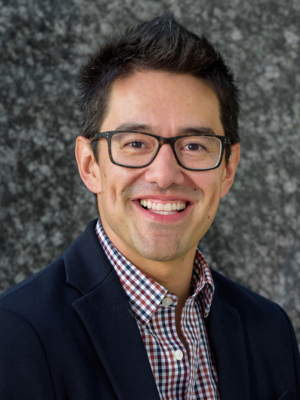
Luis Maes, executive director of the Sports Business Program at Georgetown McDonough
At the same time, I couldn’t get enough of sports. I was always outside playing tennis, soccer, watching games, and some of my most formative memories were actually connected to Georgetown. I remember how much I looked up to the students — it made a real impression on me.
Professionally, my path took me into roles at organizations like USAID, Nike, EA Sports, and the Royals, where I had the opportunity to build programs and initiatives that used sports as a platform for engagement and impact both on and off the field. Over time, I found that I was most energized when I was helping people and organizations perform at a high level while also contributing to something larger than themselves.
This new role at Georgetown brings everything full circle — the place that shaped some of my earliest experiences, combined with the opportunity to help develop future leaders who are both excellent in business and grounded in values, in the spirit of being people in service of others.
What is your personal philosophy?
My philosophy is grounded in three values: passion, curiosity, and servanthood. Passion is the energy that comes from doing work that is deeply aligned with purpose; curiosity is what allows me to listen, learn, and understand both people and systems at a deeper level; and servanthood is the belief that leadership is ultimately about helping others grow, succeed, and become more than they thought possible.
I lead as a coach, focused on developing individuals while building strong, aligned teams – and I pair that with a strong emphasis on clarity, making sure everyone knows what success looks like and how their work contributes to it. What motivates me is the intersection of impact, innovation, and continuous improvement; the ability to build something meaningful while constantly getting better. There is no finish line!
What drew you to Georgetown for sports business?
On a personal level, some of my earliest and most formative sports memories were coming to Hoyas games as a kid. My mom would drop me off at Yates Field House, and I’d take the bus with students to games in Landover. Those experiences stayed with me and gave me an early appreciation for the community, values, and spirit of the university.

Maes as an early Hoyas sports fan
I’ve also long admired Georgetown’s ethos — going back to seeing Coach John Thompson take principled stands and lead in a way that reflected both excellence and service. That intersection of high performance and values-driven leadership has always resonated with me.
Strategically, I believe Georgetown has huge potential in the sports business. Georgetown sits at a unique intersection of global business, policy, and values-driven leadership that I think is unmatched. McDonough brings tremendous academic credibility and core strengths in areas like finance, strategy, marketing, data, and analytics — all of which are central to where the sports industry is headed.
The global dimension is especially compelling. Sport today is an international industry, and Georgetown is uniquely positioned to prepare students for leadership in a global marketplace through its reach, reputation, and international orientation. The Washington, D.C., location is also a major differentiator since the sports industry increasingly intersects with policy, regulation, AI, media rights, and economic development. Being in a global city where those decisions are actively shaped gives students extraordinary access.
Finally, the donor and alumni network — starting with the extraordinary commitment behind this program — gives Georgetown the ability to build not just a curriculum but a full ecosystem of access, mentorship, research, and career pathways.
How are you influenced by Georgetown’s Jesuit values?
Georgetown’s Jesuit values align closely with how I’ve tried to lead throughout my career.
The concept of cura personalis, or care for the whole person, especially resonates with me. In every role I’ve had, whether at Nike, EA Sports, or the Royals, I’ve been motivated by maximizing human potential both on the field and off the field.
I’m also deeply influenced by the Jesuit idea of contemplation in action — the discipline of thoughtful reflection paired with decisive execution. That balance really mirrors how I’ve operated professionally: taking the time to think rigorously, align stakeholders, and understand the broader context, while also moving teams toward clear outcomes and action.
How has sports business evolved throughout your career?
Historically, the sports business was more event-centric and locally driven, with revenues focused on ticket sales, sponsorship, merchandising, local media rights, fan engagement, and game-day operations. Much of the value creation was concentrated around the live event itself.
Today, that has evolved into a much broader platform model where teams and leagues operate as entertainment, media, data, and increasingly real estate businesses. As such, the revenue streams are much broader: media rights, streaming partnerships, global brand activations, sports betting, data and analytics, venue districts, hospitality, and direct-to-consumer fan engagement. We’re also seeing sports become a truly global industry and cultural platform, employing millions of people around the world and playing a significant role in both popular culture and the global economy.
What’s especially exciting is that sports now intersects with sectors like private equity, venture capital, media technology, gaming, and urban development, which means the career pathways for students are dramatically broader than they were even 10 years ago. In many ways, the industry has evolved from a team business into a full ecosystem business.
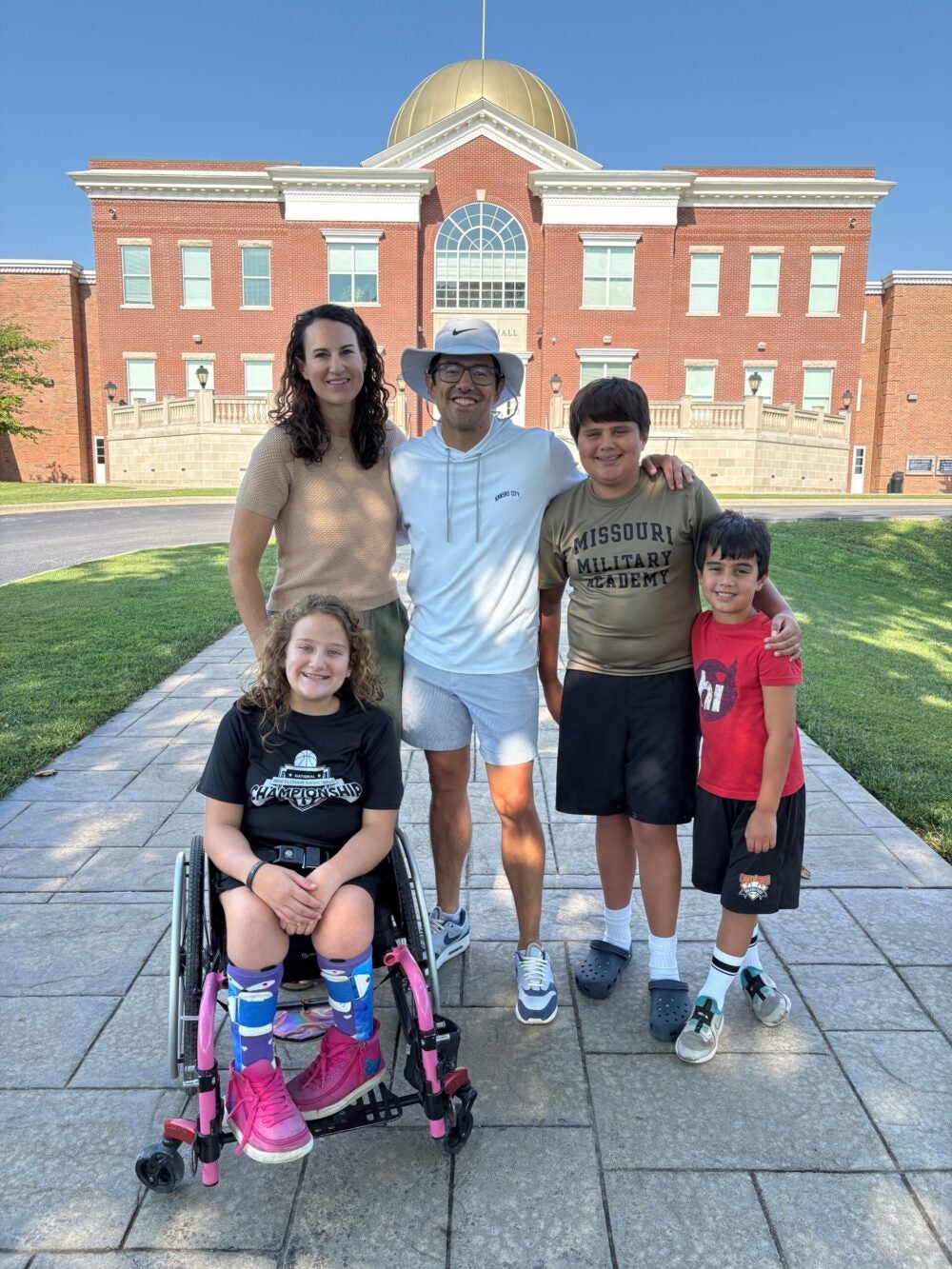
Maes with his wife and kids
What can we find you doing outside of Georgetown?
Outside of work, you will most likely see me hanging out with my family and friends! My wife played D-I basketball, and my three kids all play sports, so when we hang out it’s usually either playing or watching sports. I used to be a decent tennis player and on occasion have been known to binge-watch a TV series or two…
How would you describe the sense of community at Georgetown McDonough?
What has struck me most is how welcoming and uplifting the community feels. People have consistently gone out of their way to help, which reflects a culture rooted in care, generosity, and service. It also feels deeply student-centered — there’s a real sense that decisions are made with student growth and formation in mind, which to me reflects Georgetown’s Jesuit values in action. And beyond that, there’s a positivity and sense of pride that permeates the community. People genuinely seem happy to be here, and that creates a special energy across the school.
What do you hope students gain from the Sports Business Program?
I hope students gain three things: rigorous business acumen, meaningful industry understanding and exposure, and a strong sense of purpose as leaders. We want them to understand sports as a rapidly growing global market and as a platform that intersects with larger business and societal trends. Most importantly, we want them to leave not just as future professionals in sports, but as thoughtful, values-driven business leaders prepared to shape the industry. We want students to graduate ready not only to enter the industry, but to lead it.