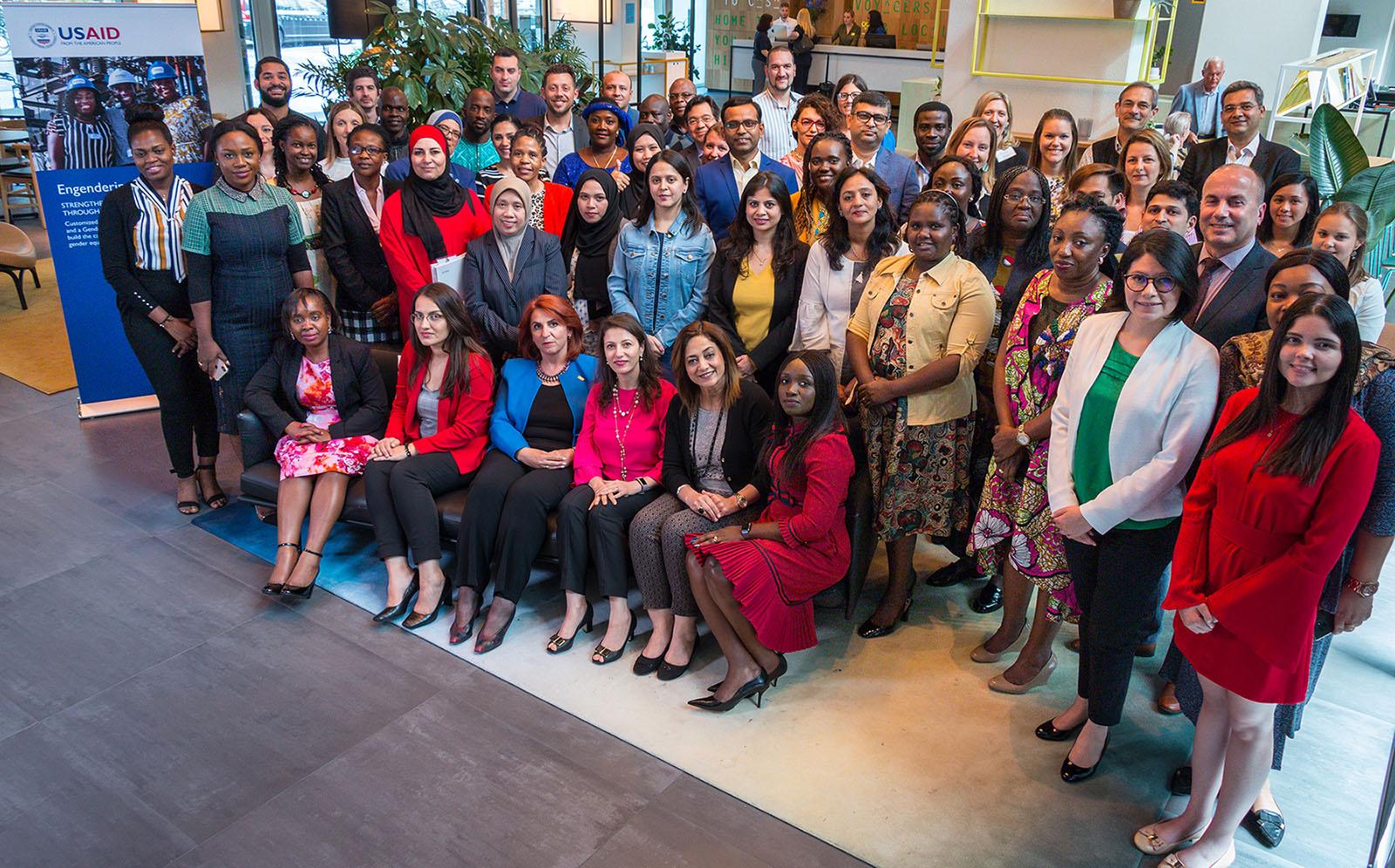
As part of USAID’s Engendering Industries initiative, Georgetown University’s McDonough School of Business will deliver a Gender Equity Executive Leadership Program to employees from 17 energy utilities from around the world in Amsterdam this July. The first group to complete the program in 2018 included 21 participants from companies in Georgia, Jordan, Kenya, North Macedonia, and Nigeria.
The Gender Equity Executive Leadership Program, developed in collaboration with USAID and Georgetown McDonough’s Executive Custom Programs team, trains leaders at energy utility companies across the world to adopt gender equitable practices throughout the human resources lifecycle.
“Because women represent one-half of the potential workforce, organizations that fail to recruit, select, and develop female talent will be at an operational disadvantage in the future,” said Brooks Holtom, the program’s academic director and professor of management at Georgetown McDonough. “This program has helped participants think deeply about how they can positively contribute to the active recruitment, development, and retention of women in male-dominated positions and industries.”
Following their participation in the Georgetown program, and through dedicated coaching from organizational change management and gender equality experts, the first cohort of partner utilities are recruiting, retaining, and promoting more female employees. In addition, the first group of seven utilities have adopted or refined Equal Employment Opportunity (EEO) policies to create a more inclusive work environment. Engendering Industries partners also are addressing pay inequity in their companies, and offering flexible work schedules and child care programs to support parents.
The Gender Equity Executive Leadership Program begins with a weeklong, in-person module in Amsterdam, and concludes with another in-person module at Georgetown in 2020. Between these sessions, participants take part in four virtual modules, consisting of both live and recorded sessions. The program culminates in a capstone project in which participants present a strategic analysis and implementation plan to improve gender equality at their respective companies.
“The program has changed my perception of various aspects of my job as head of organizational development, which includes policy formulation, recruitment, and manpower planning. I have learned to consider gender equity in all aspects,” said Osinubi Oyinlola, a 2017-2018 participant from Nigeria.
The Gender Equity Executive Leadership Program topics examine each step in the HR employee lifecycle, including best practices in gender-equitable hiring, HR compliance and reporting, payroll and administration, employee development, benefits, risk management, and separation/retirement. USAID’s initiative is tracking gender equality outcomes alongside business impact, such as increased retention and employee satisfaction.
By the end of December 2020, the Engendering Industries program will engage with 17 partner utilities from 14 countries, and more than 50 utility employees and leaders will complete the USAID/Georgetown Gender Equity Executive Leadership Program. These employees will have a chance to influence nearly 50,000 men and women in the 17 partner utilities, and to impact and improve gender equality policies and workplace culture.
Summer Internship Spotlight Series: Paulina Pellecer Aguilar (MBA’27)
August 6th, 2026
Each year, our students spend their summers in Washington, D.C., across the nation, and around the world working in corporate, nonprofit, and government organizations. Meet a few of our graduate and…
Pivot: Growth Practice
July 9th, 2026
A former teacher turned consultant expanded her impact by staying true to her values.
Kelly Bies (MBA’18) didn’t set out to work in consulting. In fact, when she began her career, she was…
MBA Class of 2026 Celebrated for Leadership, Service, and Academic Excellence at Annual Awards Gala
May 28th, 2026
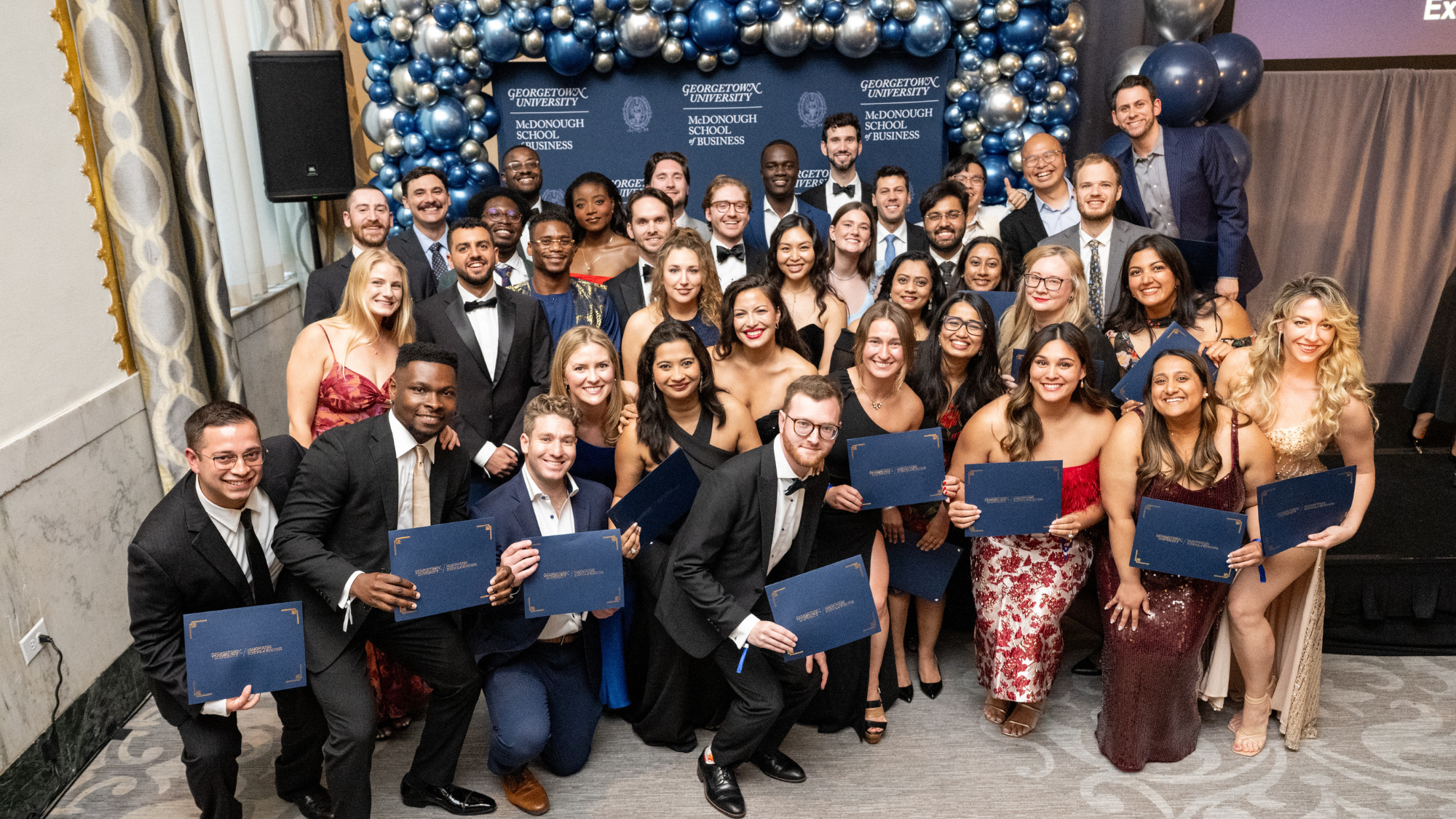
Georgetown’s McDonough School of Business honored the MBA Class of 2026 during the annual MBA Awards Gala, recognizing graduates who made exceptional contributions to the school and broader MBA…