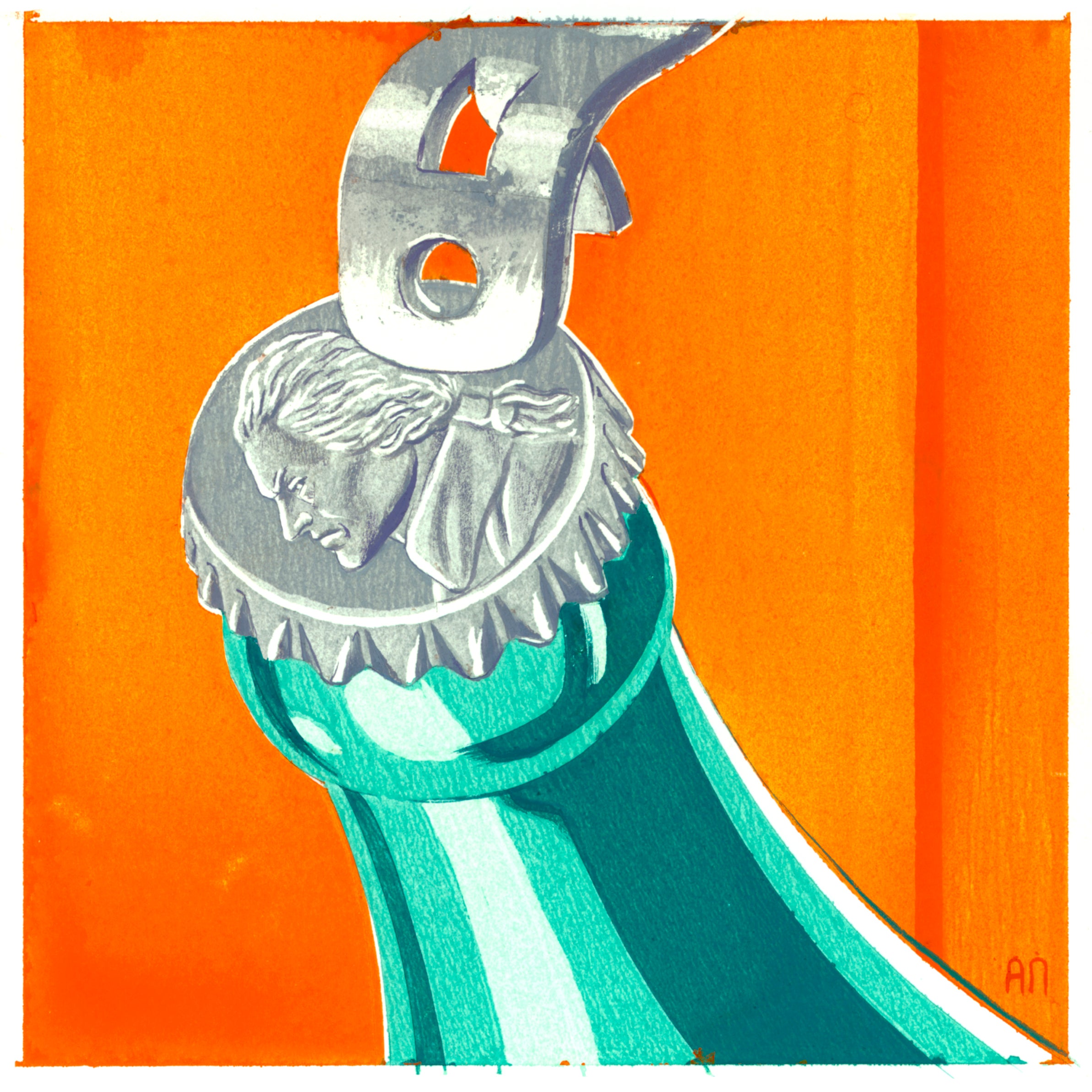
The Edge: All Fizzled Out
Can a soda tax really change the way consumers purchase sugary drinks – and more importantly, does it last? In Cook County, Illinois, a short-lived soda tax offered a rare opportunity to observe what happens when government policy attempts to nudge everyday choices. What unfolded during – and after – the tax’s brief lifespan sheds light on how pricing may (or may not) influence behavior across different households. A new study dives into this natural experiment, raising deeper questions about the long-term power of public health interventions – and who they actually reach.
Anita Rao, Beyer Family Associate Professor of Marketing, shares more about these findings in the study “How Do Tax Policies Impact Health-Relevant Purchasing? Evidence from a Temporary Soda Tax.”
How did you get started in the field of data science applied to marketing?
I’m an empirical researcher who enjoys using data to find answers to questions at the forefront of policymaking — especially when I suspect there might be some sort of deception that could harm consumers. Lately, I have become particularly interested in topics related to health and nutrition because I constantly question what we eat and put into our bodies.
You recently studied the impact of tax policies on the consumption of sugary drinks, specifically soda. What were your findings?
We started from the premise that soda taxes have been proposed and used as a tool to encourage healthier consumer behavior, and we wanted to understand whether their effects are temporary or long-lasting.
We studied the case of Cook County, Illinois, where a soda tax was introduced and later repealed. This allowed us to analyze consumer behavior and identify patterns in the data. Using household-level purchase data, we observed a reduction in sugar-sweetened beverage consumption during the period the tax was in effect, on average per household.
However, this decrease contrasted with strategic stockpiling by the general population before the tax was implemented — something we had not expected. Additionally, purchases largely returned to previous levels once the tax was repealed, resulting in a net-zero impact on the general population of consumers.
Another significant finding was that for diabetic households, the tax did reduce purchases in all periods impacted by the tax. The tax led to an initial decline among diabetic households prior to the tax, a large decline during the tax, and a sustained decline post-tax. It was as if it served as a reminder or a nudge to change behavior. For people who knew these drinks were not good for them but struggled to stop buying them, the tax might have given them a reason to do so and adopt healthier habits.
What implications does your research have for the design of public policies aimed at generating long-term changes in consumer behavior?
In such cases, companies will definitely find ways to adapt and influence behavior — such as launching new options or adjusting prices — so we cannot know for sure what will happen in the long term. However, I believe when more information is provided, behavior can change for the better.
How can we interpret this action from a consumer psychology perspective? For example, is there a connection when prices increase?
Yes, and it is quite interesting. While not the main focus of the study, we observed that several manufacturers raised prices during the tax period. We also saw anticipatory consumer behavior – typically seen with big-ticket items like TVs, computers or airline tickets, where planning ahead saves money.
Surprisingly, even for this low-cost item, consumers acted in a forward-looking way, which reflects a very interesting aspect of consumer psychology. A one-cent-per-ounce increase may feel significant, possibly because the tax is perceived as a fine or punishment for something they didn’t do – something to avoid.
Another implication is that manufacturers may be trying to influence consumer perceptions toward policymakers’ actions by raising prices simultaneously, thereby amplifying the perceived impact of the tax.
How do you see the role of fiscal interventions as catalysts for social innovation? And do you think these taxes could also be seen as a business opportunity for brands committed to health and sustainability?
Especially now, there is more social and governmental pressure for products to be healthier, and that is a good thing. Most of this change must come from consumers in order to influence companies to produce healthier foods.
What makes a policy or a change strategy truly transformative? In your opinion, what role do repetition and context play?
The most relevant factor is context and whether consumers genuinely want that change. For example, in Berkeley, California, residents voted in favor of the tax, unlike in Chicago, Illinois, where there was pressure to repeal it. The way consumers perceive the tax — whether they see it as something helpful or harmful — is key. Context and what consumers demand are very important.
What lessons do you think are worth sharing to help consumers make healthier purchase decisions?
We should make more informed decisions, even in the absence of regulation. I read the ingredients list on a product — not just the front of the package where firms might only highlight the good features of the product.
Ironically, we live in a time where access to information is very easy, but at the same time, there are all kinds of information, which sometimes makes it harder to find the truth. That is why the better-informed consumers are, the more likely they will be to make healthier decisions.
This story was originally featured in the Georgetown Business Fall 2025 Magazine. Download the Georgetown Business Audio app to listen to the stories and other bonus content.