Living the Case Study: Experiencing Global Business Firsthand in Washington, D.C., and Abroad
Margo Spiritus (IBP’25), a McDonough Student Ambassador, enrolled in the Master of Arts in International Business and Policy (IBP) program with a career spanning emerging technology, entrepreneurship, media, government, and more. Here, Spiritus shares how the real-time and hands-on learning in the IBP curriculum is preparing her for the next chapter of her professional career.
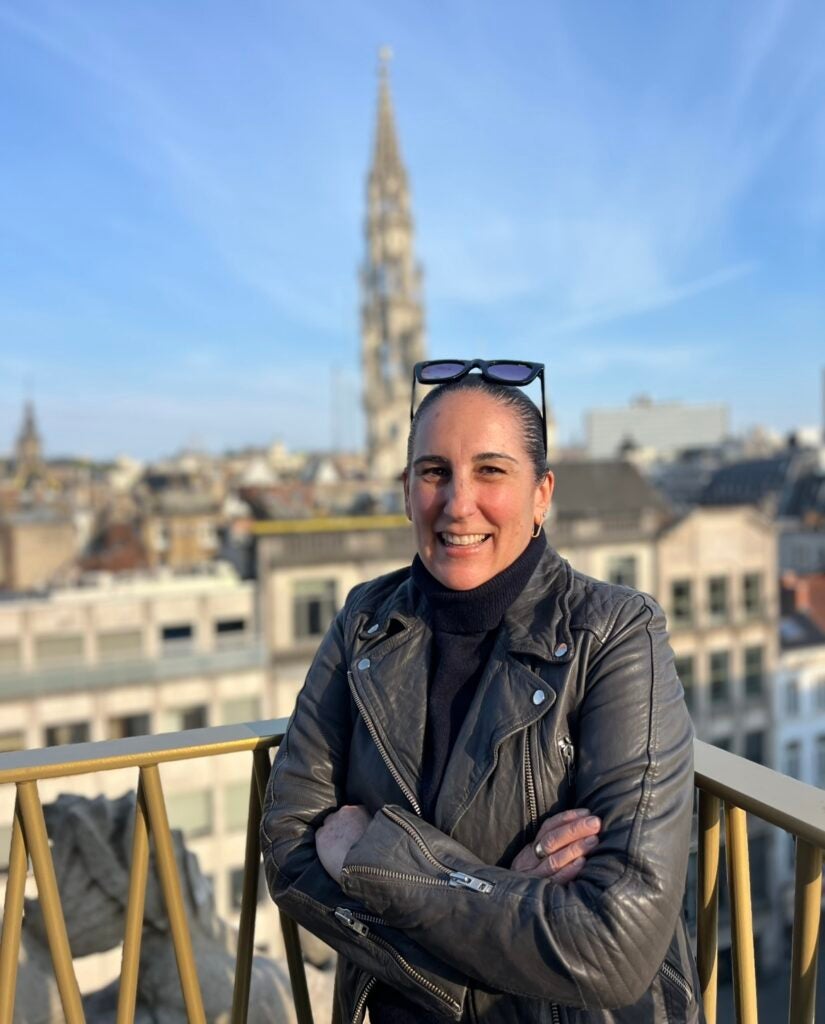
Margo Spiritus (IBP’25) in Brussels
Building a Foundation in Global Affairs
I began my career in Washington, D.C., at just 22 years old. After being part of a successful presidential campaign, I worked at the Department of Commerce on international trade missions, bringing CEOs from the United States to markets like Egypt and Jordan to expand access and opportunities. Soon after, I moved to the West Wing of the White House, where I worked in the president’s office, a fast-paced environment filled with brilliant people tackling big, complex challenges. It was an early education in how policy decisions ripple across economies and lives, sparking a lifelong interest in global affairs. Eventually, I was drawn to emerging technology, where for two decades I built, launched, and scaled category-defining companies. Most recently, I served as managing partner and chief marketing officer of a prominent venture studio, working alongside famed futurist Neal Stephenson and leading technologists, including the first chairman of the Bitcoin Foundation, to incubate tech-forward companies (e.g., AI/web3).
Over time, my professional experiences taught me that building companies from idea to profit-and-loss isn’t just about product or market fit – it’s about navigating complex systems: capital markets, regulatory landscapes, geopolitical tensions, and cultural change. When I began my career, policy, business, and technology were distinct worlds. Today, Silicon Valley, New York City, and Washington, D.C. are all inextricably intertwined. It’s no longer enough to be a strong operator; leaders must also understand the forces shaping the global environment. That realization brought me back to Georgetown for the IBP program, which blends the strengths of one of the world’s most respected foreign service schools with a top-tier business school. Eight months in, Georgetown has exceeded every expectation.
Real-Time, Applicable Learning Experiences
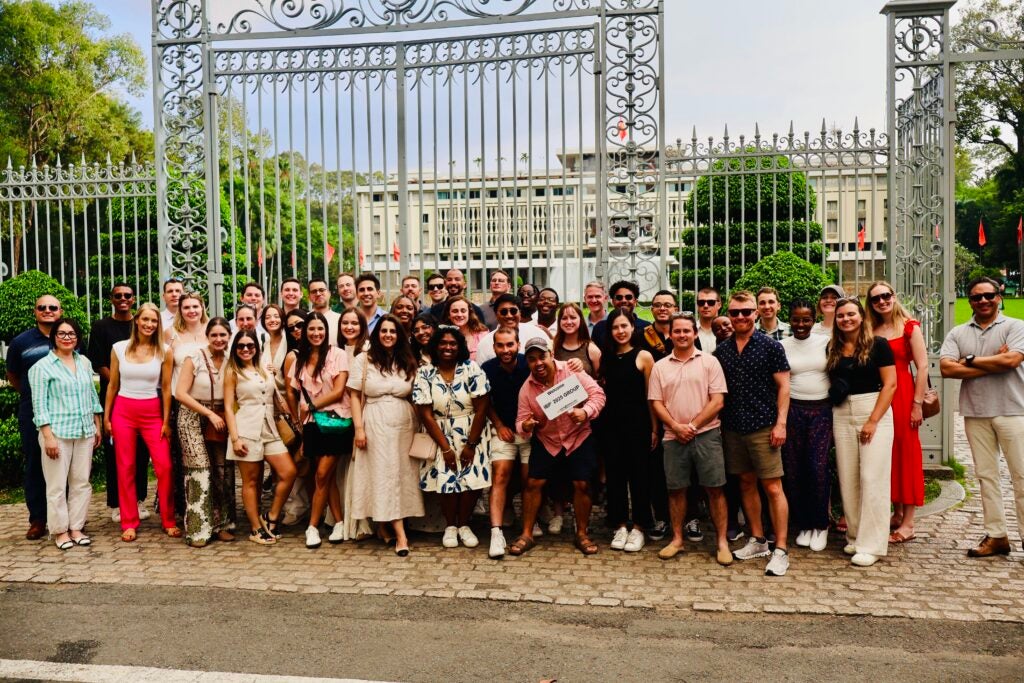
IBP Class of 2025 visit Ho Chi Minh City
I arrived on campus five days after the 2025 Presidential Inauguration, unsure of what lay ahead. What I didn’t expect was how closely our coursework would mirror the headlines unfolding just blocks away from the classroom. While the White House reshaped tariffs, we were studying trade and globalism with Professor Marc Busch, one of the leading experts on international commerce. As debates flared over the Federal Reserve, we were immersed in monetary policy and fiscal frameworks with Professor Brad Jensen. When tensions escalated in the Middle East, Ukraine, and China, we were studying great-power politics, nuclear deterrence, and the Prisoner’s Dilemma with Professor David Edelstein.
It’s one thing to study frameworks, case studies, and policy in a classroom, and another to apply them in real time. Nowhere was this more powerful than during our two international residencies, which brought the dual DNA of our program – business and policy – into sharp focus.
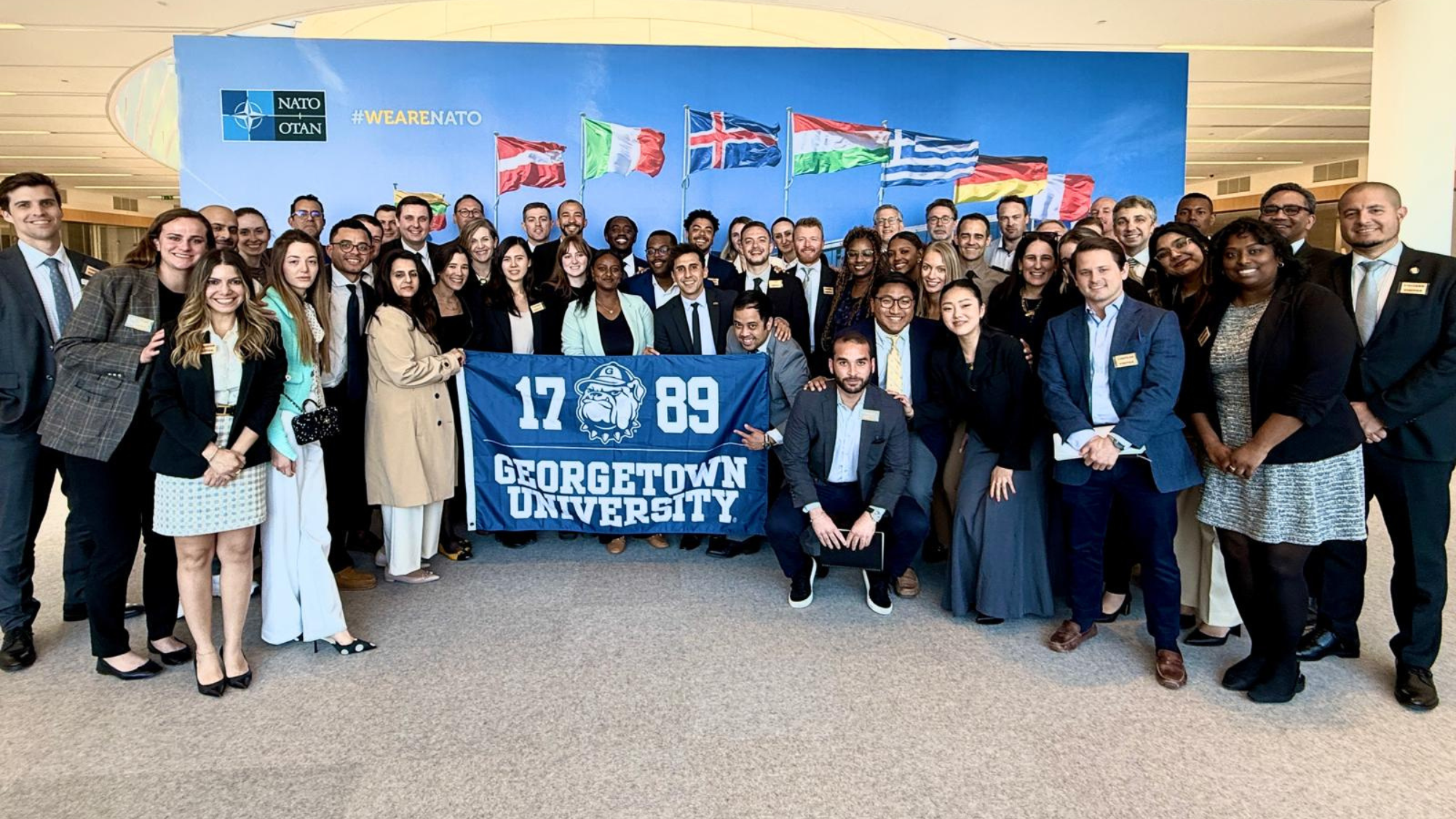
In Brussels, we spent the day at North Atlantic Treaty Organization (NATO) headquarters with diplomats grappling with the challenges of the Russia–Ukraine war. At the European Commission, we engaged with senior policymakers on defense, security, and competitiveness while dissecting the Draghi report, a sobering assessment of Europe’s innovation gap and its declining competitiveness relative to the United States and China. And as the U.S. president pressed NATO allies to increase defense contributions, we sat across the table from European Union leaders discussing industrial capacity, public–private investment, and the urgent need for transatlantic alignment.
Two months later in Vietnam, we saw one of the world’s fastest-growing economies and rising tech powerhouses at a pivotal moment in global trade realignment. We visited the country’s first tech unicorn, toured advanced automation factories supplying Nike, Puma, and New Balance, and explored an electronics assembly plant supplying global automotive, industrial, and medical companies, learning from their executives along the way. We also heard from an entrepreneur building an AI school for the next generation. At the crossroads of manufacturing, innovation, and geopolitics, we witnessed firsthand how U.S. policy, regional tensions, and corporate strategy converge on the ground.
Looking Forward With New Insights
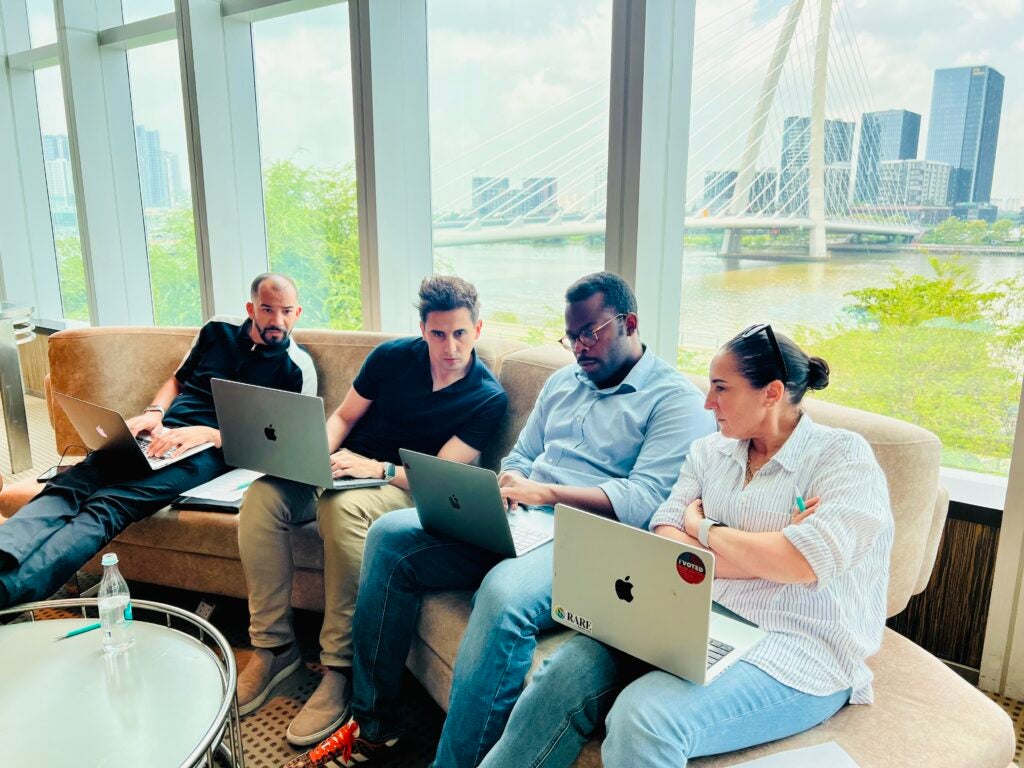
Spiritus and IBP classmates collaborate on a group project
Returning to graduate school after building a successful career was a leap of faith, and the best decision I could have made. My classmates collectively speak more than 26 languages, span three decades in age, and include diplomats, military officers, congressional and administration staff, and private sector leaders. They have challenged and expanded my thinking in profound ways, offering perspectives I couldn’t have gained anywhere else. My professors, all experts in their respective fields, have made every part of my learning experience rigorous and deeply rewarding.
At Georgetown, I also have the great privilege of serving as the first current-student entrepreneur-in-residence at Georgetown Entrepreneurship, where I’m able to draw on my extensive startup and innovation experience to support the next generation of Hoya founders as they turn ideas into new ventures.
Today’s world requires leaders who can operate at the intersection of business, technology, and global policy. Companies can no longer ignore the risks that emerge when markets and politics collide. Thank you, Georgetown, for helping me to prepare for my next chapter – one where I hope to bridge the public and private sectors to drive innovation.
-Margo Spiritus (IBP’25)