Executive MBA Expands International Locations for Signature Global Business Experience Consulting Projects
For the first time, Executive MBA (EMBA) students at Georgetown’s McDonough School of Business traveled to two separate international destinations as part of the school’s signature Global Business Experience (GBE), bringing semester-long consulting projects to life in Vietnam and South Korea.
A cornerstone of the EMBA curriculum, the GBE gives students the opportunity to work directly with international organizations on complex business challenges before traveling abroad to present their recommendations in person. This year, teams explored challenges spanning market strategy, manufacturing, sustainability, health care, and artificial intelligence, while gaining firsthand insight into the cultures and business environments shaping two dynamic economies.
“The Global Business Experience is what makes business education at McDonough tangible,” said Nick Lovegrove, academic director of the EMBA program. “Our EMBA students are already accomplished professionals but the GBE puts them in situations where their experience alone isn’t enough. Through client interactions and cultural experiences onsite, our students move beyond what they can learn from research and understand what it’s truly like to work in a complex and dynamic global business setting. I am grateful to our GBE faculty – professors Bardia Kamrad, April Nguyen, and Michael Ryan– along with our program staff, for making this experience possible for our students.”
Putting Strategy Into Practice
In Vietnam, students worked with organizations across industries, tackling challenges that required them to combine rigorous analysis with firsthand observation.
Trails of Indochina, a Southeast Asian destination management company.
Nancy Martin’s (EMBA’27) team partnered with Trails of Indochina, a Southeast Asian destination management company, to assess whether the company’s emerging luxury golf travel business represented a viable growth opportunity. The team initially anticipated recommending a flagship golf product, but their time in Vietnam reinforced their conclusions.
“Our recommendation was: lead with culture, not golf,” said Martin. “Golf is the reason travelers come. Culture, luxury, and seamless execution are the reasons they remember and return.”
The team ultimately concluded that Trails of Indochina’s greatest competitive advantage was not access to golf courses, which could be replicated, but its longstanding relationships and reputation for hospitality. Their recommendation was to build on those strengths rather than separate golf from the company’s broader luxury travel offering.
For Martin, that insight emerged as much from being in Vietnam as from the team’s market research.
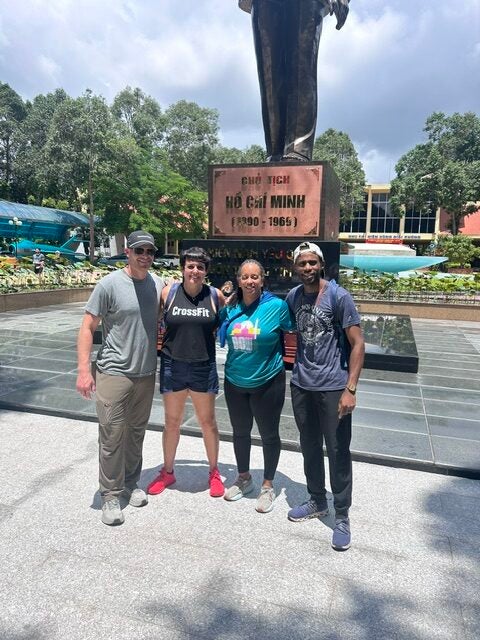
Martin and her EMBA team exploring Ho Chi Minh City during their Global Business Experience trip to Vietnam.
“Ho Chi Minh City is where it clicked and not in a boardroom,” she said, describing interactions with local guides, grab drivers, hotel staff, and shopkeepers. “Every interaction, at every level of service, led with hospitality.”
Another team worked with Framas Vietnam, a footwear technology manufacturer outside Ho Chi Minh City, to address production waste. The team discovered that frequent machine color changes required material to be flushed through the machines, creating significant waste as brands increasingly placed smaller orders across more colors.
Rather than recommending new equipment or additional staff, the team developed a scheduling approach that would dedicate a small group of machines to smaller color orders, allowing the remaining machines to run longer without switching. Their analysis indicated that the approach could reduce color changeovers by nearly half and total waste by roughly one-third. The team also recommended training and simple floor displays to help employees understand how their production lines were performing.
For Aja Flewelen (EMBA’27), that experience reinforced the importance of looking beyond the numbers.
“Research told us where the waste was. Being on the ground told us why,” she said.
Exploring Innovation in South Korea
In South Korea, EMBA teams tackled challenges at the intersection of technology, health care, and international growth.
John Shorter’s (EMBA’27) team partnered with Sun Medical Center to explore how artificial intelligence could create measurable operational value within the organization’s Health Checkup Center. Rather than simply identifying potential uses for AI, the team focused on how the technology could be integrated into an existing workflow to improve patient flow across 18 examination stations.
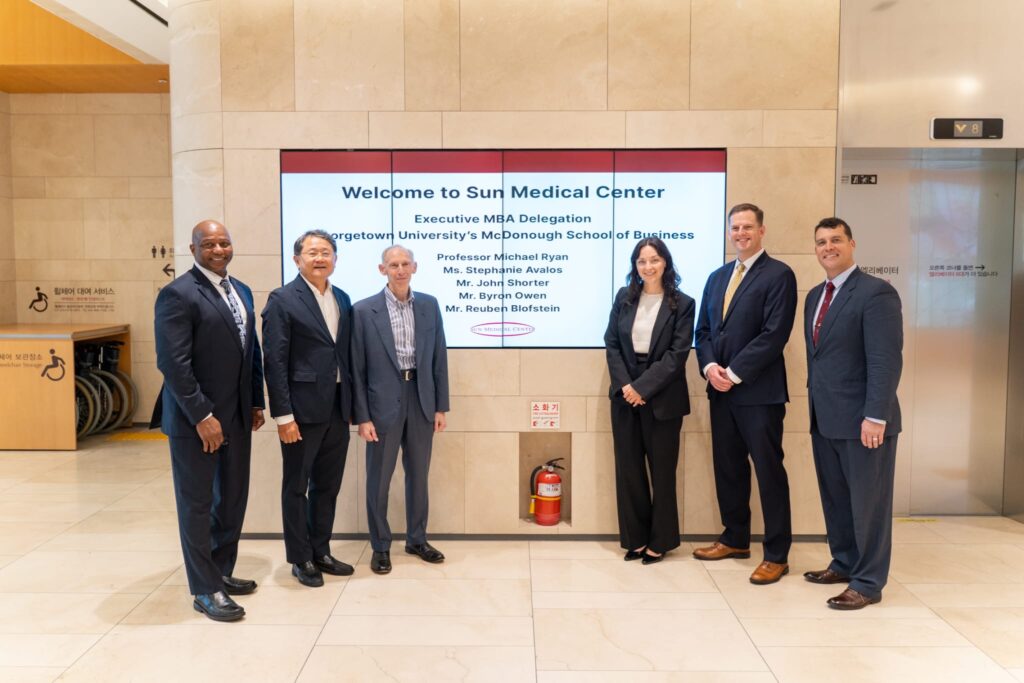
Shorter and his team preparing to present their projects to Sun Medical Center in South Korea.
The team developed a client-ready pilot concept and interactive demonstration focused on current-state visibility, forecasting, recommendations and scenario modeling. The prototype used entirely synthetic data and was designed as a demonstration rather than a deployed Sun Medical system.
“Successful AI transformation starts with understanding the operating process, not with the technology,” said Shorter.
Being inside the medical center changed the team’s understanding of the challenge. While data could identify where delays occurred, observing the facility firsthand revealed the human decisions behind patient movement, from how nurses redirected patients to how staff responded to congestion and exceptions.
“AI creates value when it becomes part of the operating workflow, not when it simply sits on top of it,” said Shorter.
Other EMBA teams in South Korea partnered with organizations including Byucksan Corporation, a manufacturing company, on its U.S. market strategy and long-term growth opportunities, and Medtronic on questions surrounding reimbursement for AI-enabled health care.
Bridging Business Strategy and Culture
While the consulting projects differed, students consistently found that being immersed in Vietnam and South Korea provided insights that research alone could not offer.
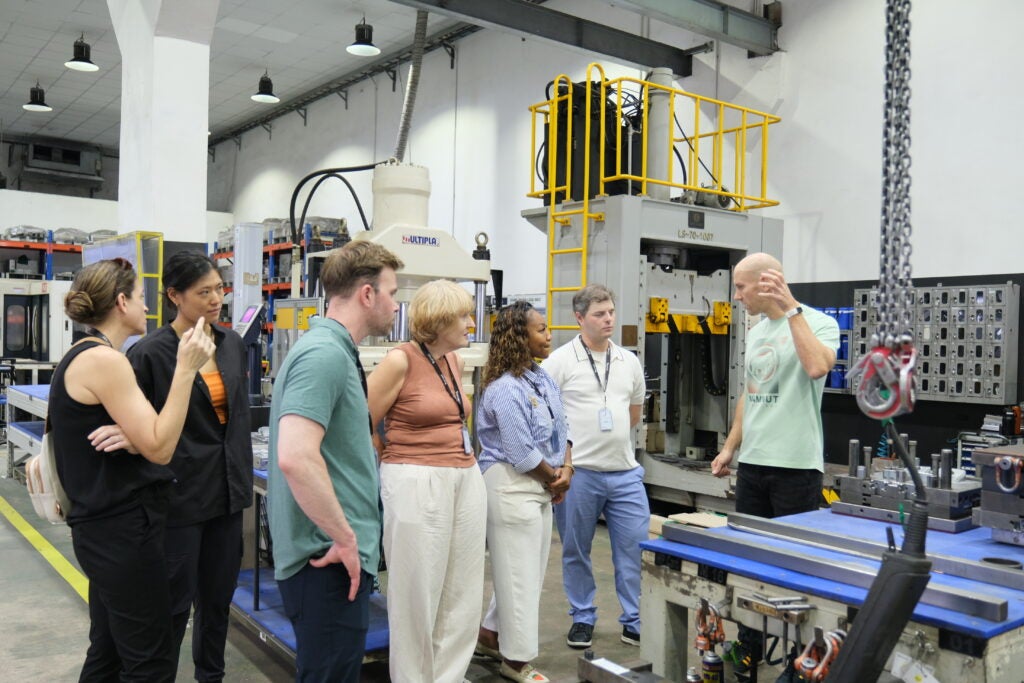
Flewelen received a tour of Vietnam Framas and its footwear manufacturing site, guided by the team’s clients.
For Flewelen, Vietnam demonstrated the resilience and agility of a country undergoing rapid economic development. Conversations with local vendors and encounters throughout Ho Chi Minh City became as meaningful as formal company visits.
“The Vietnamese people are proven examples of resilience while still being agile,” she said. “Vietnam is at an inflection point: already a force in the global economy and clearly headed toward stronger growth and innovation.”
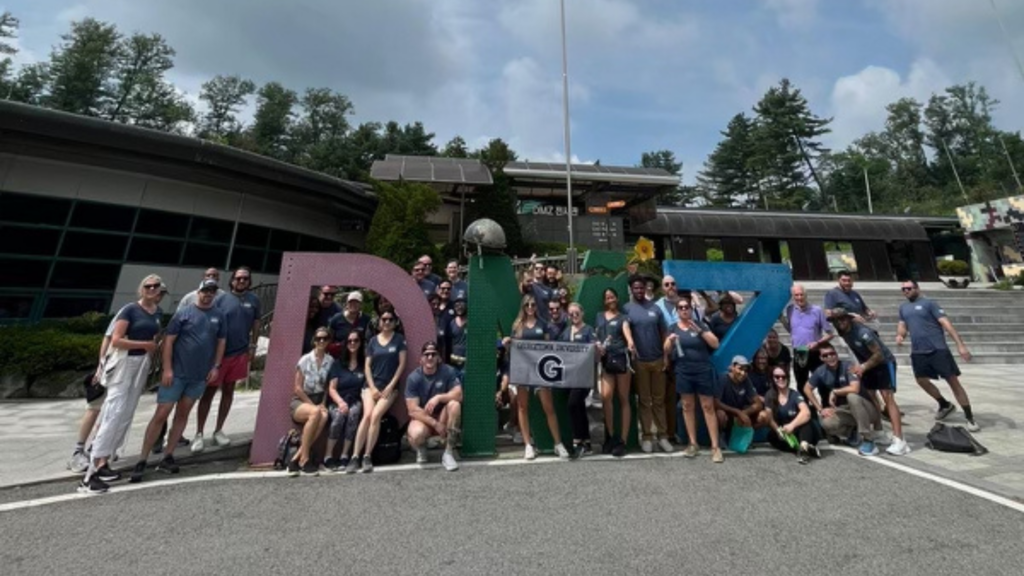
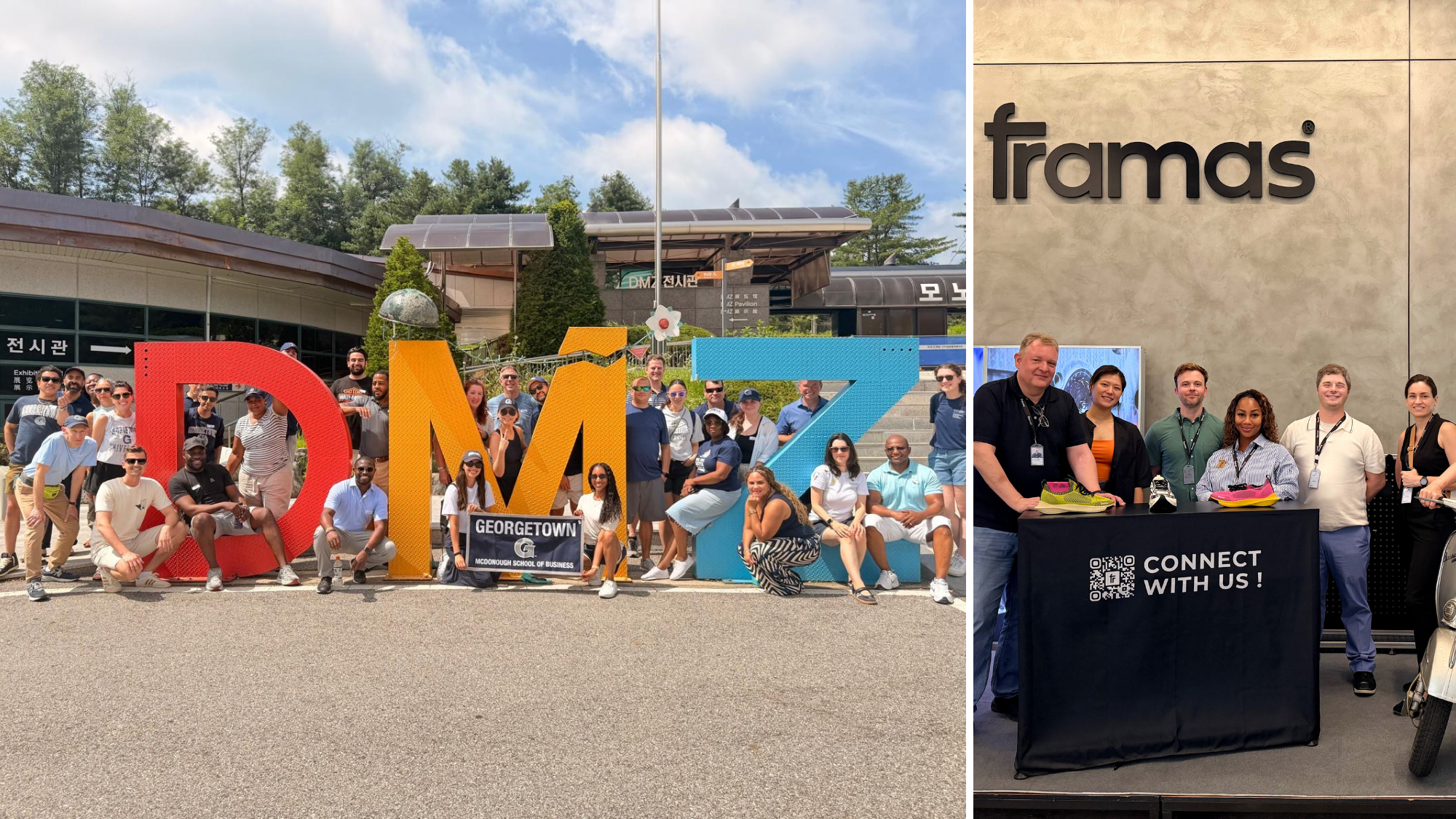
In South Korea, Shorter was struck by the country’s combination of technological sophistication, speed, hospitality, and respect. Visiting Sun Medical Center, sharing meals with clients, and traveling to the Korean Demilitarized Zone gave students opportunities to understand the country through its institutions, history, and people as well as its economy.
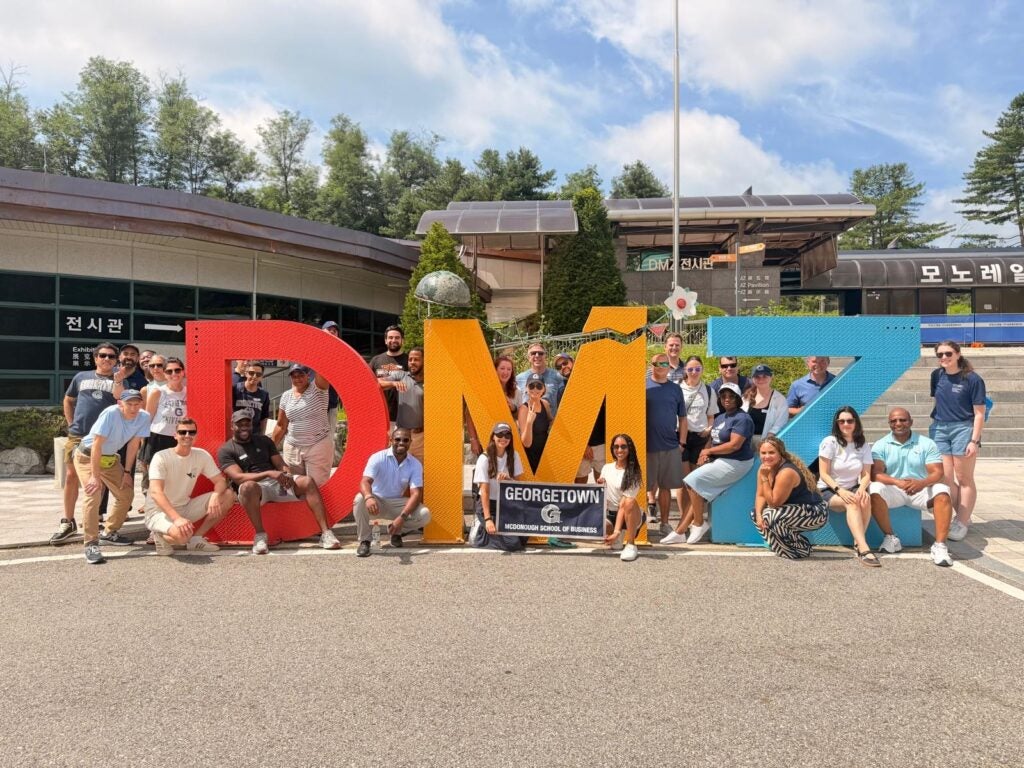
The South Korea EMBA cohort visited the Korean Demilitarized Zone during their in-country cultural experience.
“Understanding a business environment requires understanding the history, culture, institutions, and people around the organization, not only its economics and technology,” said Shorter.
The experience also reinforced the importance of adapting business concepts to local contexts.
“Global leadership is not taking what works in the United States and applying it somewhere else,” he said. “The experience reinforced the importance of curiosity, humility, and adaptation.”
Learning Beyond the Classroom
For many students, the GBE served as a reminder that the most important business insights can emerge when leaders are willing to question their assumptions.
Martin said her experience in Vietnam changed how she thinks about leadership and service.
“A global leader leads with culture,” she said, describing the importance of immersing oneself in a new environment and adapting business concepts to fit the place rather than forcing the place to fit the concepts.
Flewelen similarly identified curiosity as the most important skill she relied on during the engagement.
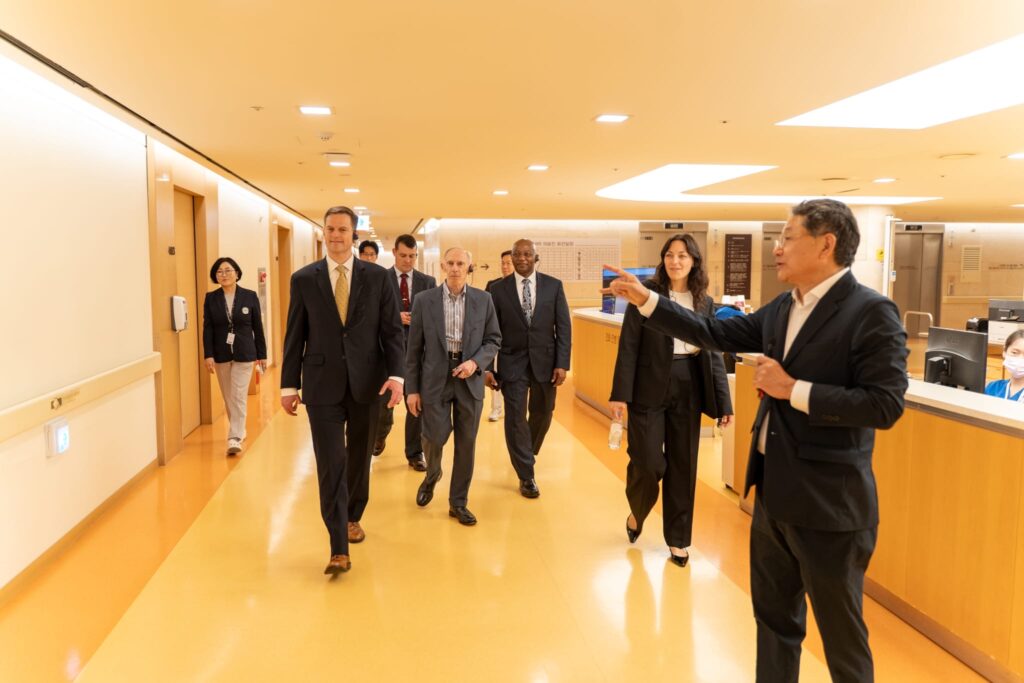
Shorter and team met with executives, physicians, nurses, and operational leaders during their tour of Sun Medical Center.
“The most valuable moments of the engagement came from questions I asked when I thought I already knew the answer,” she said.
Shorter found that listening, rather than technical expertise, was the most important skill during his AI-focused engagement. The team had to listen carefully to executives, physicians, nurses, and operational leaders and translate those perspectives across people, processes, data, and technology.
Together, the experiences emphasized a central lesson of the GBE: effective global consulting requires understanding how traditional business frameworks interact with the people, systems, and cultural context of each organization.
Preparing Globally-Minded Leaders
As students returned from Vietnam and South Korea, they brought back new perspectives on leadership, problem-solving, and the complexity of operating across borders.
For Martin, Vietnam offered lessons she plans to carry into her own plans to build an international wellness center. In particular, the importance of making service part of an organization’s culture.
“Hospitality isn’t a department; it’s a posture, and it shows up in every interaction whether anyone is watching or not,” she said.
Shorter plans to apply his experience to his work in AI transformation, carrying forward the idea that organizations will increasingly need to understand their workflows, identify friction, redesign processes around AI where appropriate, and measure outcomes before scaling solutions.
The students also offered a consistent piece of advice to the next cohort of EMBA students: prepare thoroughly, but be ready to have your assumptions challenged.
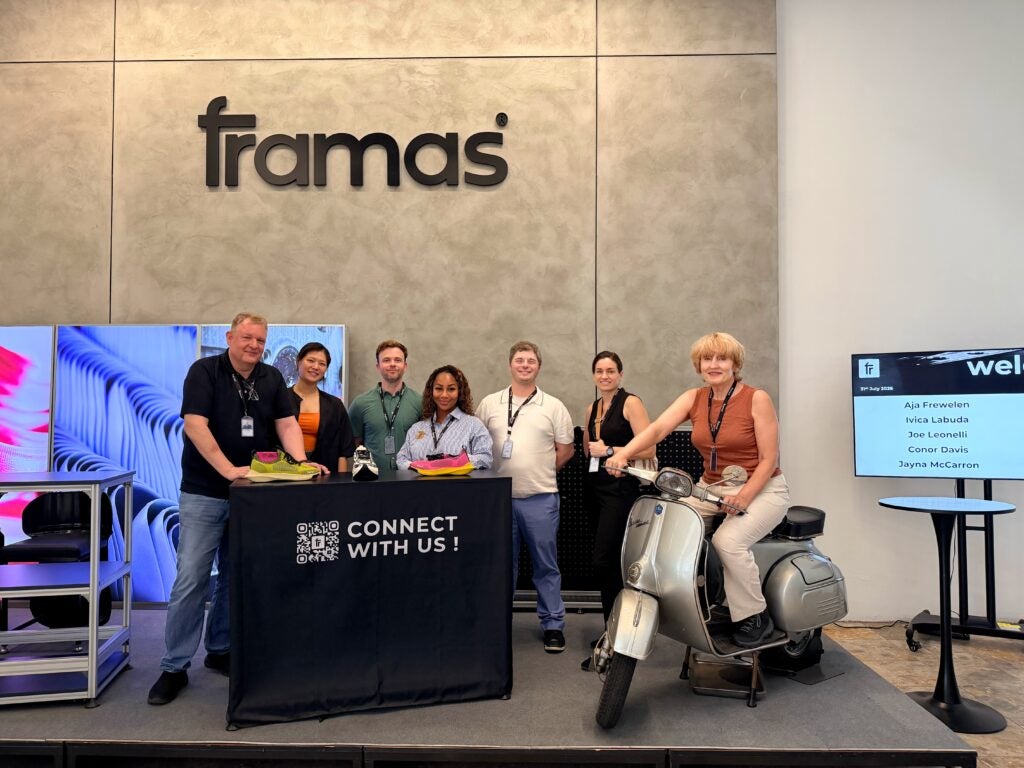
The EMBA team after the tour of Vietnam Framas.
“Check your assumptions at the door: about your project, the people, and the culture,” said Flewelen. “The value of being there is everything the data couldn’t tell you. Stay open long enough to be wrong.”
From Shorter’s perspective, that means treating the GBE as more than an academic exercise.
“Do the preparation, but arrive ready to have your assumptions challenged,” he said. “Treat the Global Business Experience as more than an academic project. Approach it as a real consulting engagement with a real client.”
Through their work in Vietnam and South Korea, this year’s EMBA students experienced firsthand how strategy, technology, and business fundamentals take on new meaning in different cultural and economic contexts – preparing them to lead with greater adaptability and confidence in an increasingly interconnected world.