Meet Caroline Nguyen: The Executive Who Drives Global Impact
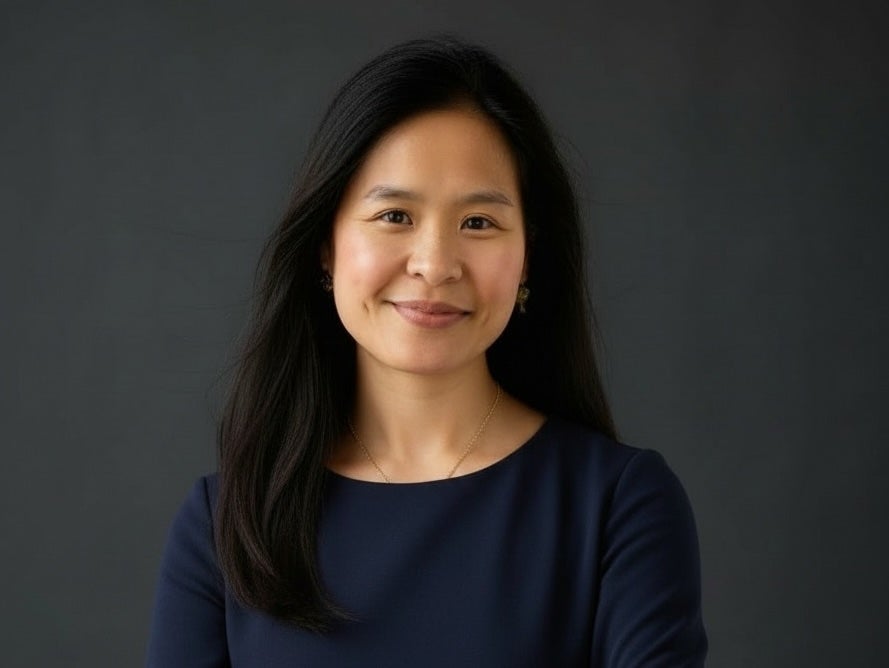
Caroline Nguyen, the new executive director of the Baratta Center for Global Business Education, joined Georgetown McDonough after two decades driving strategy and execution across the public and private sectors. She previously served as managing director at the Millennium Challenge Corporation, where she led a $2B+ international portfolio overseeing senior teams and delivering complex infrastructure and policy investments across Europe, Asia, and Latin America. Prior to that, Nguyen worked at McKinsey & Company where she led strategy teams on transformative projects with private and public sector leaders across Southeast Asia. Now, she will take her passion for global business and engage with student fellows in the classroom and through co-curricular experiences on the Hilltop.
Caroline Nguyen
How did you choose your career path?
My career path has been anything but straightforward — and that’s been partly by luck, and partly by design. I started as a litigator at a law firm, moved to legal policy at the U.S. Department of Justice, and eventually shifted into strategy, operations, and global affairs for both the private and public sectors on four continents.
Through all the changes in my career, my north stars have been “mission” and “impact.” At each decision point, I asked myself two questions: Which option lets me use the most of my skills to make the biggest difference on something meaningful? And which option will teach me something new — a fresh perspective, a new sector, a capability I don’t yet have?
That’s why I kept crossing boundaries — between sectors, disciplines, and geographies. Complex challenges don’t fit neatly into one box, and the leaders who can connect dots across business, policy, and global affairs — who can translate between worlds and see the big picture that siloed experts miss — are the ones who end up driving real change.
What is your personal philosophy?
Particularly since becoming a parent, my mantra has been “It’s a process.” Focus on learning and growth, and don’t dwell too long on good-faith mistakes (by yourself or others). Always seek new challenges, environments, and adventures that help you become the best version of yourself.
What will students be surprised to learn about you?
I used to be a bartender (and manager of the graduate student bar at Princeton) and have my own trademarked drink.
What can we find you doing outside of Georgetown?
I enjoy running and have two kids, Felix (11) and Fiona (8), so you’ll frequently find me running after my kids in some way. Chances are also good that you’ll find me cooking or baking with my daughter. The upshot is that occasionally, if you are lucky, you will find cookies in my office that I hope you will enjoy!
How have you been influenced by Georgetown’s Jesuit values?
Justice and service are two of the Jesuit values that resonate the most with me. My parents were refugees from Vietnam (my mom’s family was among those that migrated from the communist-controlled North Vietnam to Saigon (now Ho Chi Minh City) in 1954 to avoid persecution due to their faith). I grew up in Germany until the age of 12 when we emigrated to the United States. Our lives as refugees were not easy at first. As someone who has benefitted from the generosity of others and has, in turn, been in a position to give back, I try to use my capabilities, time, and energy on efforts that advance societal good.
What has been the biggest change to the (global) business world since you started working?
The most significant change has been the fracturing of the world order that has shaped global business for decades. From the end of World War II, international business operated within a relatively predictable framework with shared rules, institutions, and U.S.-led alliances that made cross-border trade and investment more stable and predictable. That foundation is now cracking. The rivalry between the U.S. and China, the rise of multiple regional power centers, and ongoing armed conflicts around the world have made the global business environment far more uncertain and complex.
As a result, companies need to really consider geopolitics when making strategic and operational decisions, including choosing which markets to enter, where to manufacture, how to manage and diversify supply chains, and which assets to invest in. It’s a very different world, and the ground will continue to shift!
What are you most looking forward to joining the community at Georgetown McDonough?
I am really looking forward to engaging with students! Their energy, talent, and spirit are palpable, and I want to do all I can to help each of them grow and succeed on their chosen journeys. As someone who has navigated a non-linear career, I can say with confidence that there is no single “right” path, and that some of the most fulfilling careers involve pivots along the way. That’s part of the fun of life – and I’m happy to be a sounding board and share perspectives along the way.
I am also looking forward to getting to know and working with all the faculty and staff — it’s wonderful to be in a community of accomplished, engaged, thoughtful, and kind individuals!
What is the one thing you hope students take away from being part of the Global Business Fellows program?
The world is changing fast — geopolitical competition and technological disruption are reshaping business in ways that demand a totally different kind of leader. What I hope Global Business Fellows take away is the instinct to lean into that complexity rather than shy away from it, to see geopolitics not as background noise but as part of the playing field, and to understand how policy, business, and global affairs all connect and shape what’s actually possible for companies, governments, and people. That mindset — built through our Global Business Labs, treks, real conversations with world-class leaders, and other programming — is what will set them apart and fast-track them to the top.
What is the one thing you recommend a student does before graduating from their program?
Spend time with your cohort and really get to know your classmates. It is rare to be surrounded by so many people who are smart, interesting, thoughtful, and kind — take advantage of it while you still can! The friendships you make here are likely to be some of the most enduring, supportive, and valuable relationships you have as you progress through your lives and careers.
Related Content
Business and Global Affairs, Events
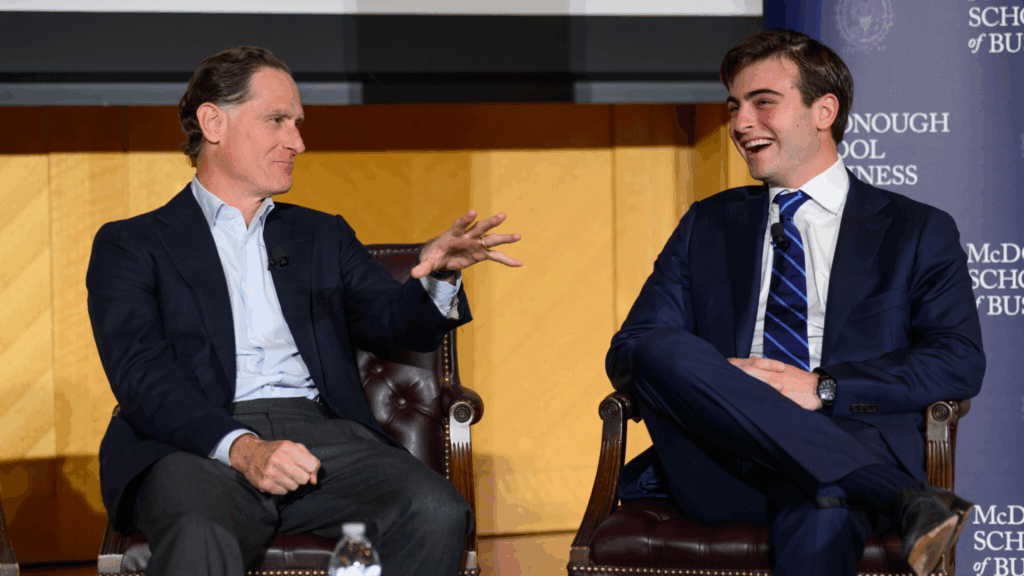
What’s Next for the Future of Global Business? Baratta Center Conference Reimagines the Answer
Alumni, Leadership, News Story
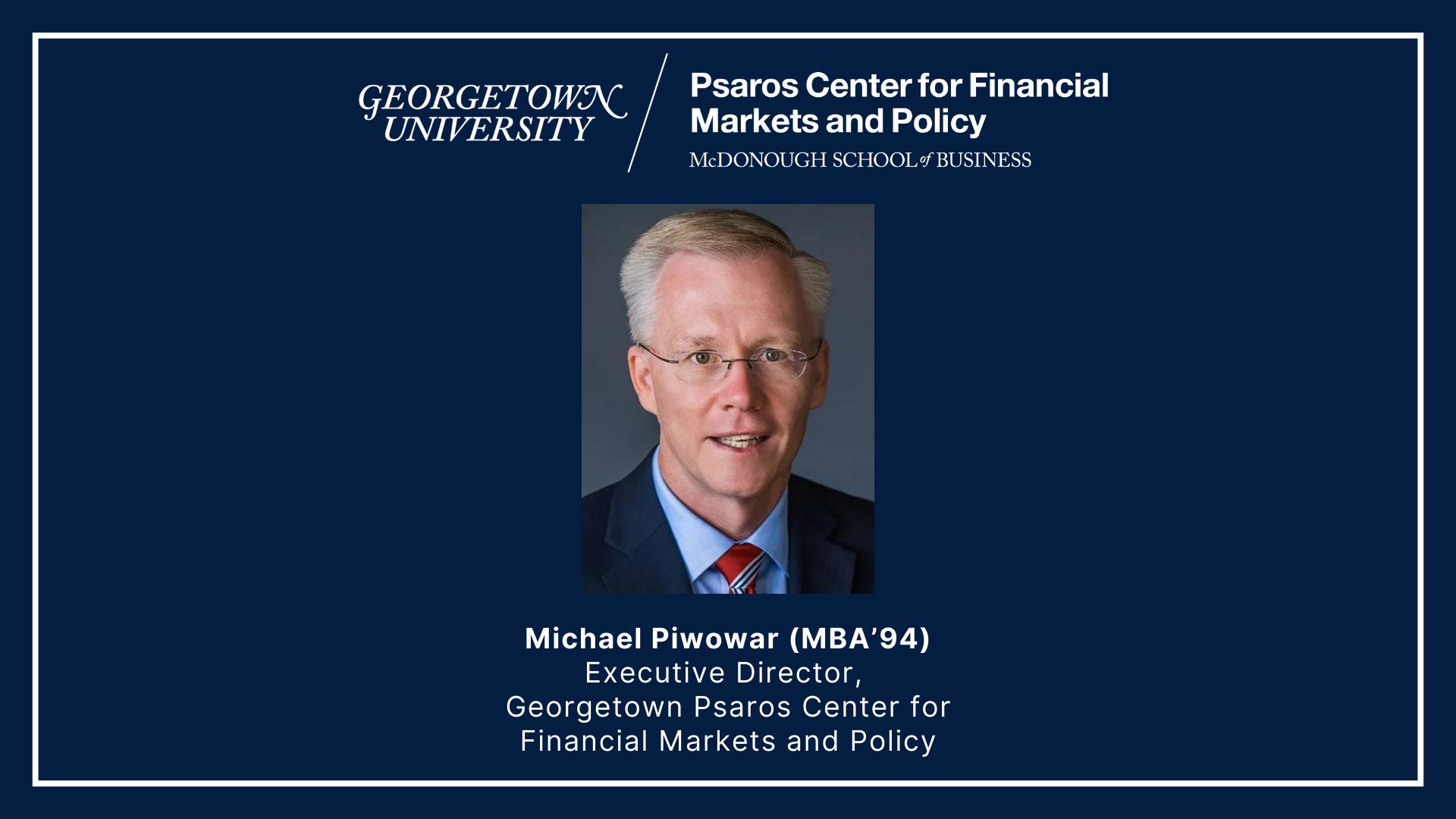
Michael Piwowar (MBA’94) Named New Executive Director of Georgetown Psaros Center