Beyond the Coast Guard: A New Chapter in Sustainability
This story is part of the Student Voices series, which provides a firsthand perspective of the student experience at Georgetown McDonough.
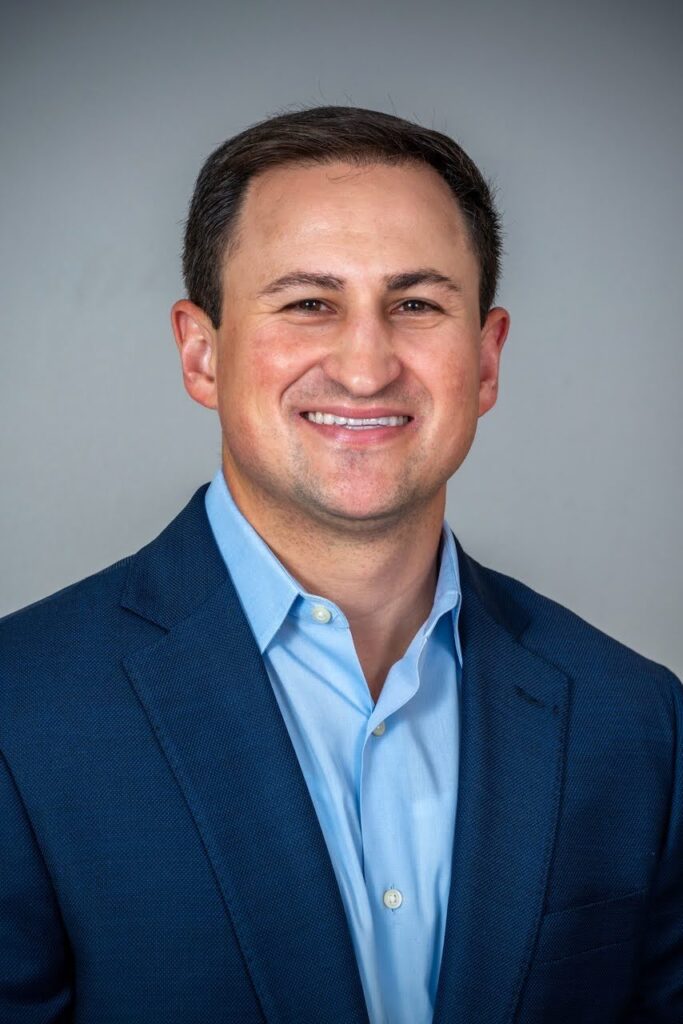
After serving for more than a decade in the U.S. Coast Guard, including roles focused on environmental disaster response and international maritime policy, Matthew Martin (ESM’26) came to Georgetown’s M.S. in Environment and Sustainability Management (ESM) program seeking practical, solutions-oriented business education at the intersection of sustainability and global impact.
Here, Martin reflects on how the ESM program’s collaborative cohort, interdisciplinary curriculum, and hands-on capstone experience expanded his perspective on climate innovation and sustainable business strategy – and how he’s taking these skills into the next phase of his career.
From the Coast Guard to Georgetown’s ESM Program
After a decade of service in the U.S. Coast Guard, I was ready to set out on my next adventure. I spent most of my early career responding to major environmental disasters including oil spills and hazardous material releases before moving on to a role at the International Maritime Organization, where I worked with Caribbean countries to balance the expansion of their maritime sectors with protecting the marine environment.
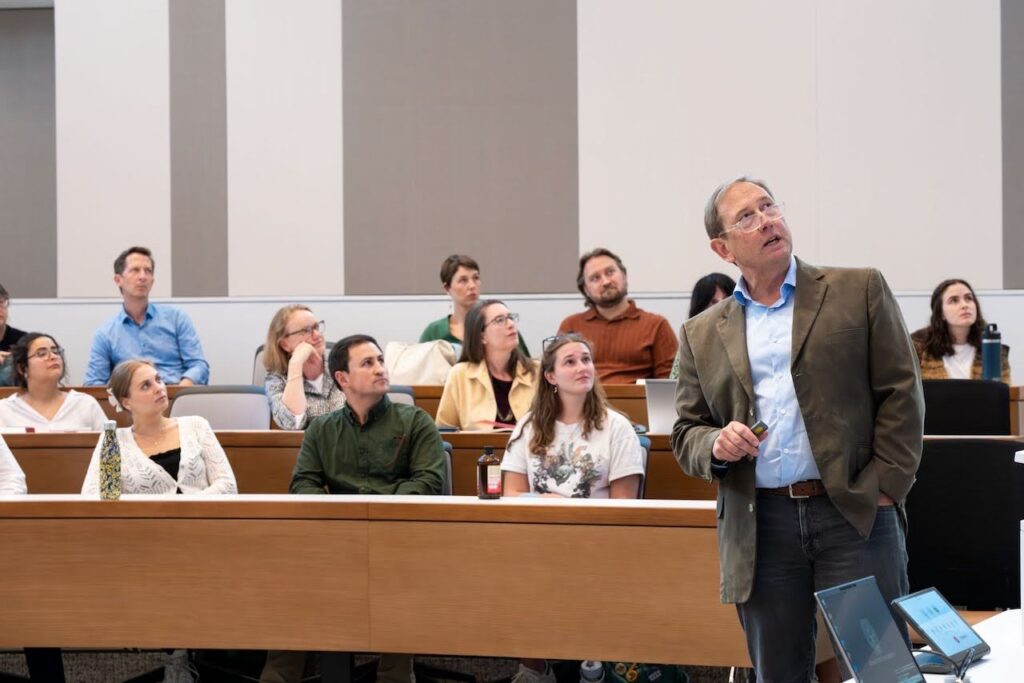
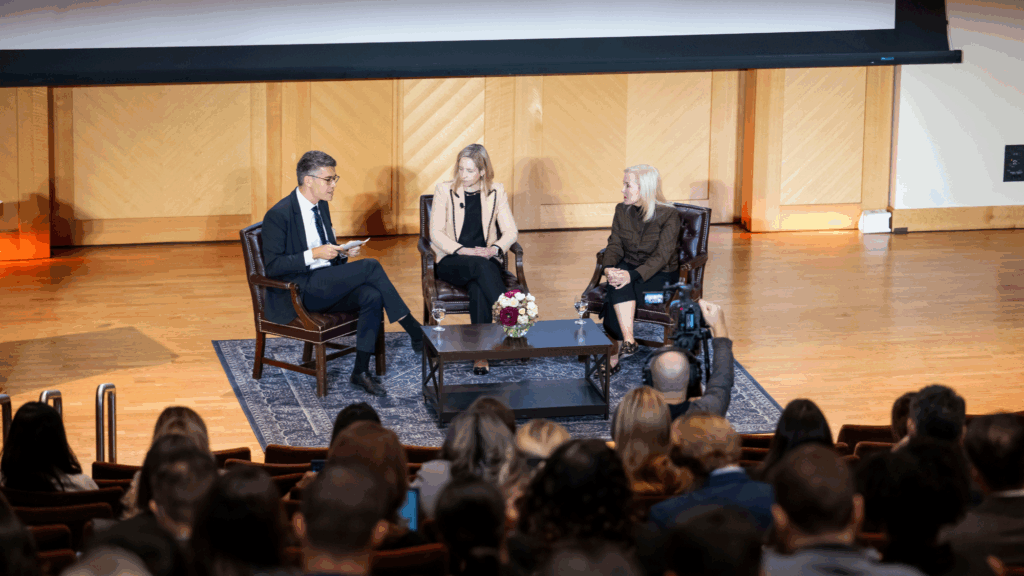
Martin and peers participating in Georgetown’s Earth Commons EcoTalk.
When it came time to decide on what graduate school program to attend, I knew I wanted to remain in D.C., where there’s no better access to the business and policy leaders progressing sustainability action both domestically and around the world. After visiting an ESM class, I was immediately impressed by the academic rigor, the active student participation, and the practical focus on impactful solutions. I didn’t want to spend my academic program simply theorizing about business fundamentals or debating why solutions haven’t worked in the past; I wanted an environment that would surround me with peers dedicated to implementing business strategies to solve major global challenges.
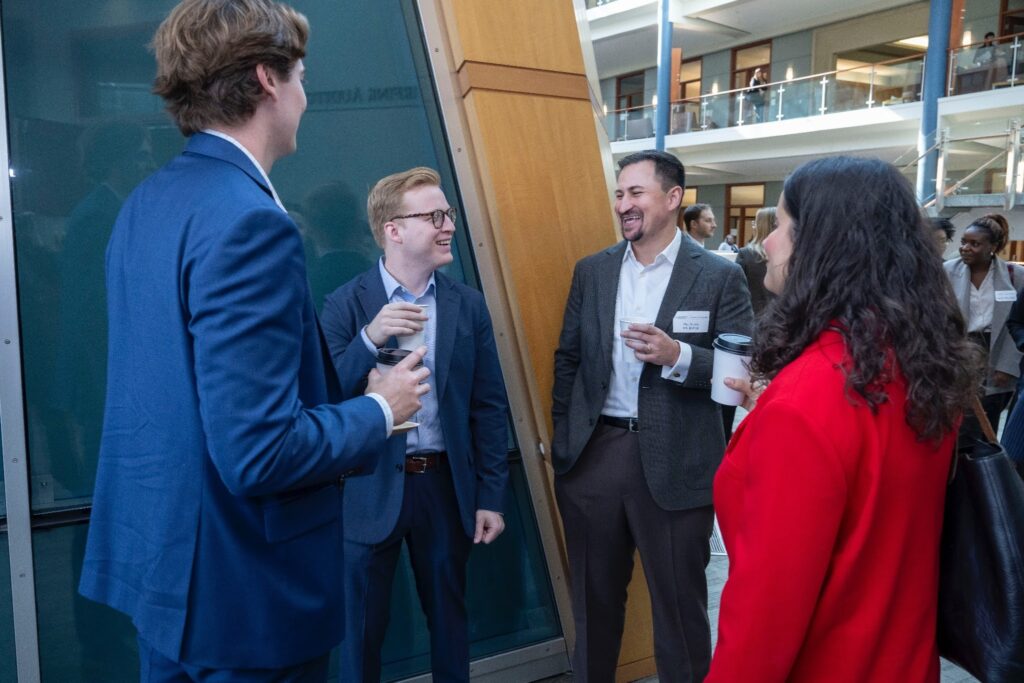
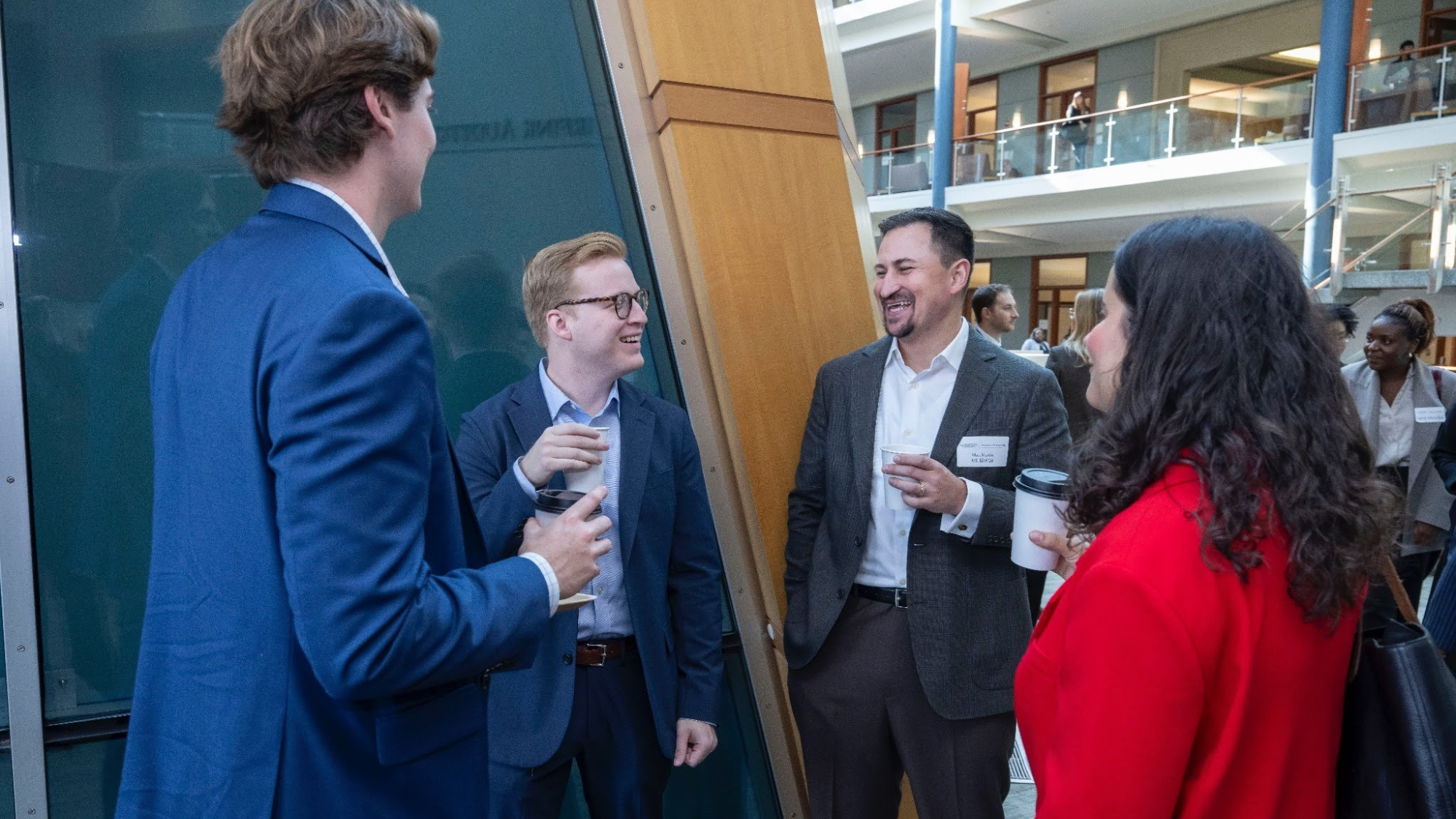
Martin attending the 2025 Business of Sustainability Initiative’s Leadership and Innovation Summit.
From day one, I’ve been beyond impressed with my peers within the cohort. Our cohort has brought together diverse, global perspectives with an eye for science-based impact. A primary insight I gained from our academic studies is that successful business innovation dismantles traditional silos to create cross-functional strategies. This cohort embodies that principle, providing a collaborative space where students learn from one another and develop pitch decks and business models designed for practical, real-world applications.
Learning Through Real-World Sustainability Challenges
The faculty at Georgetown mirror the excellence of the student body, offering extensive practical expertise and industry connections. Professor Roshi Nateghi, who teaches our Environmental Science course, exemplifies this. Her distinguished research operates at the nexus of policy, data science, and engineering, where she creates machine learning and statistical models to bolster the resilience of energy and infrastructure systems against climate-related threats. Given my prior experience responding to increasingly frequent and severe hurricanes in the Coast Guard, I found her classroom discussions on climate-resilient infrastructure particularly resonant. She demonstrated the intricate nature of climate risk and the necessity for businesses to evolve their long-term growth strategies.
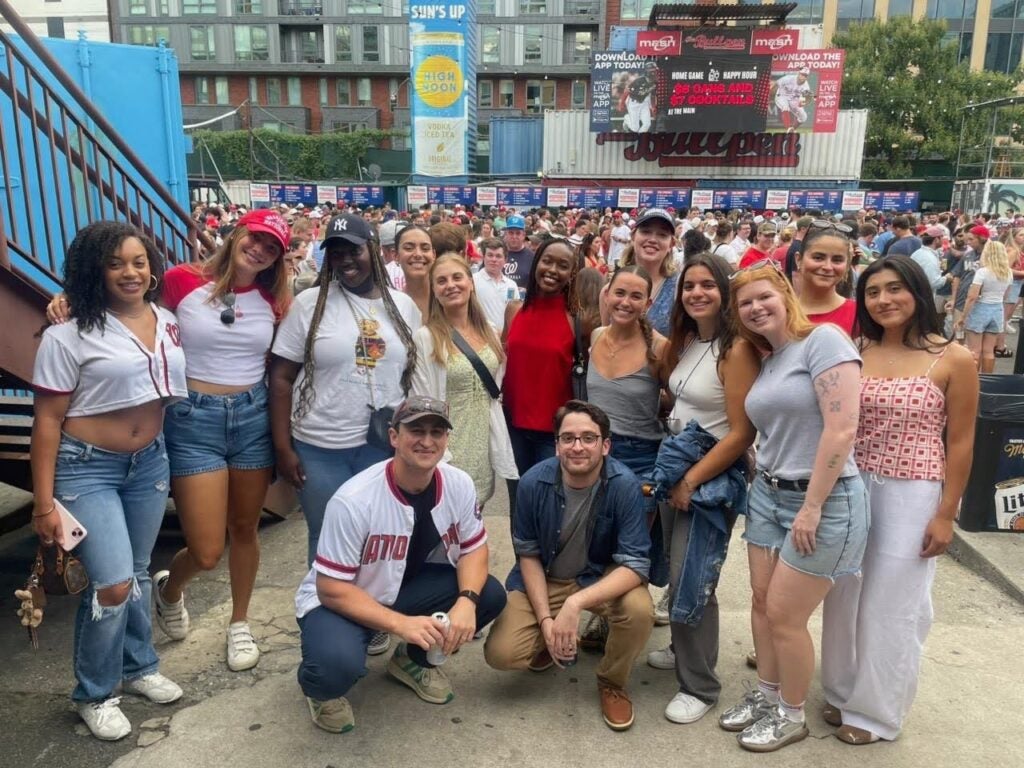
ESM class members enjoying a school-sponsored outing to a Nationals game.
The capstone project further distinguishes this program, pairing student teams with government agencies and private enterprises to tackle sustainability issues. Our team collaborated with an international shipping firm to analyze actual operational data and developed strategies to improve efficiency as the industry prepares for upcoming sustainability mandates and stricter regulations. This experience provided a unique vantage point to analyze maritime sustainability from a commercial perspective, having previously worked on the topic through a regulatory lens. It deepened my understanding of how collaborative efforts between the private sector and regulators can effectively address complex global problems.
Lessons I’ll Carry Forward
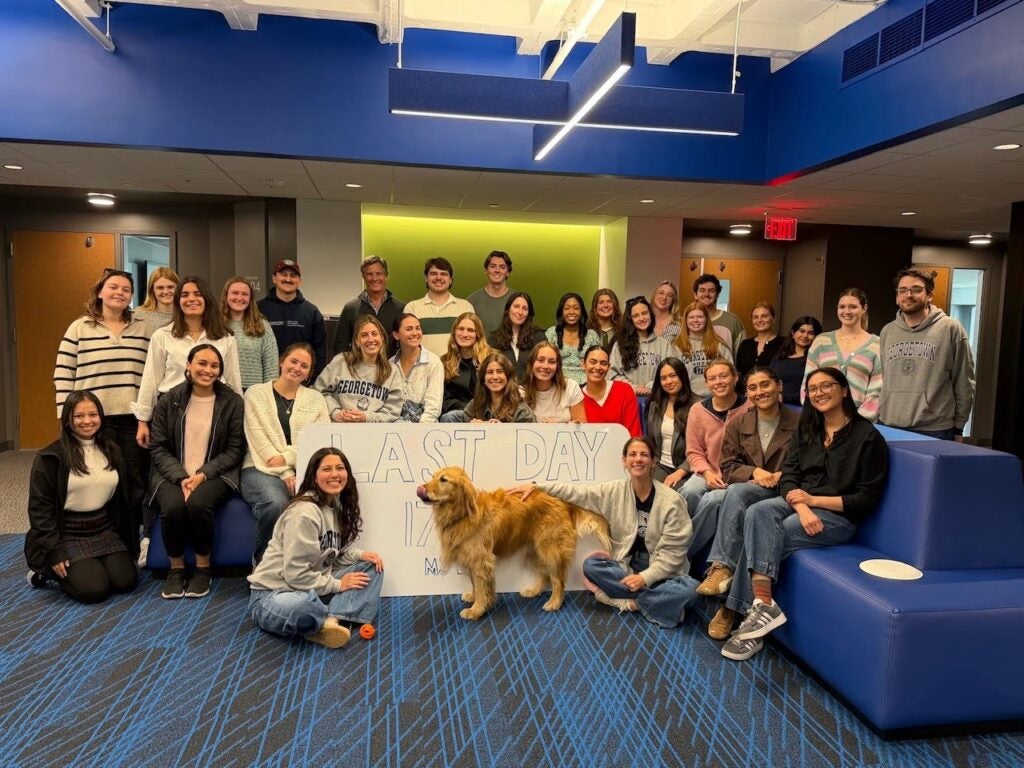
ESM cohort celebrating the last day of the program together.
After graduation, I am excited to continue advancing decarbonization strategies for the energy and transportation sectors. I hope to work on scaling novel technologies that not only fulfill critical societal climate objectives but also drive financial performance in an evolving global economy.
My advice to any incoming ESM students is to cherish the relationships you will certainly grow with your classmates. Lean on them to challenge your assumptions, dream up new ideas, and expand your perspectives. You’ll graduate the program with more questions than answers but you will leave with more tools and personal connections to tackle any sustainability challenge you’ll face in the future.
Related Stories
Business and Global Affairs, Student Experience
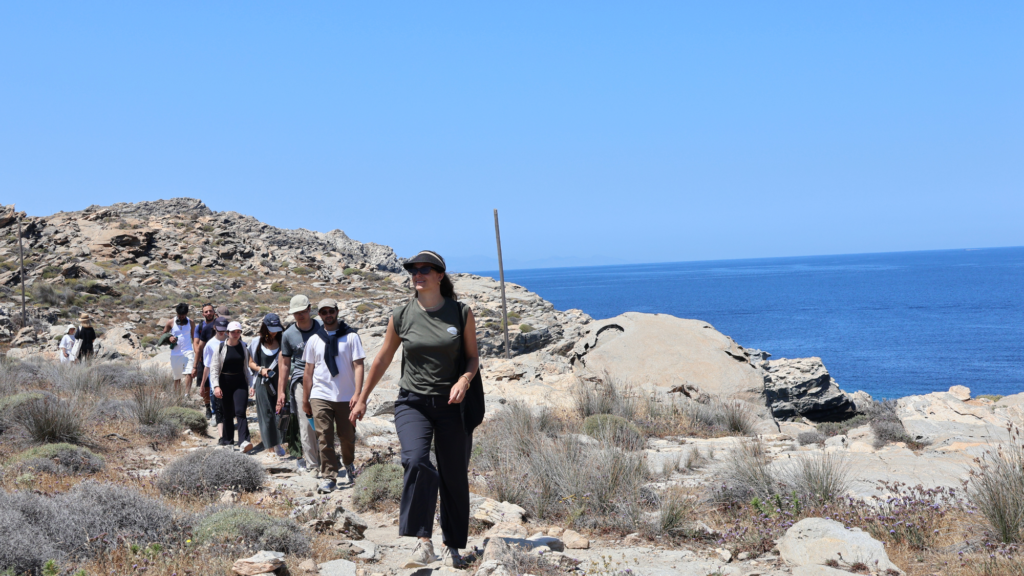
MS-ESM Students Tackle Sustainability Projects Through Partnerships With Earth Commons Greece