What Does It Take to Power Biotech Innovation? Insights from Georgetown’s Business of Health Summit
The Business of Health Initiative at Georgetown University’s McDonough School of Business convened leading voices from across biotechnology, finance, and healthcare for a timely and wide-ranging discussion on the challenges of financing innovation in the life sciences sector.
The conference, titled Financing Biotech Innovation: Challenges and Opportunities, brought together investors, operators, and industry leaders to explore how capital is allocated in an industry defined by scientific uncertainty, long development timelines, and profound human impact.
The event was opened by Paul Almeida, dean and William R. Berkley Chair at Georgetown McDonough, who emphasized the essential role of business in advancing healthcare innovation — highlighting that progress in healthcare is not only about extending the length of life, but also improving its quality.
“Healthcare is both deeply personal and profoundly complex – shaped by scientific discovery, capital markets, policy decisions, and operational realities,” said Almeida. “Increasingly, the question is not only what innovations are possible but how we finance, scale, and deliver them in ways that create meaningful outcomes for patients within a responsible healthcare ecosystem.”
Leadership, Capital, and Patient Impact
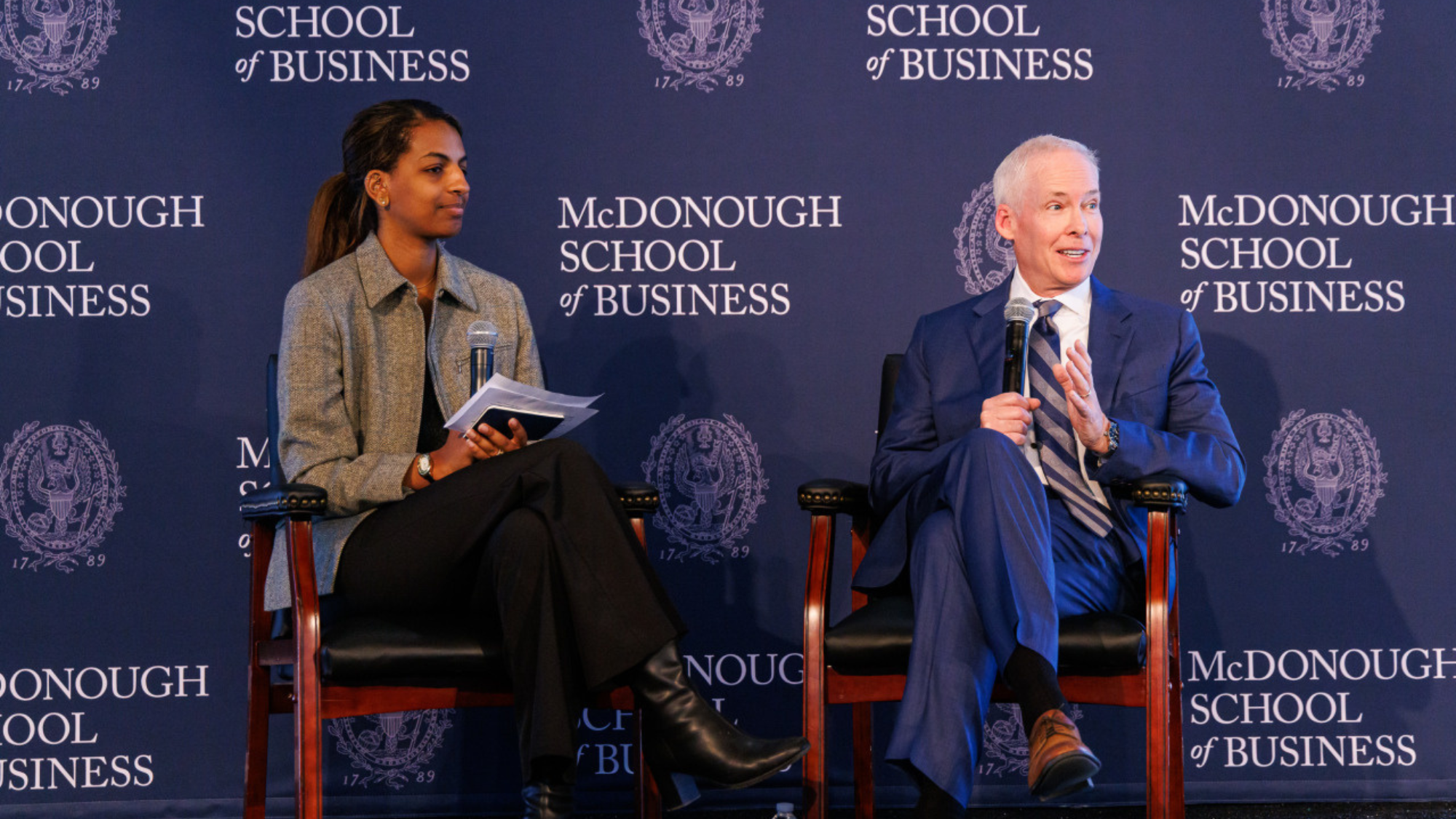
The conference featured a keynote fireside chat with Michael McDonnell (B’86), former chief financial officer of Biogen, moderated by Tineer Ahmed (MBA’27), president of the MBA Healthcare Business Alliance.
Drawing on his experience at Biogen, McDonnell highlighted the unique challenges of capital allocation in biotech. Companies often operate for years without revenue, requiring leaders to make high-stakes decisions under deep uncertainty.
He reflected on the approval of Biogen’s Alzheimer’s therapy as a moment of profound achievement following more than a decade of research — followed by the sobering reality of reimbursement constraints that limited patient access.
“If you’re going to commercialize a drug, you’ve got to have insurance reimbursement,” noted McDonnell. “The majority of patients who suffer from Alzheimer’s are on Medicare. Six months after FDA approval – January 11, 2022 – the reimbursement decision came out, and it basically was like no reimbursement. Our market cap went from $40 billion to $70 billion to $20 billion.”
The discussion underscored a central tension in biotechnology: balancing scientific innovation, financial discipline, and patient impact. McDonnell also emphasized the importance of leadership, humility, and clarity in decision-making — particularly when allocating scarce resources across competing priorities.
Investor Perspectives
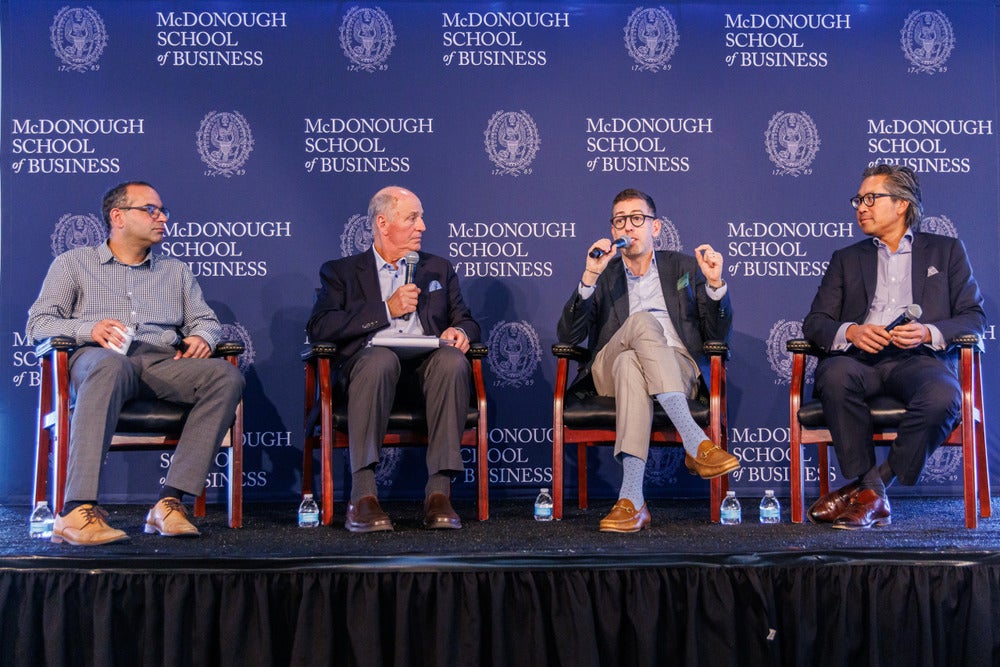
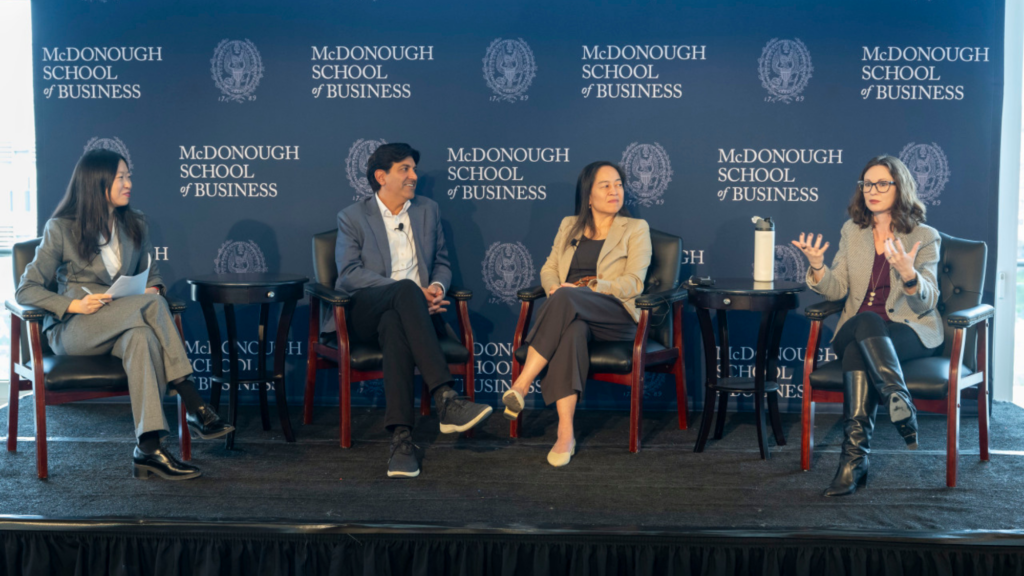
From left to right: Ali Behbahani, Peter Crnkovich, Evan Seigerman, Graig Suvannavejh
A panel on Investor Insights: Valuation, Policy, and Pipeline Pressure in Biotech featured Ali Behbahani, partner and co-head of healthcare at New Enterprise Associates; Evan Seigerman, managing director, head of healthcare research, and senior biotechnology and pharmaceutical analyst at BMO Capital Markets; and Graig Suvannavejh, managing director and senior biotechnology and biopharmaceuticals analyst at Mizuho Securities; moderated by Peter Crnkovich (B’78).
Panelists discussed the complexity of valuing biotechnology companies, where traditional financial metrics often take a back seat to scientific potential and clinical data. Investors are frequently underwriting future standards of care rather than current earnings.
“The investing part is sort of a means to an end. Biotech investing is about backing ideas that can change the world: betting on things that can be a big step forward, a transformation, and it doesn’t happen every day. But when it does, it’s pretty stunning,” said Behbahani.
The conversation also highlighted the evolving role of public markets. Initial public offerings, panelists noted, serve not only as financing events but also as mechanisms for investor discovery, helping companies establish credibility and visibility.
Regulatory dynamics and shifting signals from the Federal Drug Administration were cited as increasing sources of uncertainty, complicating investment decisions across the sector.
Raising Capital
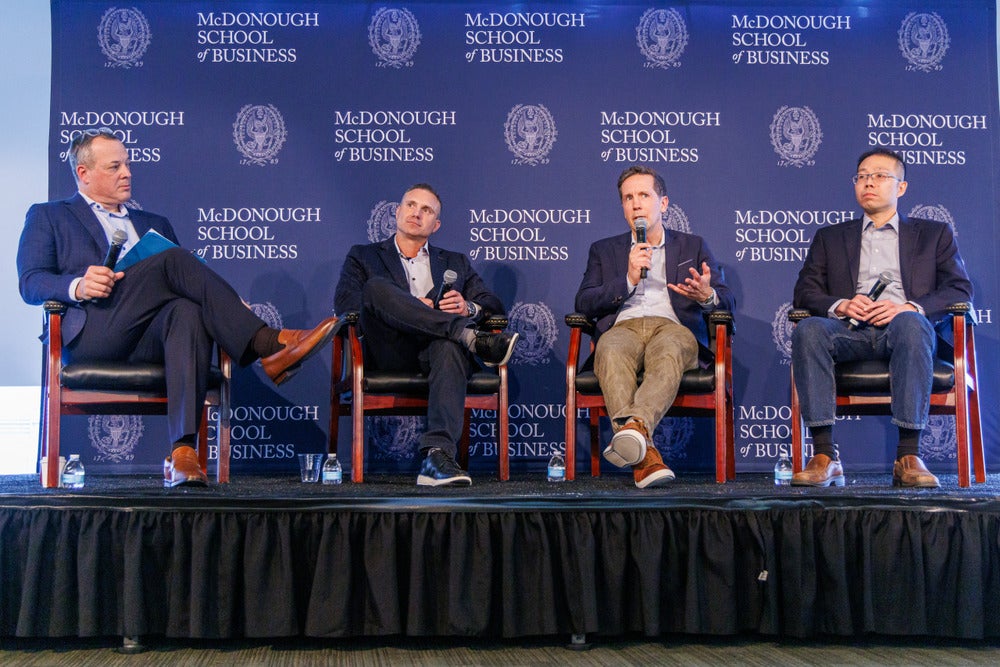
From left to right: Gregg Gilbert, Joseph Todisco, Chip Baird, Mitchell Chan
The second panel, Navigating Risk and Reward – Raising Capital in Biotech, brought together Chip Baird, CEO at Poplar Therapeutics, Mitchell Chan, chief financial officer at REGENXBIO, and Joseph Todisco, CEO at CorMedix, moderated by Gregg Gilbert, founder at GG Advisory Group.
Speakers emphasized that financing is not a one-time event, but an ongoing strategic process that often occupies a significant portion of leadership attention.
“Financing is probably one of the top discussions in every board meeting, especially in those early stages,” said Todisco. “You need to make sure that you’ve got at least 12 months of cash on hand, if not more. When to raise, how to raise, how much to raise: that is what’s always being discussed.”
Panelists also discussed a range of financing strategies, including equity, partnerships, royalty financing, and non-dilutive sources such as grants. While equity remains the primary mechanism, the growing complexity of capital markets requires flexibility and careful timing.
“There is no single playbook,” noted Baird. “This is one of the biggest parts of being a CFO or being part of a leadership team at a biotech company. Timing matters: if you get positive phase two or phase three data, you could get up to 50%. And similarly, if you have a regulatory setback, you could go down 50%.”
The discussion also underscored the importance of selecting the right investors, as these decisions shape not only current financing outcomes but also future strategic direction
Looking Ahead: An Industry Defined by Uncertainty and Purpose
Across sessions, a consistent message emerged: financing biotech innovation requires navigating a complex ecosystem that includes capital markets, regulatory frameworks, and healthcare delivery systems. At the same time, the work remains deeply mission-driven. Every investment decision, clinical milestone, and strategic pivot ultimately affects patients and families. “Dollars are finite… at the end of the day, the best idea wins,” said McDonnell.
The event also highlighted Georgetown’s growing leadership in this space, including the launch of the MBA Certificate in the Business of Healthcare, with its first cohort of students graduating this year.
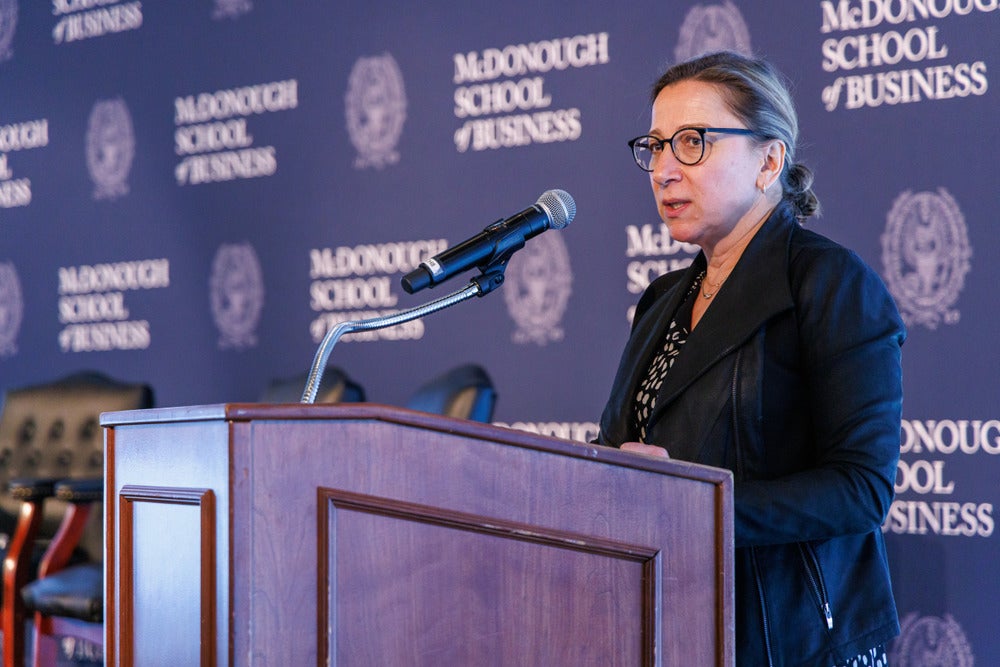
Tatiana Litvin-Vechnyak
The conference concluded with remarks introduced by Ivica Labuda, professor and director of the biotechnology program in the School of Medicine, who invited Tatiana Litvin-Vechnyak, vice president of the Office of Technology Commercialization, to deliver closing reflections.
She emphasized the shared responsibility across academia, industry, and investors to advance innovation collaboratively, particularly at early stages, where ideas are full of promise but also uncertainty. “Innovation in healthcare is not just about extending life but improving its quality,” Litvin-Vechnyak noted.
The Business of Health Initiative continues to serve as a platform for dialogue at the intersection of business, healthcare, and policy, bringing together leaders to address some of the most complex and consequential challenges in modern society.
As the conference made clear, the future of biotech innovation will depend not only on scientific breakthroughs, but also on the ability to finance them effectively, responsibly, and with a clear sense of purpose.
Related Content

- Tagged
- Business of Health