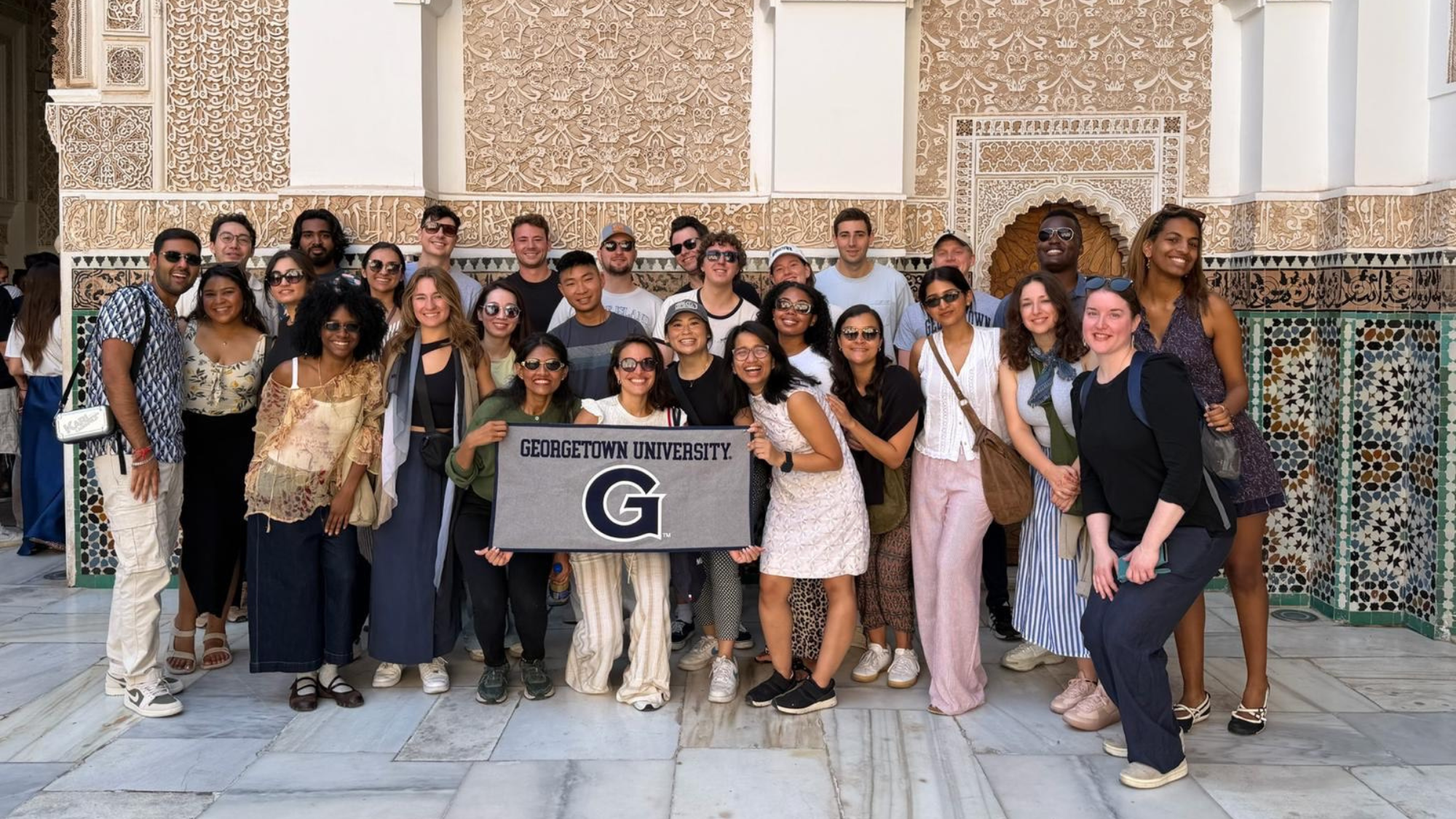
Expanding My View of Global Leadership: An MBA iTrek to Morocco
This story is part of the Student Voices series, which provides a firsthand perspective of the student experience at Georgetown McDonough.
During his time in the Full-time MBA program at Georgetown’s McDonough School of Business, Ryan Pachuta (MBA’26) took advantage of opportunities to deepen his global perspective through an International Trek (iTrek), a student-led immersion experience that combines cultural exploration with company visits in key global markets. As a student leader, Pachuta helped organize the iTrek to Morocco, bringing together classmates to explore how business, culture, and innovation intersect in an emerging economy.
Here, Pachuta shares how the iTrek experience reshaped his understanding of global business and the lessons he plans to carry forward as he prepares for a career in international leadership.
Before arriving at Georgetown McDonough, the majority of my professional career was spent at an equipment manufacturer serving the automotive industry. As a sales engineer within a globally integrated organization headquartered in Japan, my role spanned project management, supply chain coordination, account management, product troubleshooting, and cost optimization. Over six years, I worked daily with teams in Brazil, Canada, China, France, Germany, Japan, Korea, and Mexico.
Those experiences shaped my understanding of how culture influences business. I saw firsthand how regulatory structures, infrastructure constraints, labor norms, and communication styles vary across markets and how successful global organizations must adapt accordingly. Working for a global firm operating across developed and developing markets sparked a deeper curiosity about the structural challenges and opportunities facing emerging economies. That curiosity was reinforced personally through my wife Catherine’s Guatemalan roots, where we have witnessed the development trajectory of another emerging economy up close.
When I chose the McDonough School of Business, it was intentional. The school’s international orientation, its Jesuit emphasis on values-based leadership, and its diverse student body aligned with my aspiration to become a future leader in international business. My MBA is not simply about advancing my technical skill set; it is about expanding my global perspective.
That perspective was meaningfully shaped when 39 MBA students traveled to Morocco on an immersive International Trek (iTrek) organized by the Emerging Markets Network (EMN). As vice president of finance for EMN, I had the opportunity to help bring the experience to life. Alongside EMN President Chris Hui and Vice President of Marketing Catherine Pachuta, we developed a shortlist of destinations. Morocco quickly rose to the top through internal discussions and club polling. Its geographic position at the crossroads of Africa, Europe, and the Middle East, combined with its cultural diversity and economic vibrancy, made it an ideal destination.
Cultural Immersion: Seeing the Full Landscape
One of the most powerful lessons from the trip came not inside a conference room, but within the medina of Marrakech.
Walking through the historic marketplace, observing generational artisans at work, and experiencing the rhythm of daily commerce reinforced that business does not exist in isolation from culture. The medina is not just a commercial hub; it is a living ecosystem of heritage, trust, craftsmanship, and community. It reminded me that economic systems are built upon social foundations.
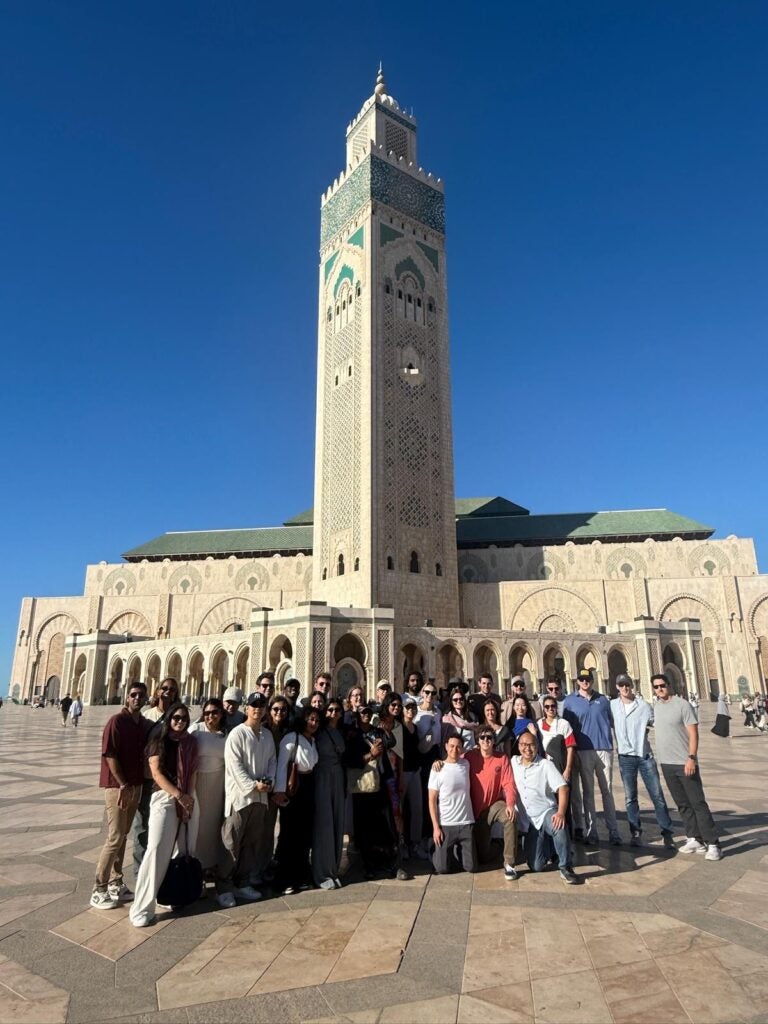
McDonough MBA students in front of the Koutoubia Minaret in Marrakech.
Traveling beyond the city further expanded my understanding of Morocco’s depth and diversity. Our overnight stay in the Agafay Desert was a striking contrast to the vibrancy of Marrakech. Surrounded by vast open terrain and dramatic landscapes, we experienced a side of Morocco defined by stillness and scale. The desert camp allowed us to disconnect from routine and immerse ourselves in a completely different environment.
More importantly, it was a moment to bond with the classmates who shared this journey. Whether riding camels across the terrain, having a dance-off to traditional Moroccan music, or simply reflecting on the day’s experiences, the desert created space for connection. Removed from classrooms and career conversations, we built stronger relationships rooted in shared experience.
In Casablanca and Rabat, we observed yet another dimension of Morocco, its modern economic ambition layered atop historical legacy. Touring the Hassan II Mosque and exploring business districts illustrated how Morocco integrates tradition with forward-looking development. The trip revealed a country that is multifaceted: urban and rural, historic and modern, desert and coastal.
Business Engagement: Emerging Markets in Action
While cultural immersion provided context, our company visits delivered substantive insight into Morocco’s evolving business landscape.
At Hightech Payment Systems (HPS), we explored the rapid digitization of financial systems across Africa and the Middle East. Discussions around regulatory fragmentation, cross-border payments, and financial inclusion highlighted how emerging markets can leapfrog legacy infrastructure. Rather than following developed markets, Morocco and its regional peers are innovating in ways uniquely suited to their environments.
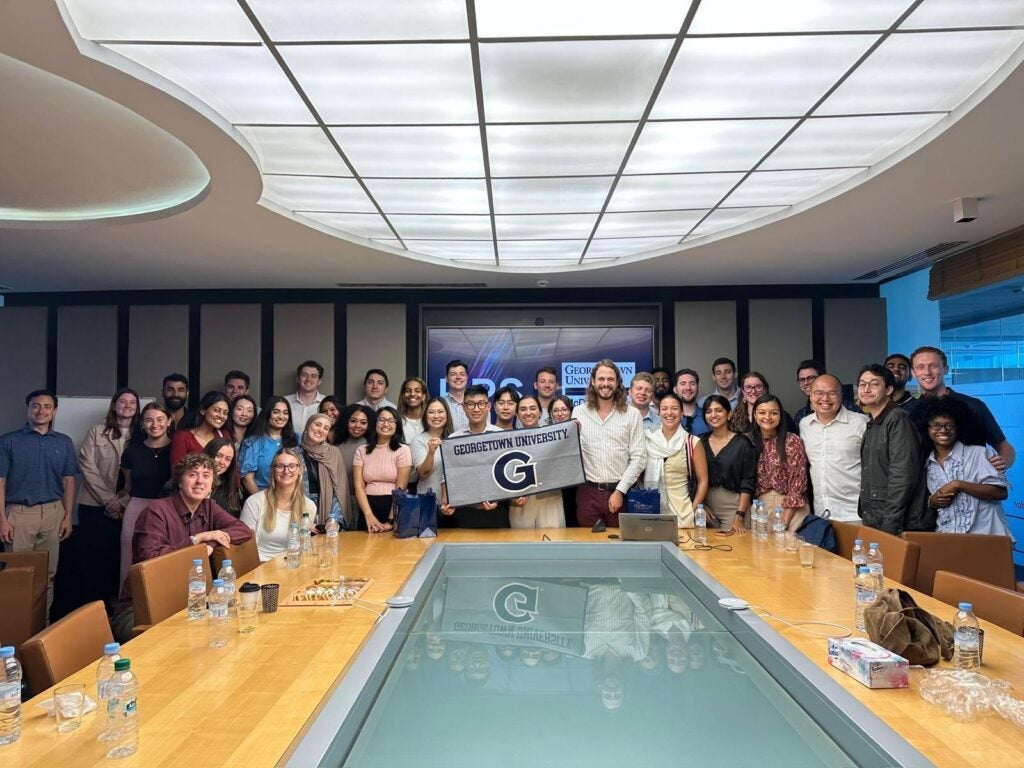
Students discussed regulatory fragmentation, cross-border payments, and financial inclusion during their visit to HPS.
Our visit with SoPharma offered insight into the rapid evolution of Morocco’s healthcare sector. Founded in 2022 and headquartered in Casablanca, SoPharma aims to expand access to innovative health solutions across Morocco, Africa, and the Middle East. The company operates through health, comfort, and skincare business units while investing in a new pharmaceutical manufacturing facility focused on key therapeutic areas such as oncology, cardiometabolism, and central nervous system treatments. Hearing about their ambition to combine local production, regional expansion, and improved healthcare access underscored how entrepreneurship in emerging markets often intersects directly with social impact.
Finally, our engagement with a regional vice president from Bosch Africa resonated strongly with my professional background. Discussions around supply chain strategy, localization, and workforce development echoed challenges I encountered in the automotive manufacturing industry. The visit reinforced that while industries may differ, the fundamentals of global operations, adaptation, partnership, and long-term commitment remain constant.
How the Experience Changed Me
Before Morocco, my understanding of emerging markets was shaped largely through professional exposure and academic study. The iTrek deepened that understanding by adding lived experience.
The trip reshaped how I think about global business. Emerging markets are often described through volatility and risk. What I saw in Morocco was resilience, adaptability, and opportunity. Innovation thrives not despite constraints, but often because of them.
Equally impactful was the experience of traveling with 39 classmates who brought diverse perspectives to every conversation. Whether discussing strategy with executives or navigating a new cultural environment together, the trek strengthened our sense of community. It was a reminder that leadership development does not happen in isolation; it happens in shared experience.
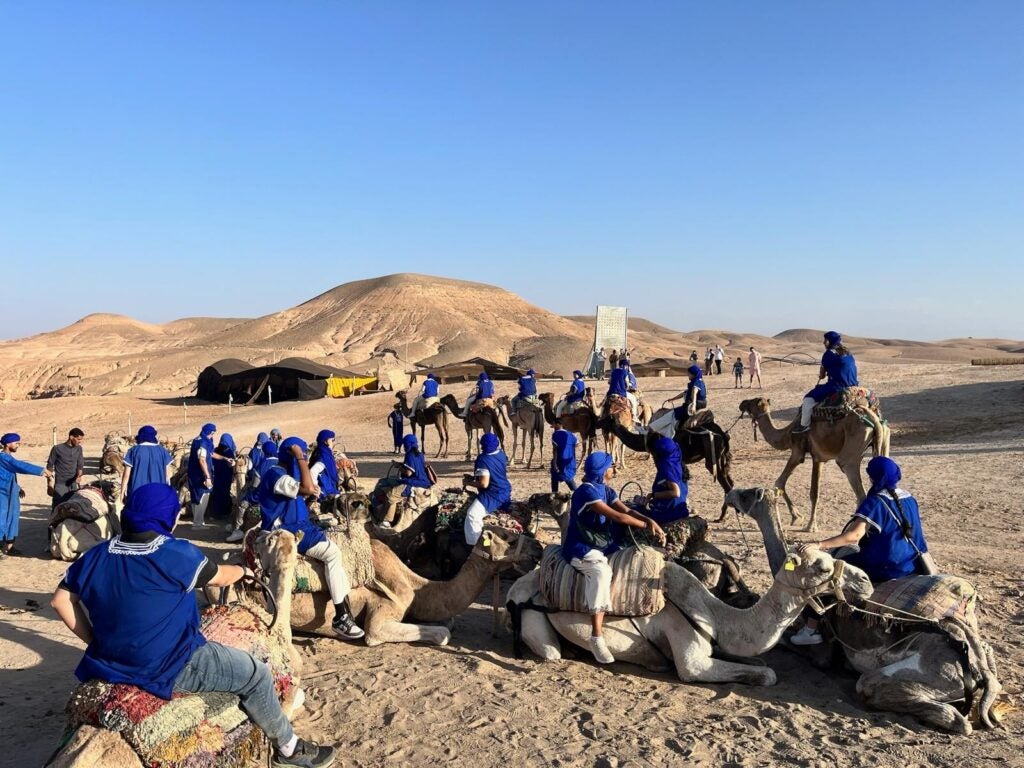
Students had the opportunity to ride camels and stay overnight in the Agafay Desert.
Serving in a leadership role within EMN added another layer of growth. Helping coordinate logistics, budgeting, and programming for a group of this size required collaboration, communication, and accountability. Seeing the trek come together successfully was one of my proudest moments at Georgetown.
Looking Forward
Georgetown’s commitment to global engagement and values-based leadership came to life in Morocco. The experience reinforced that effective international leadership requires more than analytical skill; it demands cultural awareness, humility, and adaptability.
As I move forward in my MBA and into my career, I plan to carry these lessons with me: approach new markets with curiosity rather than assumptions, seek understanding before strategy, and recognize that meaningful global leadership is built through both professional insight and personal connection.
Morocco was not simply a trip. It was a defining chapter in my journey toward becoming a global business leader.
Related Stories
Business and Global Affairs
Celebrating 30 Years of Global Business Leadership at Georgetown McDonough
Student Experience
MBA Students Celebrate Campus Diversity and Culture During Global Fest