Navigating Crisis: Lessons from Georgetown’s Global Consulting Projects in Dubai
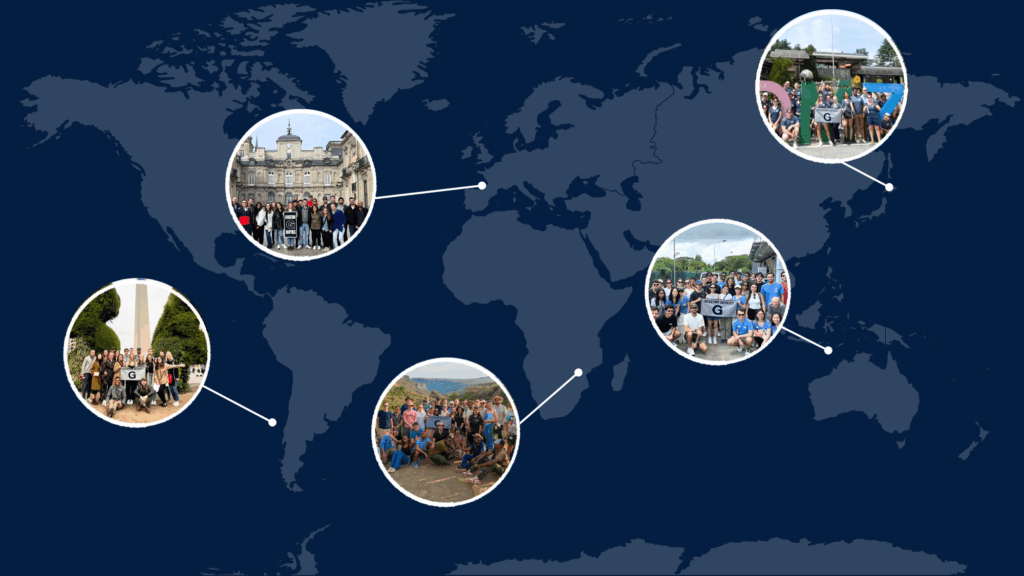
For Full-time MBA students at Georgetown’s McDonough School of Business, the Global Business Experience (GBE) is designed to bring classroom concepts to life, placing students in real-world consulting projects around the world to better understand how business operates across cultures, economies, and political systems.
This year, those lessons extended far beyond boardrooms and site visits.
As geopolitical tensions escalated in the Middle East during their time abroad, students traveling to Dubai found themselves navigating a rapidly changing environment – one that mirrored, in real time, the very forces they study in the MBA classroom. Their GBE became a firsthand lesson in the complexities of global business, where political risk, uncertainty, and the need for swift decision-making became ever-present realities.
Working closely with faculty and university staff, students navigated evacuation plans and rerouted travel, ultimately making their way safely out of the region before returning home. And throughout the process, they demonstrated resilience, composure, and a deep sense of shared responsibility to the broader community.
“What our community demonstrated was remarkable — care, resilience, and a commitment to one another in a moment of real uncertainty,” said Prashant Malaviya, vice dean for programs at Georgetown McDonough. “At the same time, we recognize this was a true VUCA [volatility, uncertainty, complexity, and ambiguity] environment, where decisions had to be made in real time with limited information. With the benefit of hindsight, we are continuing to learn from this experience and refine how we respond, if ever presented with a similar situation in the future.”
Now that they are safely back on the Hilltop, we asked two students from the trip – Sanjana Raju (MBA’26) and Enrique Piñon (MBA’26) – for their key takeaways and insights into navigating the complexity of global business this spring.
Takeaway #1: Crisis as a Leadership Test
My GBE experience in Dubai was a real-life case study in crisis management. We went there to consult for a global snack company, with a clear plan to meet the client in person, present our research, gather feedback, and keep refining the project while working out of their office. But things changed very quickly. We found ourselves in the middle of a regional conflict, sheltering in place and hearing interceptions in the distance. Although the UAE government handled the situation incredibly well and I felt confident we were safe, it still felt uneasy. Airports were closed, airspace was shut down, and we didn’t know how long we would be there.
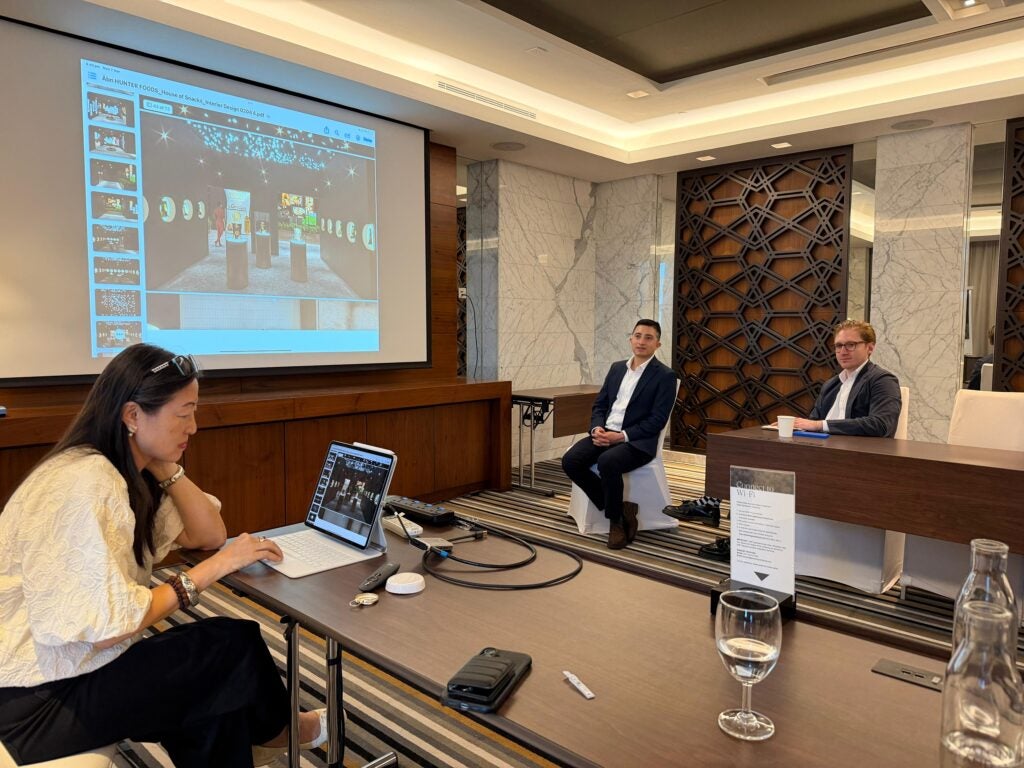
Piñon and his classmates present their GBE consulting projects at a hotel in Dubai during the crisis.
At the same time, we knew we still had a job to do. We were there to deliver for a client, so we pivoted. We met the client at our hotel and presented our full project there. It wasn’t what we planned, but we adjusted and stayed calm, cool, and collected. That’s the biggest takeaway I’ll carry with me. When things get chaotic, you have to be able to pivot, operate calmly in uncertainty, adapt in real time, and still deliver in the best way you can. It’s something I’ll carry with me well beyond my time at Georgetown.
– Piñon
Takeaway #2: Teamwork Under Pressure
No plan survives first contact with a geopolitical disruption, and this trip taught me that firsthand. When the situation with Iran escalated, and our field work plans had to be shelved, we pivoted to surveys to gather the primary research we needed, and it worked. What stuck with me was less the pivot itself and more what it required: fast alignment as a team, creative problem-solving under pressure, and the trust of a client who stayed engaged throughout. They checked in on us, kept the relationship warm, and never made the disruption feel like a dead end. That combination of team adaptability and client partnership is what made the project land despite the circumstances.
– Raju
Takeaway #3: Stability Starts at the Top
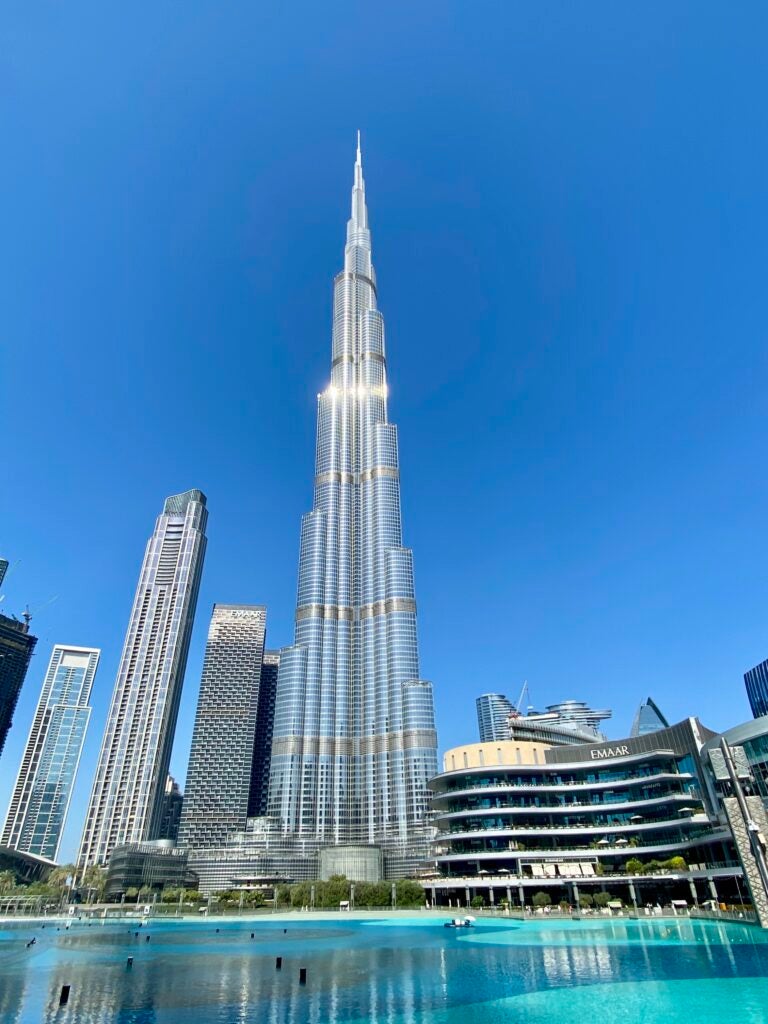
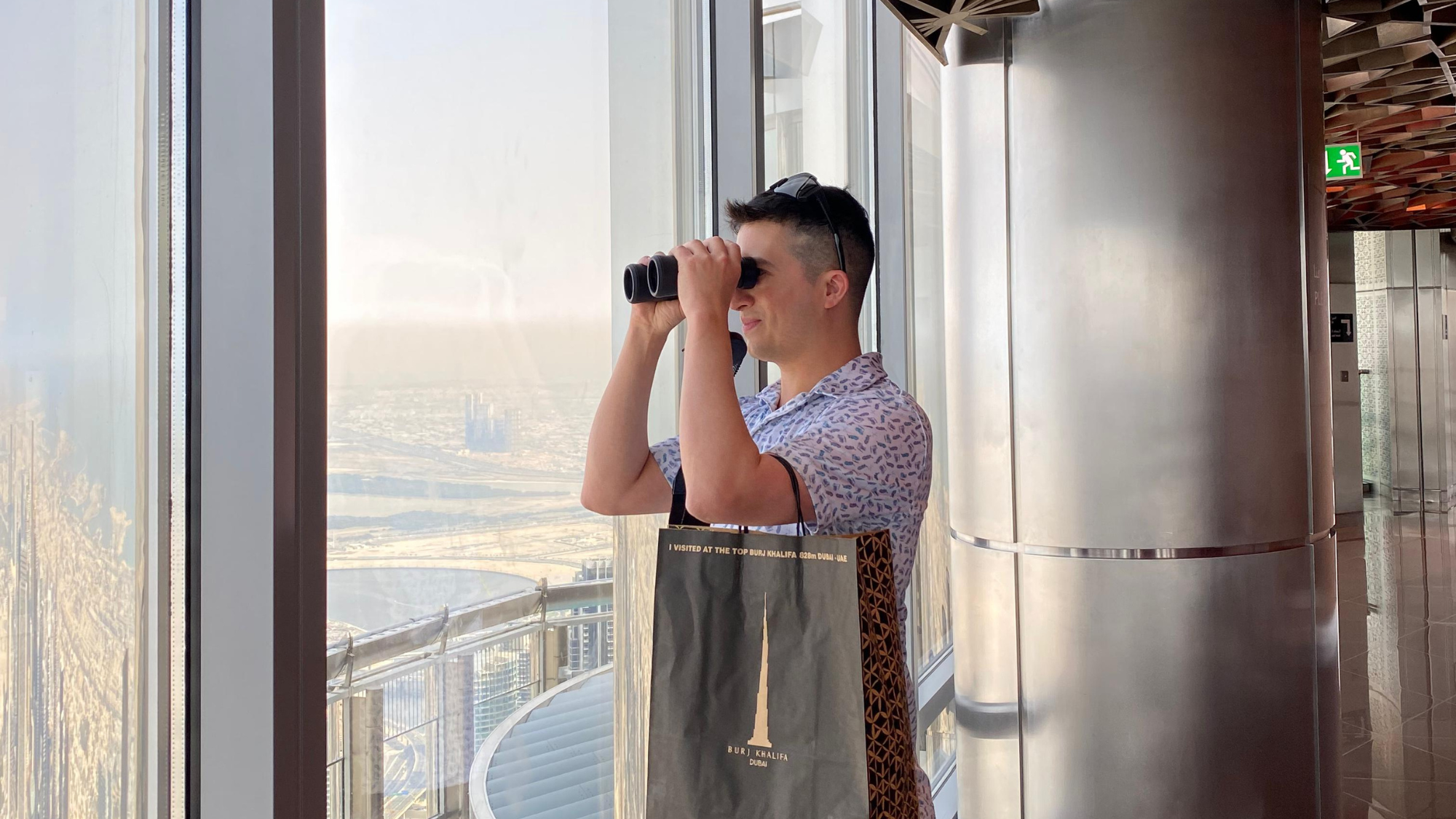
The Burj Khalifa in Dubai.
It was my first time in the UAE, and I was genuinely excited to visit Dubai. I had heard so many great things, but being there in person exceeded my expectations. The city felt incredibly clean, modern, and futuristic. Everyone I met kept saying Dubai is one of the safest places in the world, and I really felt that. I spent time at the Dubai Mall, which is unlike anything I’ve ever seen, and went up the Burj Khalifa, where I felt like I was on top of the world, looking out over the entire city and coastline. It was one of those moments that just felt surreal.
What stood out even more was how the city responded during a time of regional conflict. Even though you could occasionally hear interceptions in the distance and knew things were happening beyond what you could see, the environment on the ground remained calm. I felt safe, and it was clear the government was prepared and in control. What really stuck with me was seeing UAE leadership step into the public, walking through places like the Dubai Mall alongside everyone else, reinforcing that there was no need to panic. They also supported people who were stranded by covering hotel stays, which spoke to a broader sense of responsibility and care. That level of calm, steady leadership left an impression on me. It showed me that in moments of uncertainty, how you show up matters, and that people will take their cues from you. Staying calm and composed as a leader can shape how others respond around you.
– Piñon
Takeaway #4: Resilience as a Business Norm
Coming into this experience with a professional background, I thought I had a fairly developed sense of how organizations handle uncertainty. Dubai recalibrated that. In the first few days of the escalation, there was no visible panic, no operational paralysis. Businesses moved online, workflows continued, and people adapted without making the disruption the center of attention. That kind of quiet institutional resilience is hard to appreciate until you see it up close. It made me reflect on the organizations I have worked in and what separates the ones that absorb shocks cleanly from those that fragment under them. It is less about having the right crisis plan and more about having a culture that treats adaptability as default.
– Raju