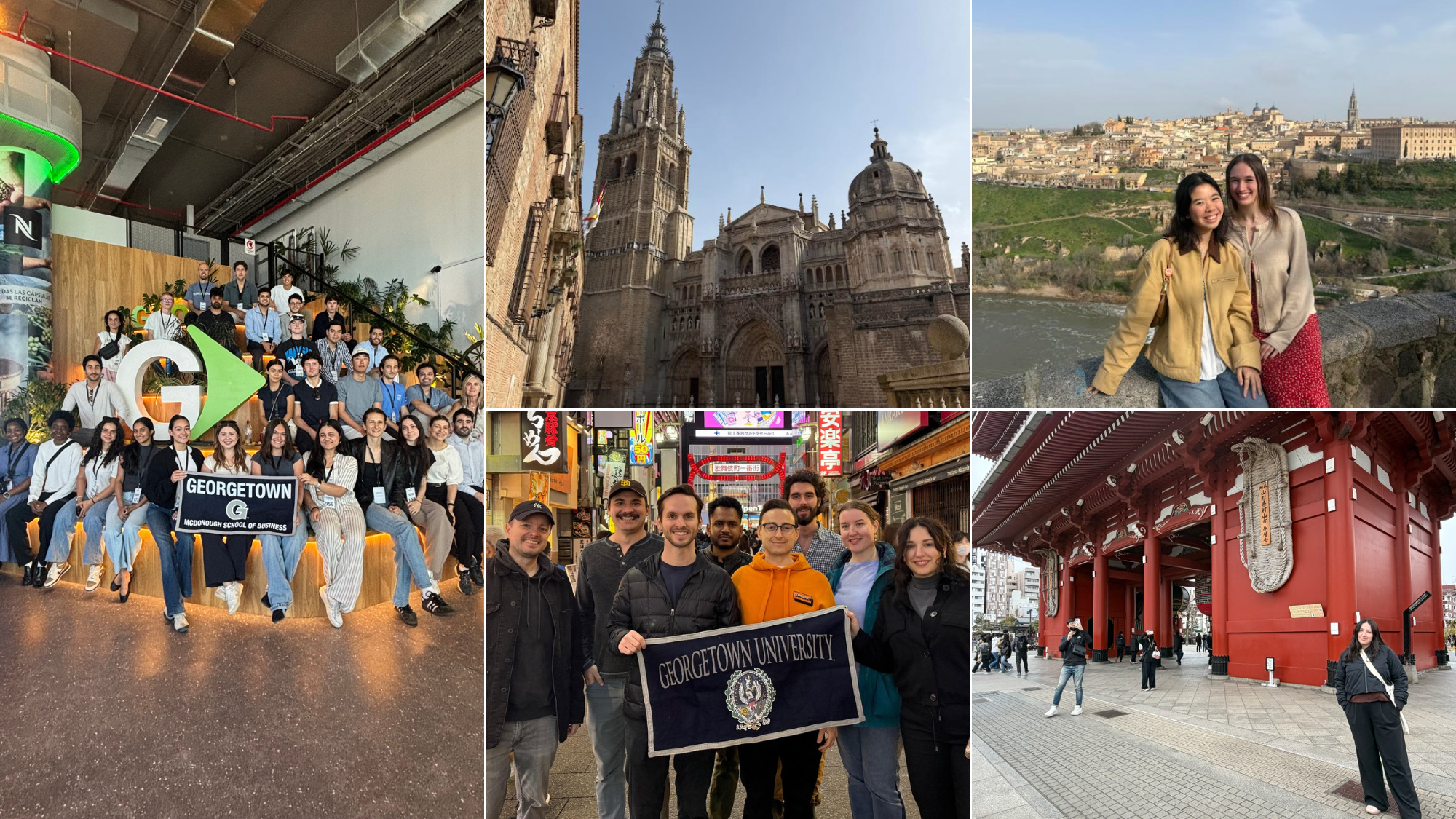
Georgetown Students Travel the Globe to Tackle Real-World Business Challenges
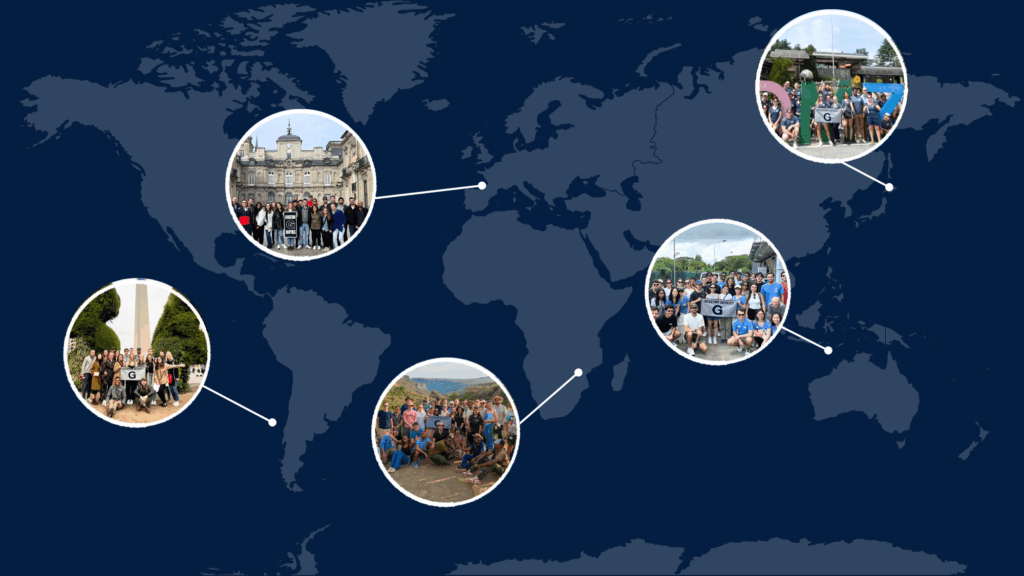
Undergraduate and graduate students at Georgetown’s McDonough School of Business recently traveled across nine countries and four continents, partnering with multinational and regional organizations while immersing themselves in local cultures through the school’s signature Global Business Experience (GBE).
A cornerstone of the McDonough curriculum, the GBE is a semester-long consulting project where students collaborate directly with international clients to address complex business challenges – from market entry and growth strategy to innovation and operations – before traveling abroad to deliver their final recommendations in-country.
This spring, undergraduate, Master’s in Management, and Full-time MBA students traveled to countries including Argentina, Brazil, Ireland, Japan, Kenya, Spain, Singapore, the United Arab Emirates, and Vietnam. In each location, they engaged directly with senior executives, presented their recommendations in real-world settings, and gained firsthand exposure to regional business environments.
“At its core, the GBE is about developing leaders who can operate with confidence in complex, global environments,” said Sezer Ulku, professor of operations and academic director of the GBE. “When students are working with global clients and navigating unfamiliar markets, they learn that business problems are rarely clear-cut. The experience builds the judgment, adaptability, and cultural fluency required to lead effectively across borders.”
For many students, the experience reinforced that global business cannot be understood from a distance.
“My global consulting project was with Medtronic in Ethiopia, where our team focused on developing a sustainable reimbursement strategy for their thrombectomy device,” said Ahmed Farid (MBA’26). “Our goal was to make stroke treatment more financially accessible while ensuring the solution was viable for hospitals and the broader healthcare system.”
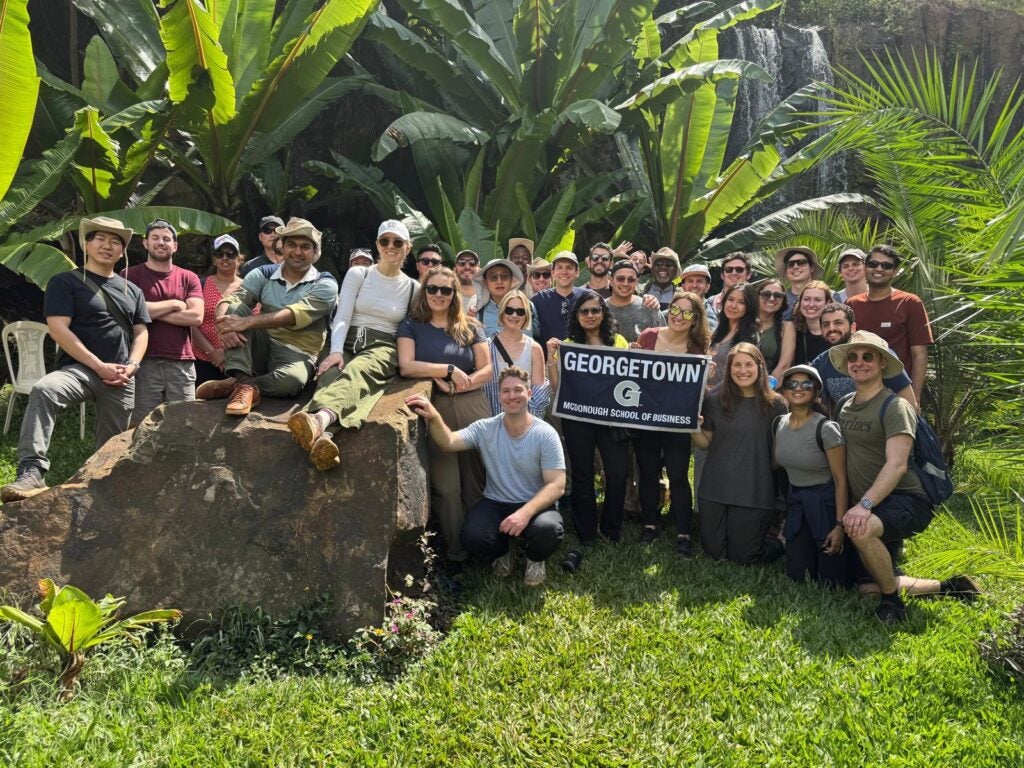
Farid and his GBE cohort in Kenya.
Through the project, Farid and his team navigated the complexities of emerging healthcare markets, from funding constraints to infrastructure limitations.
“Our final recommendation centered on a hybrid reimbursement model that balanced affordability with long-term sustainability, giving Medtronic a practical path forward in expanding access to care,” said Farid.
Dannique Nouh Chaia (MiM’26) worked with an Argentine gluten-free food company to evaluate opportunities for international expansion in the United States and Brazil.
“Entering a new market is not just about having a strong product,” said Nouh Chaia. “You have to understand the full ecosystem around it — from regulations and labeling to consumer expectations, pricing, and the right local partners.”
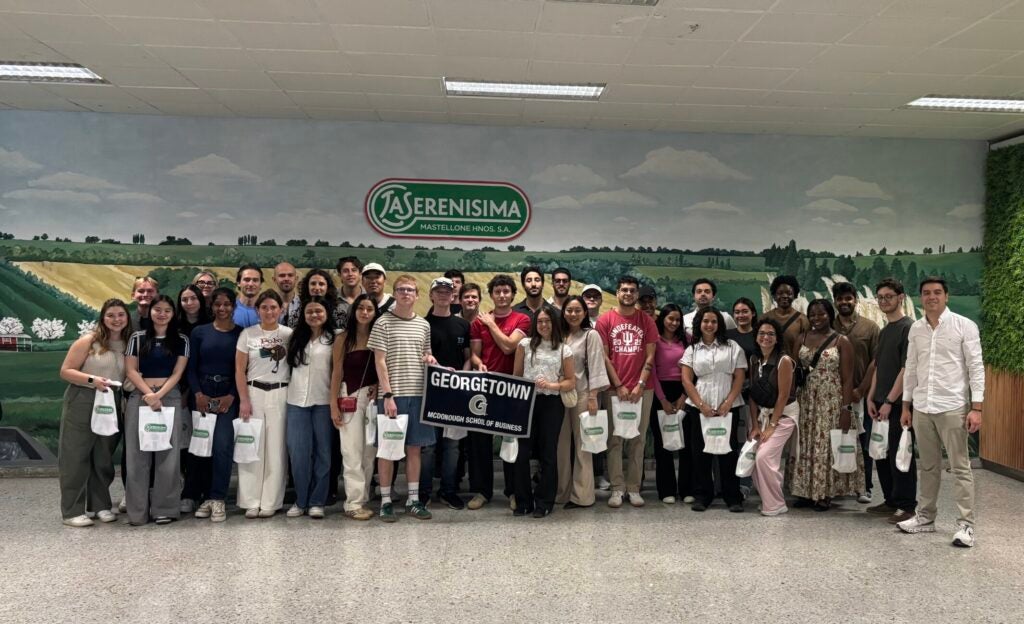
Her team developed a market entry strategy that positioned the company as a premium gluten-free brand, combining consumer insights with operational and regulatory considerations. Through direct interactions with local clients, she recognized the importance of relationships in the Argentine business environment.
“In Argentina, business isn’t just about transactions,” Nouh Chaia said. “It is about trust, communication, and understanding the people behind the company. That’s something you can’t fully grasp from a distance.”
Bridging Strategy and Culture
Beyond the consulting work, students describe the GBE as a powerful lesson in how culture and business intersect.
Hailey Walker (B’26), a Global Business Fellow who worked with Airbus Helicopters in Spain, helped evaluate the viability of a “drones-as-a-service” business model – analyzing operational, financial, and strategic implications of shifting from a product-based to a service-based approach.
“This project was a valuable hands-on experience conducting a multi-faceted business analysis,” Walker said. “It required not only understanding the complexities of drone services, but also how a shift in business model would affect Airbus across multiple dimensions.”
Walker also pointed to site visits and cultural experiences, such as touring Inditex headquarters and exploring historic cities like Toledo, as critical to understanding the broader business environment.
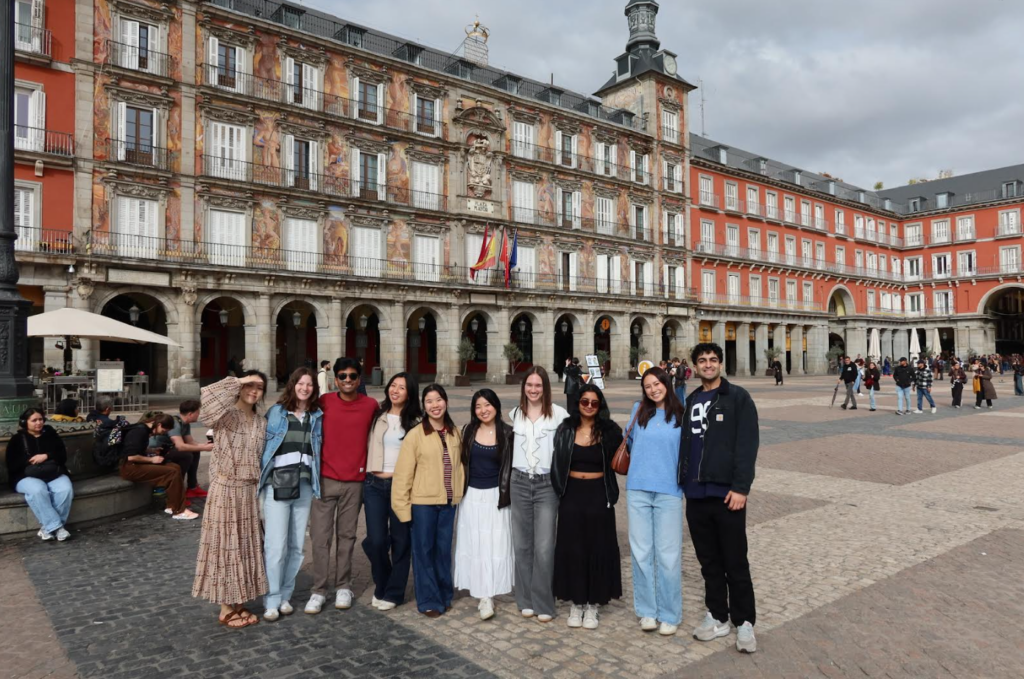
Walker and other Global Business Fellows in front of Plaza Mayor in Madrid, Spain.
“Everywhere we went, there was an emphasis on the human experience,” she said. “Companies prioritized creating environments where employees could flourish and build relationships. That perspective fundamentally shaped how I think about business in a global context.”
Katarina Montague’s (MBA’26) experience in Japan offered another lens into how business operates across cultures. Her team partnered with Oishii, a U.S.-based vertical farming company, to develop strategic human resources staffing recommendations and a recruiting video to support talent acquisition.
“Honestly, I learned so much more than I expected,” said Montague. “Our team went deep on vertical farming, Japanese agricultural practices, and cross-cultural team dynamics all at once.”
Coordinating across time zones and cultural contexts proved to be one of the most valuable parts of the experience.
“It wasn’t always graceful, but figuring it out in real-time was exactly the kind of challenge I came to this program for,” said Montague. “There’s a real sense of accountability. You want to deliver value to the client, and you want to represent Georgetown well. That pushes you to be more creative and rigorous.”
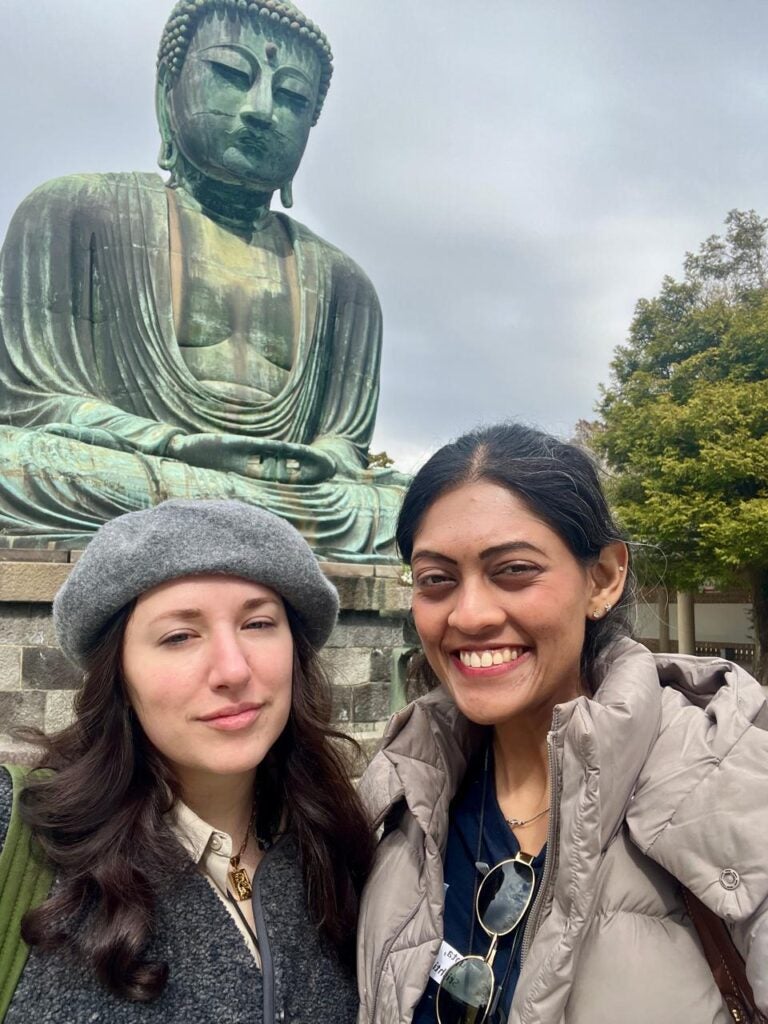
Montague in front of the Great Buddha of Kamakura in Japan.
While in Japan, Montague and her classmates complemented their consulting work with immersive cultural experiences, including company visits, cultural experiences, and moments of reflection.
“Each company we visited – from Uniqlo headquarters to the Bank of Japan – offered a completely different window into how business operates in Japan,” she said. “Our hosts were generous and candid with their time in a way you just don’t get from a case study.”
Learning Beyond the Classroom
Students consistently emphasize that the GBE experience reshaped how they think about applying business fundamentals across different markets.
“This experience reinforced that core business principles are broadly applicable across geographies, but their implementation is highly context-dependent,” said Farid. “What works in one market cannot simply be transplanted into another without adaptation.”
In Kenya, Farid experienced firsthand the intersection of economic development and cultural tradition.
“What stood out most was the contrast between rapid urban development and more traditional ways of life, and how both coexist,” he said. “It gave me a better appreciation for how economic growth, culture, and infrastructure evolve together.”
Preparing Globally Minded Leaders
After returning to campus, students complete final presentations and reflect on their experiences – often describing the GBE as one of the most defining components of their time at Georgetown.
“As I move forward, I will carry with me the importance of being inquisitive and open-minded in global business environments,” said Walker. “There is so much value in listening to different perspectives and understanding how cultural context shapes decision-making.”
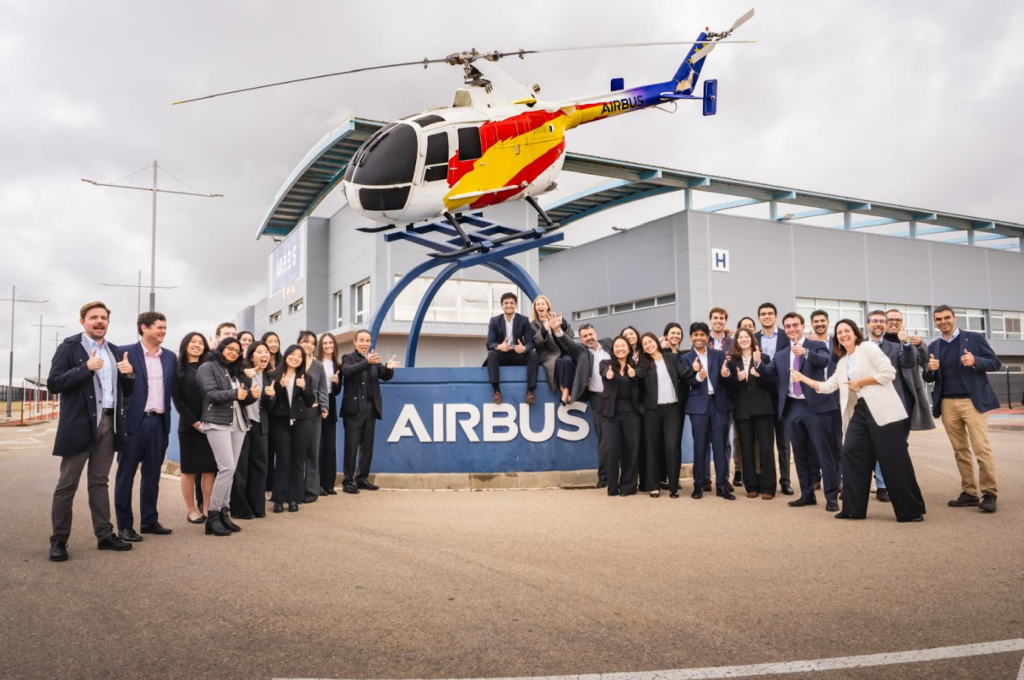
Global Business Fellows in front of Airbus in Spain.
For Nouh Chaia, the experience clarified both her interests and her skill set.
“This project strengthened my interest in strategy, brand positioning, and international business,” she said. “It gave me confidence in my ability to work with real clients, manage ambiguity, and turn complex information into clear recommendations.”
Farid echoed that sentiment, noting how the experience sharpened his long-term goals.
“This experience strengthened my interest in working at the intersection of strategy, operations, and impact, particularly in international or emerging market contexts,” he said. “I want to build solutions that are not only analytically sound, but also practical and adaptable to the environments in which they are implemented.”
Related Stories
Business and Global Affairs
Celebrating 30 Years of Global Business Leadership at Georgetown McDonough
Business and Global Affairs
Navigating Crisis: Lessons from Georgetown’s Global Consulting Projects in Dubai